


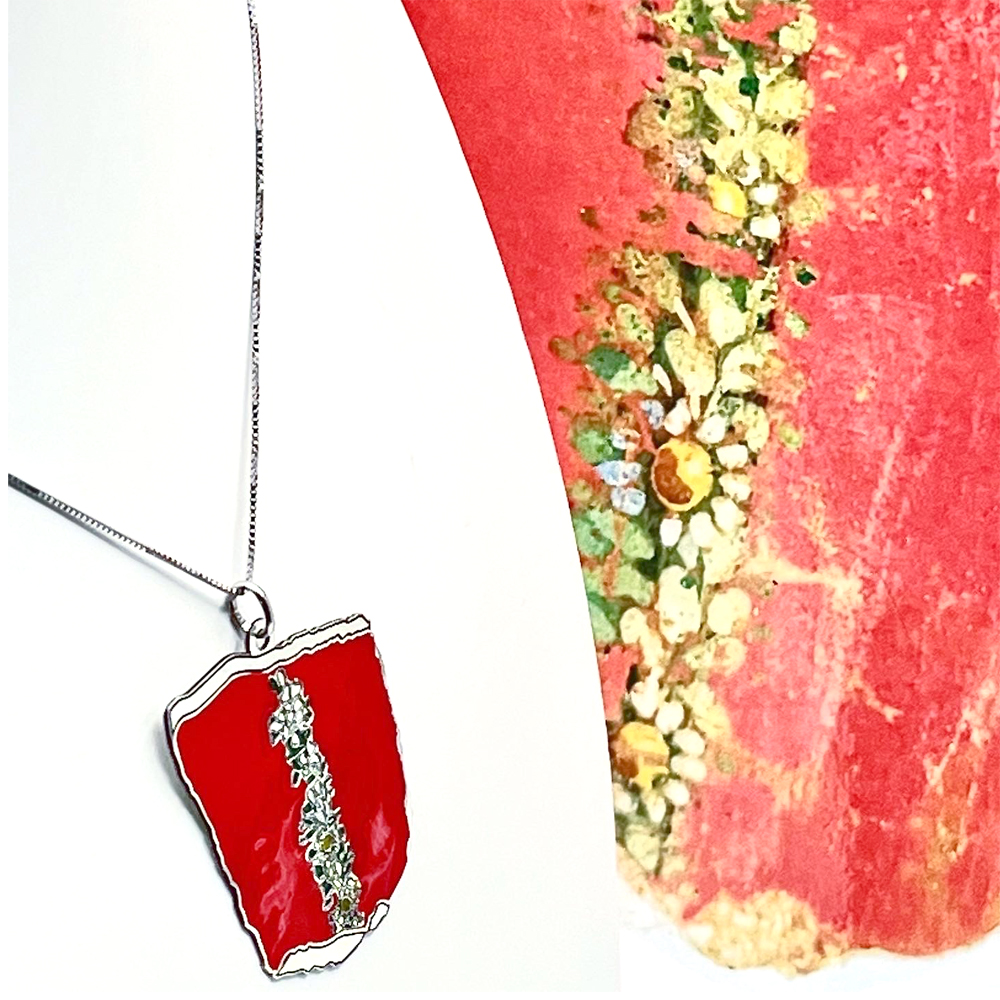
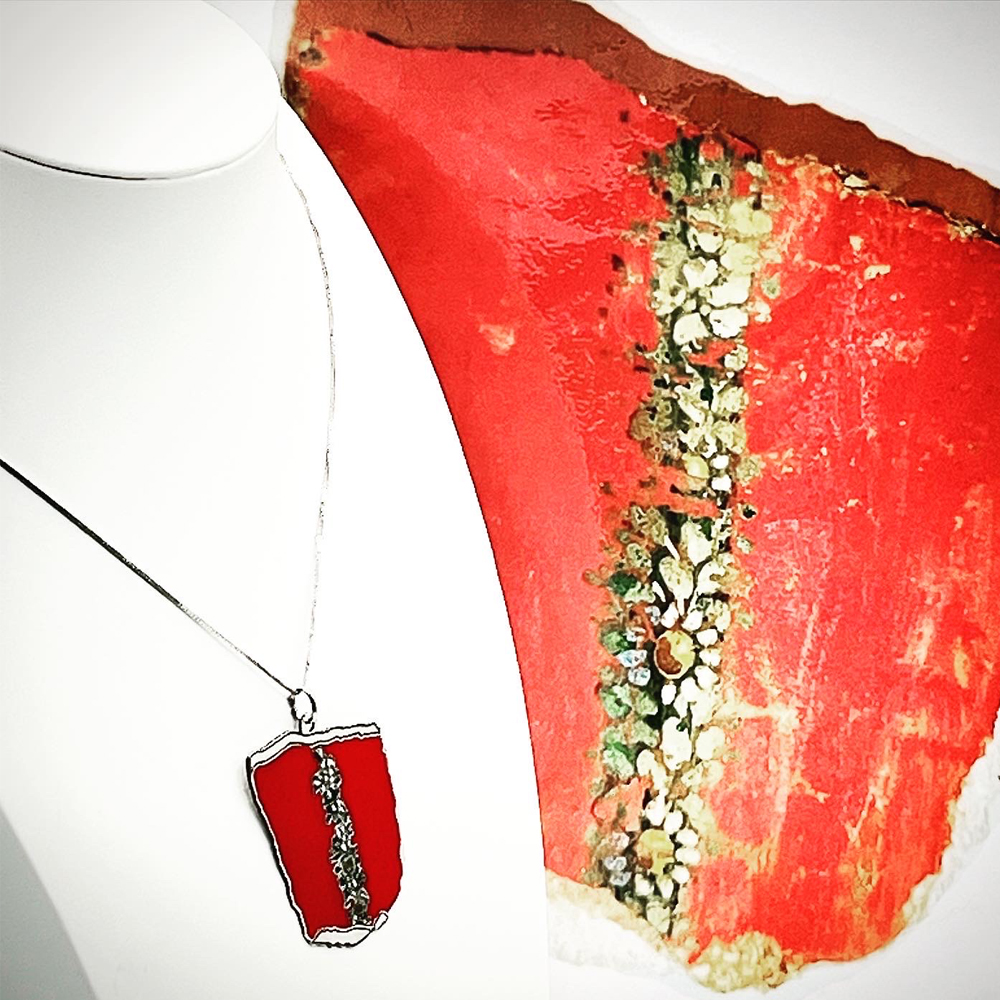
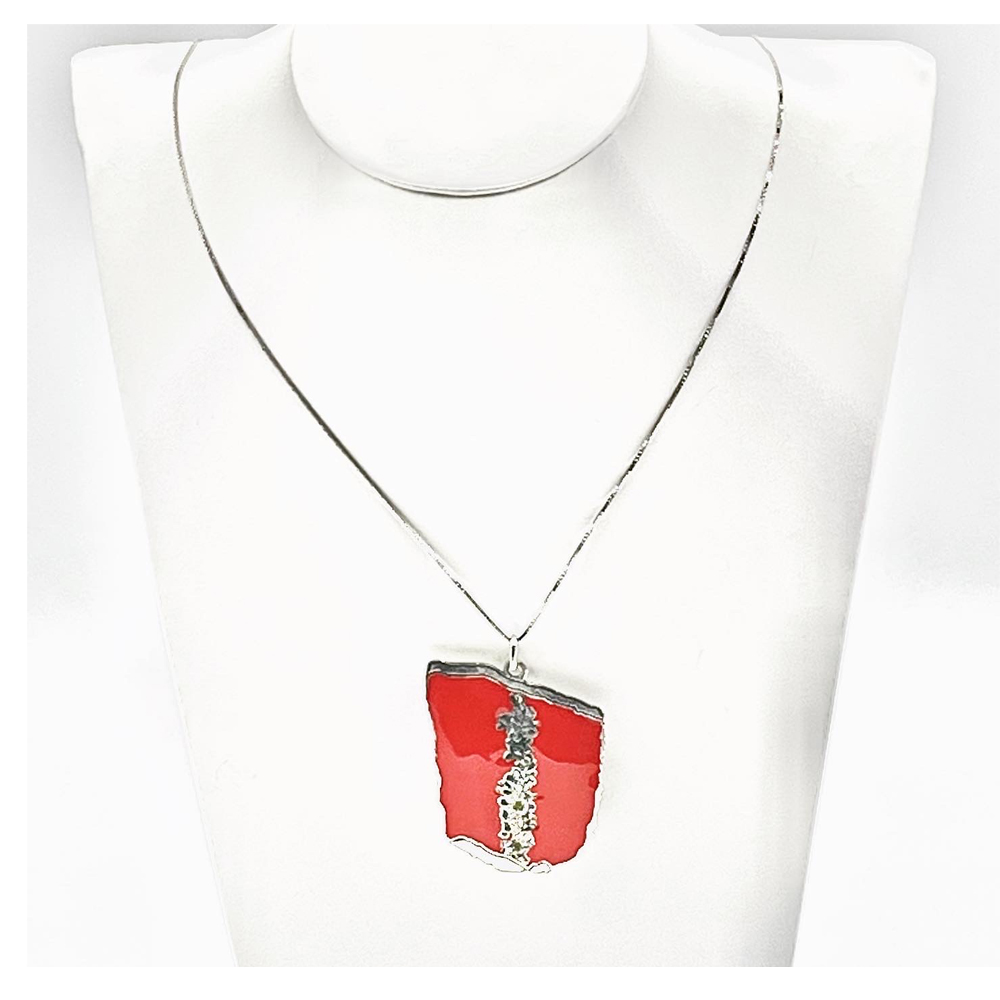
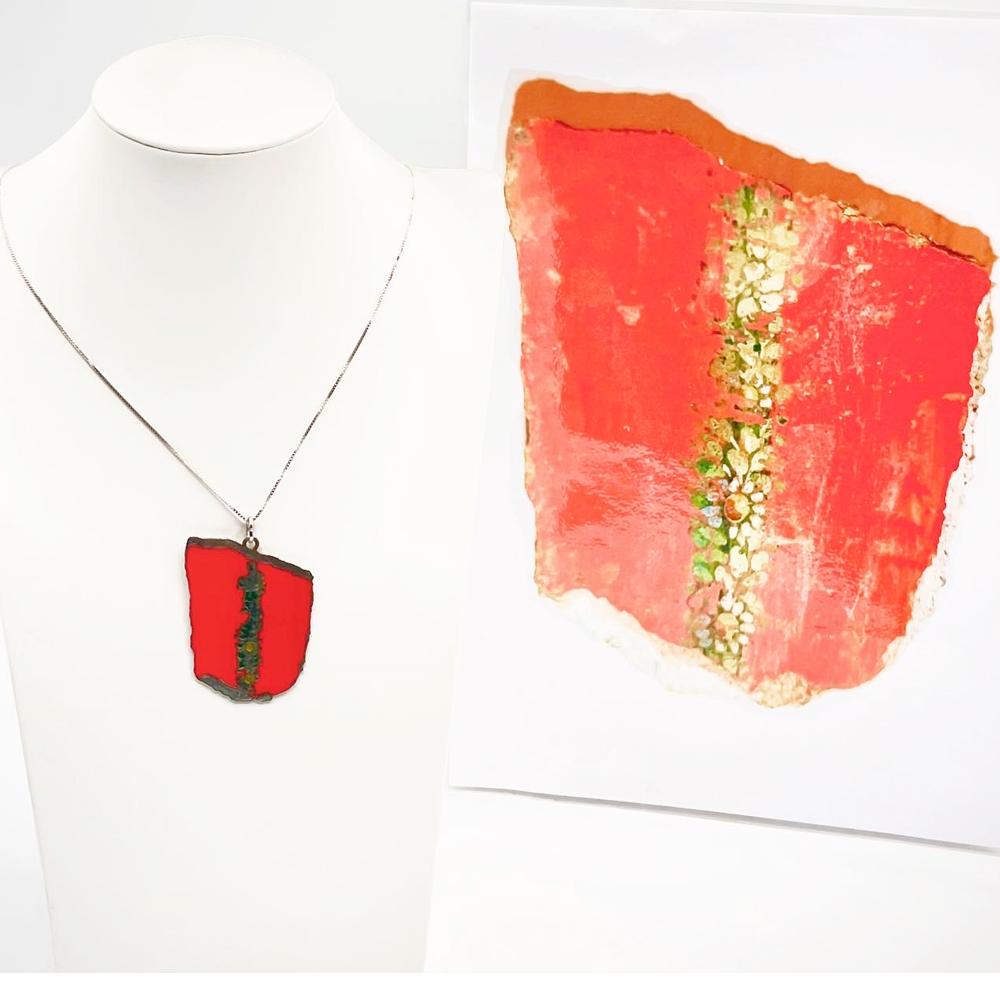
PAINTED PLASTER FRAGMENT WITH GARLAND FROM THE TEMPLE OF THE ROMAN FORUM OF CUPRA MARITTIMA
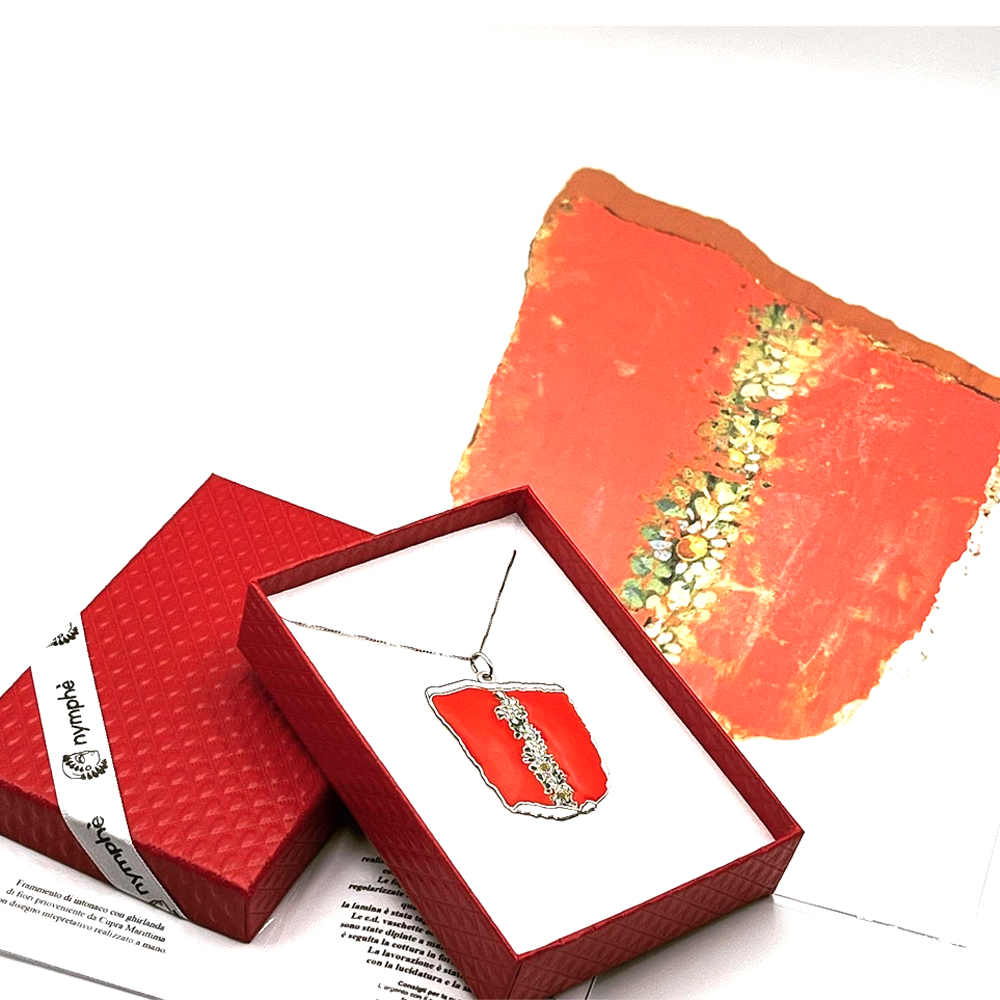
This is a fragment of painted plaster that, on stylistic grounds, can be attributed to the Third Pompeian Style (20 BC – 45 AD).
The fragment was recovered inside the podium of the main temple of the Roman forum of Cupra Marittima during the archaeological campaign conducted by the University of Naples “L’Orientale” in 2022, and is currently housed in the storeroom of the Archaeological-Naturalistic Park of Cupra.
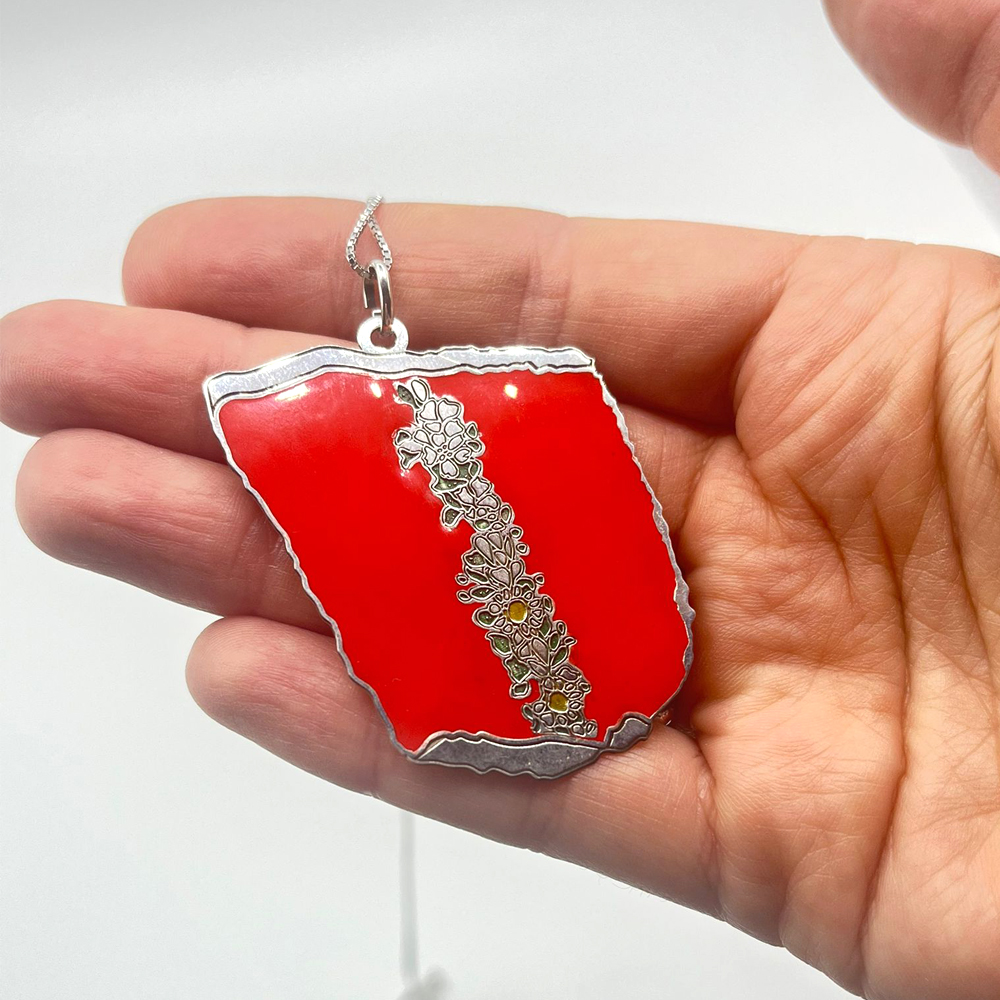
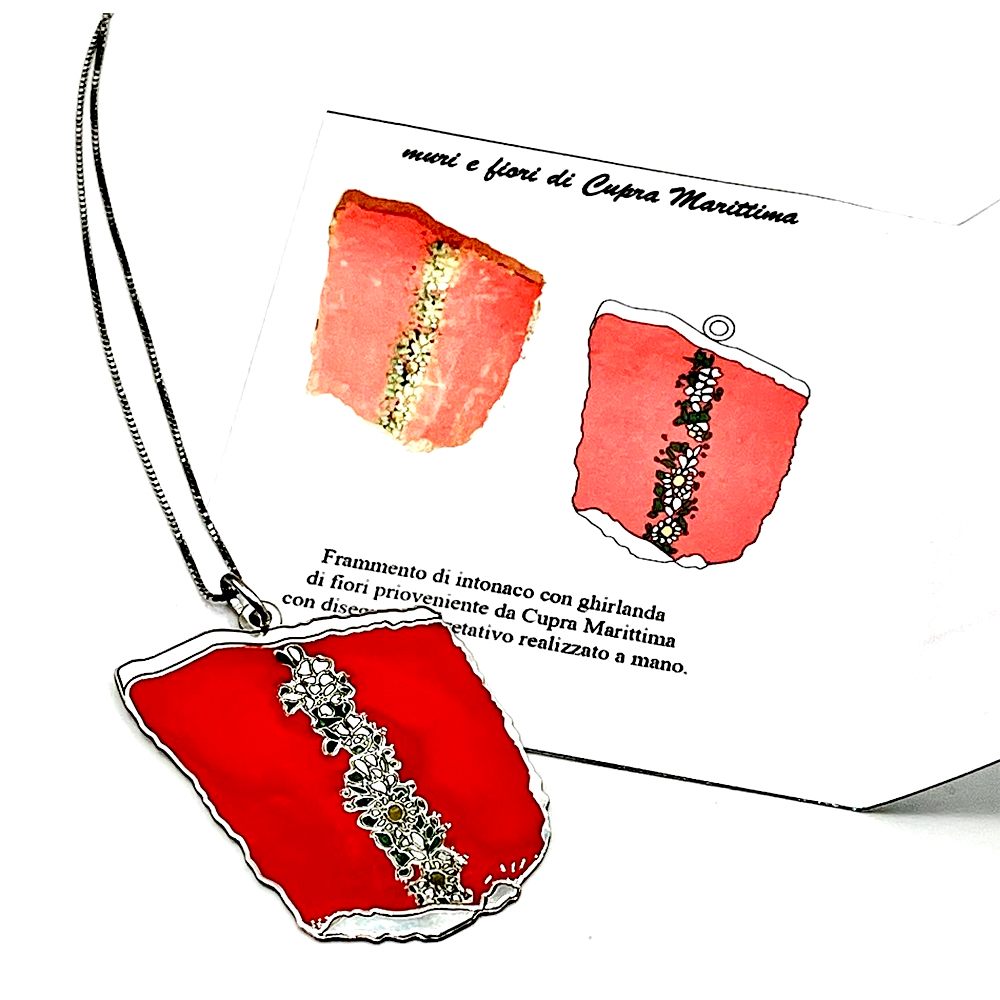
It depicts a splendid garland featuring various shades of green to convey depth, decorated with golden apples on a cinnabar red background. One hypothesis suggests that this decorative motif ran along the wall, likely within the middle zone filled with cinnabar red, which adorned the temple’s cella.
Possible parallels can be found in some of the frescoes that embellished several Pompeian domus, decorated with garlands—most often threadlike or swagged—with tied or hanging beaded ribbons, characteristic of the ornamental style.
Regarding the rendering of the support, it consists of at least four preparation layers of identical composition, made of calcite, lime, sand, and river pebbles. Notable is the presence of calcite on the surface layer of the fragment, which imparted greater luster to the paint film.
Research is currently ongoing; upcoming excavation campaigns in the temple area will allow for the recovery of further fragments. This will make it possible to expand upon the information currently available and reconstruct a complete overview of the decorative scheme.
Maria Grazia Moliterno
Bibliography:
- Allag, Barbet 1972: Allag C., Barbet A., Techniques de préparation des parois dans la peinture murale romaine. In MEFRA. Antiquité, tome 84, n°2., 1972.
- Barbet 1985: Barbet A., La Peinture murale romaine: Les styles décoratifs pompéiens, 1985.
- Barbet 2016: Barbet A., Recomposition et restitution des peintures murales fragmentaires: méthodologie, principes scientifiques et éthiques, in Revue Archéologique, Nouvelle Série, Fasc. 2, 2016.
- Bastet, De Vos 1979: Bastet F. L., De Vos M., Proposta per una classificazione del terzo stile pompeiano, 1979.
- Croisille 2005: Croisille J.M., La peinture romaine, L’Antiquité Classique, 2005.
- Moliterno 2023: Moliterno M.G., Frammenti di intonaco dipinto in III stile pompeiano dalla cella del tempio del foro romano di Cupra Marittima, Master’s thesis, University of Naples “L’Orientale”, 2023.
- Pesando, Giglio et alii 2023: Indagini archeologiche presso il tempio forense di Cupra Marittima (AP). In Newsletter di Archeologia CISA, 2023.
Per quanto riguarda il supporto, appare costituito da almeno quattro strati di preparazione, con medesima composizione, formati da calcite, calce, sabbia e ciottoli di fiume. Particolare la presenza della calcite, sullo strato più superficiale del frammento, che donava alla pellicola pittorica maggiore lucentezza.
Al momento le ricerche sono ancora in corso, seguiranno nuove campagne di scavo presso l’area del tempio che permetteranno il ritrovamento di ulteriori frammenti. Questo consentirà di approfondire le informazioni adesso disponibili e di ottenere un quadro completo dello schema decorativo.
. I soggetti scelti sono le famose Palestriti, dieci atlete vestite di subligaria o cingola ella parte inferiore e strophia o fasciae pectorales nella parte superiore rossi o verdi. I loro corpi sono muscolosi e resi realisticamente, capelli sono raccolti o sciolti sulle spalle e recano in mano attrezzi relativi alle loro specialità atletiche: una figura regge gli halteres ossia i pesi utilizzati nel lancio del disco, una è intenta nella corsa, una coppia gioca con una palla colorata, un giudice invece regge una corona e una palma rivolgendosi verso un’atleta che regge una sorta di girandola. Lo sfondo è bianco e luminoso come il color rosa pallido dei corpi La bellezza e l’interesse di scene di vita quotidiana così uniche si combina alla dimostrazione di forza e vigore, incurante dei modelli maschili imperanti.




Reviews
There are no reviews yet.