

👩🏫📚🤓 In-depth insight by Dr. Martina Pistone:
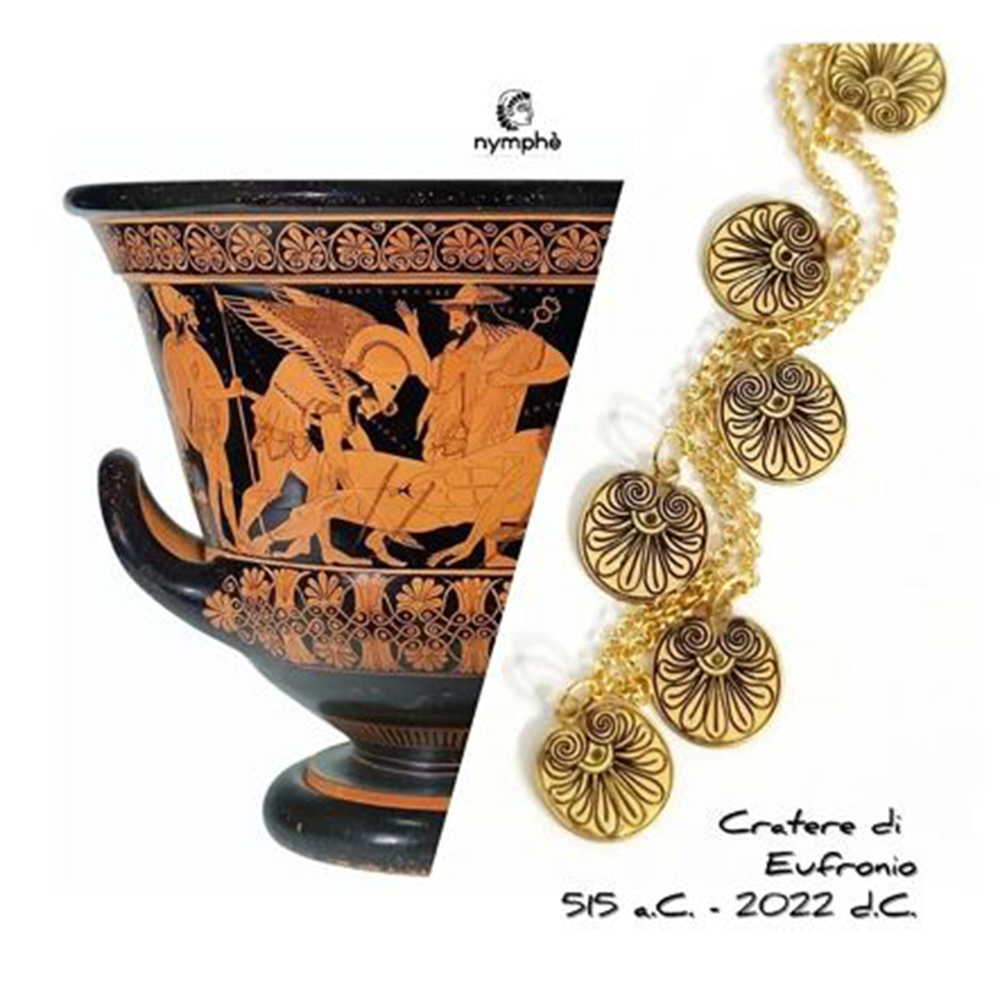
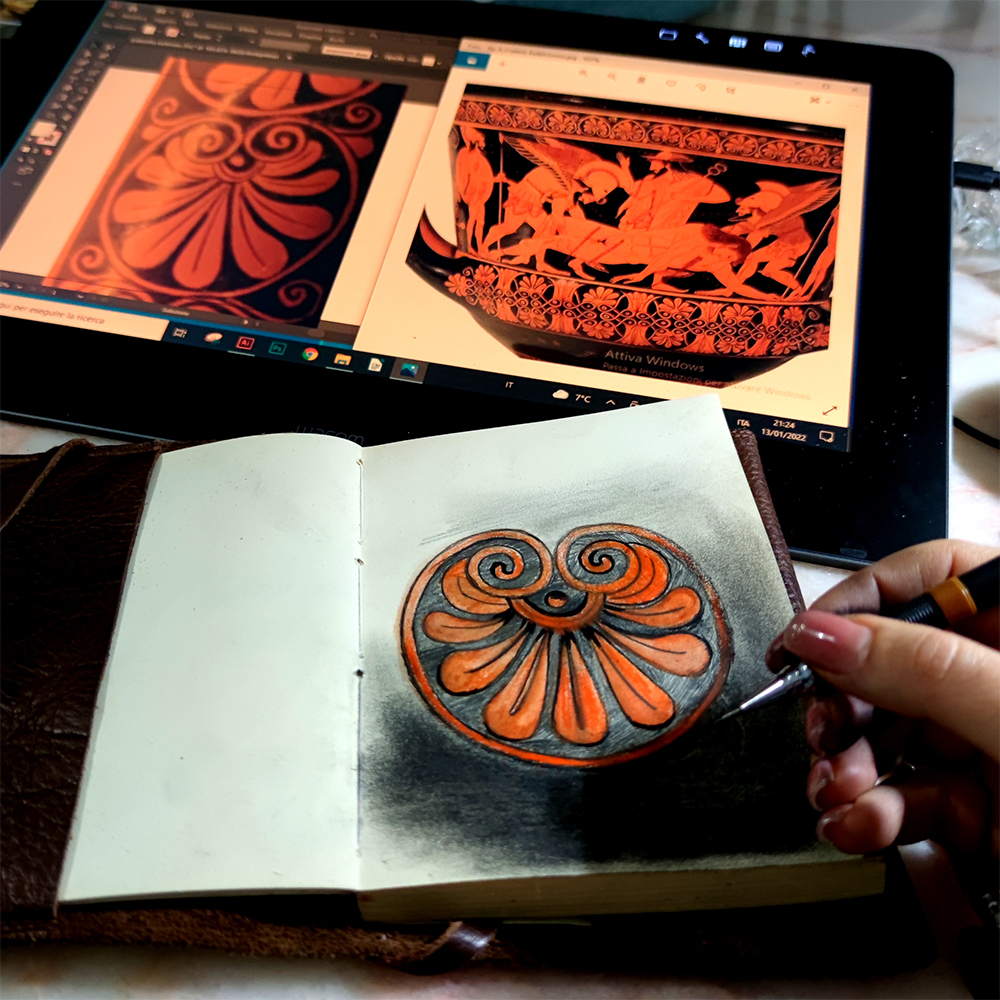
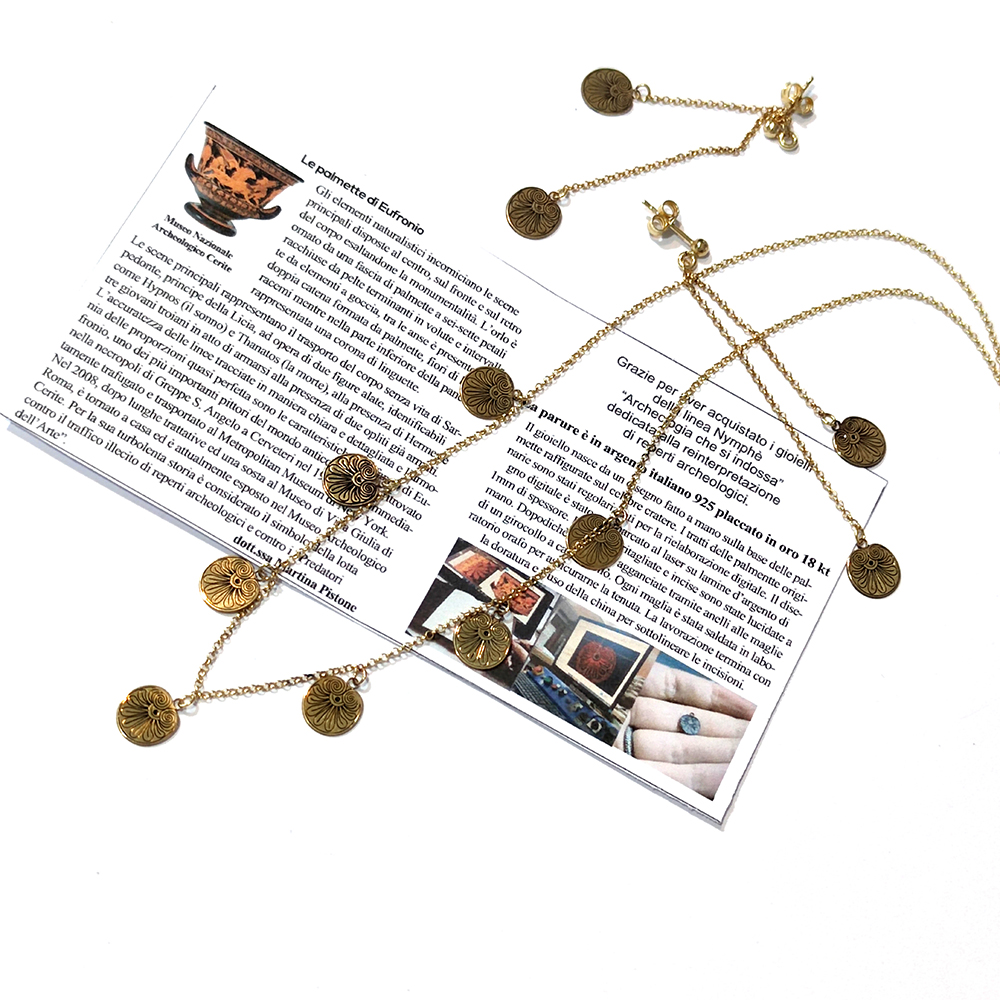
“Naturalistic elements frame the main scenes arranged at the center, on the front and back of the body, enhancing their monumentality. The rim is decorated with a band of six-to-seven-petaled palmettes enclosed by peltae ending in volutes and interspersed with drop-shaped elements. Between the handles lies a double chain formed by palmettes, lotus flowers, and tendrils, while a band of tongues is depicted on the lower part of the belly. 🌴 The main scenes depict the transport of the lifeless body of Sarpedon, Prince of Lycia, by two winged figures identified as Hypnos (Sleep) and Thanatos (Death), in the presence of Hermes, and three young Trojans arming themselves in the presence of two already armed hoplites. The precision of the clearly and intricately drawn lines and the near-perfect harmony of proportions are the defining features that make Euphronios one of the most significant painters of the ancient world. 🌴 The krater, discovered in the Greppe Sant’Angelo necropolis at Cerveteri in 1971, was immediately looted and smuggled to the Metropolitan Museum of Art in New York. In 2008, following lengthy negotiations and a period on display at the Villa Giulia Museum in Rome, it returned home and is currently exhibited in the Cerite Archaeological Museum. Due to its turbulent history, it is considered a symbol of the fight against the illicit trafficking of archaeological artifacts and against the ‘Art Looters’.”
P



Reviews
There are no reviews yet.