


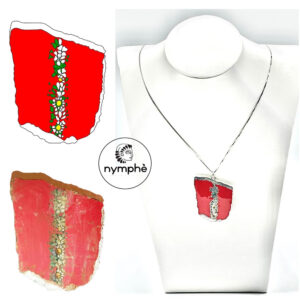
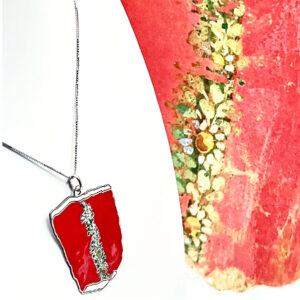
This refined series of pendants, crafted from 1-mm thick silver sheet through ultra-precise laser cutting and engraving, draws direct inspiration from the mosaic flooring of one of the iconic sites of Rome’s ancient port: the Square of the Corporations (Piazzale delle Corporazioni, Ostia Antica, Regio II, VII).
The Square of the Corporations was the commercial hub of the ancient colony of Ostia, strategically located directly behind the Theatre. Its final layout, dating primarily to the late 2nd century AD (the Severan period), featured a vast quadrangular plaza enclosed by a double portico. This portico was divided into over 70 small individual rooms, known as stationes (offices).
These stationes served as representative offices for navicularii (shipowners) and negotiantes (traders) hailing from the principal ports of the Mediterranean basin (particularly Roman Africa and Sardinia), as well as local trade guilds (stuppatores, caudicarii, etc.).
Each statio was adorned with a black-and-white floor mosaic that, through Latin inscriptions and striking visual symbols, functioned as a true commercial sign, identifying the origin of the guild and the types of goods traded—primarily linked to the annona (the grain supply for the city of Rome).
L’incisione laser su argento riproduce con pulizia e precisione millimetrica l’originaria “pittura” in tessere bianche e nere del mosaico romano:
Le Due Navi Mercantili (Corbitae): Il cuore della composizione presenta due navi mercantili romane (probabilmente corbitae, navi da carico a vela tonda), raffigurate mentre navigano affiancate verso un porto. La resa dell’alberatura, delle vele (visibili sul ciondolo come la struttura a griglia) e del timone riflette la tipica iconografia marinaresca antica, simbolo del viaggio, del commercio a lungo raggio e del collegamento transmediterraneo che univa Roma alle sue province frumentarie.
Il Pesce/Delfino: Al di sotto delle navi, l’incisione riporta la figura stilizzata di una grande creatura marina,un pesce o, più probabilmente, un delfino. Nella simbologia romana, il delfino era considerato un animale benevolo e un protettore dei naviganti, nonché un simbolo che indicava la presenza del mare e del “porto sicuro”. La sua presenza nel mosaico e sul ciondolo sottolinea la dimensione marittima e la scommessa sul viaggio andato a buon fine.
Il Faro (Simbolo di Porto e Salvezza): In alto, tra le due navi e chiaramente riconoscibile per la sua struttura a più piani sovrapposti che culmina in una fiamma, è inciso il faro. Questo elemento rappresenta,con altissima probabilità, una stilizzazione del Faro di Claudio del porto di Portus, l’avveniristico bacino portuale costruito dall’imperatore Claudio a nord della foce del Tevere e poi completato da Traiano. Il faro non è solo una guida nautica, ma il simbolo della destinazione raggiunta, dell’integrazione del sistema portuale di Ostia e della centralità logistica di Roma.



Reviews
There are no reviews yet.