


The Dancers of Ruvo: Ritual, Myth, and Immortality in Ancient Apulia
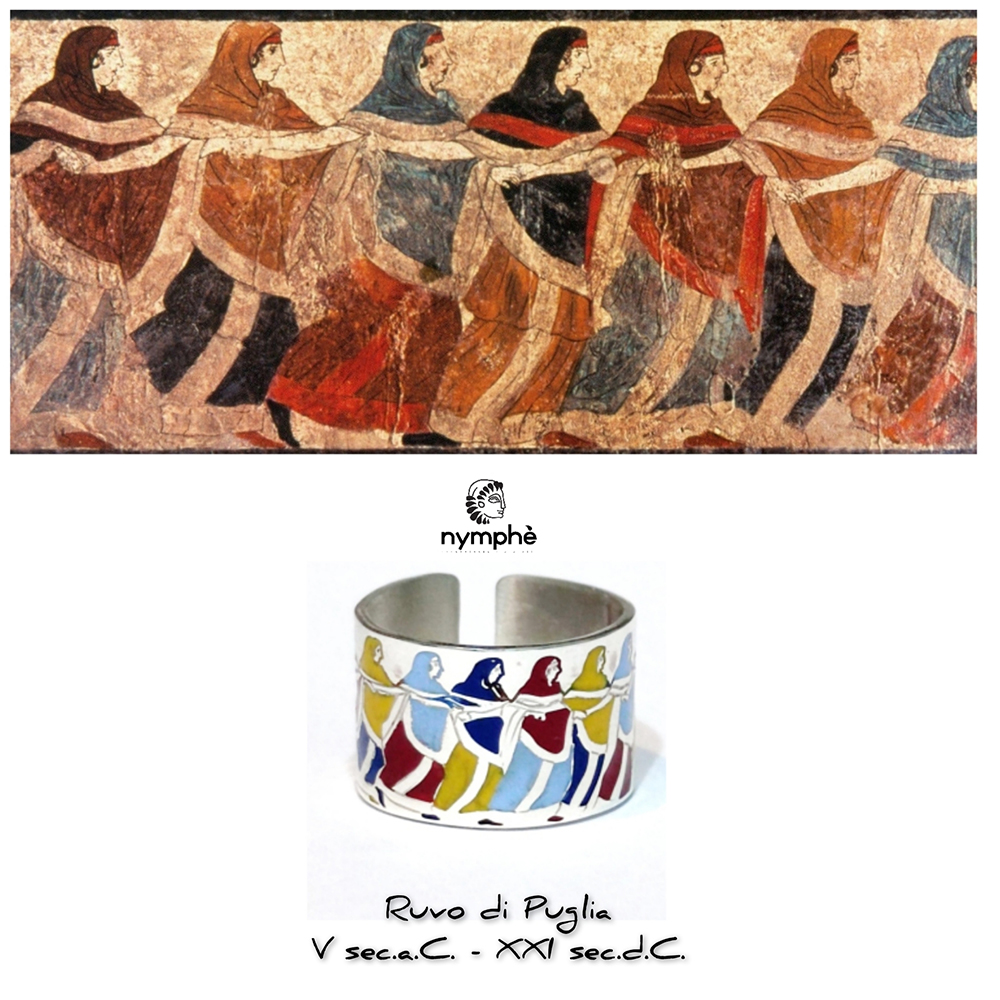
The Dance of Joy, the Dance of Theseus, or the Crane Dance: three distinct expressions used in archaeological historiography and exegesis to describe one of the absolute masterpieces of Classical and Hellenistic painting in Southern Italy: the painted frieze of the Tomb of the Dancers of Ruvo.
This complex figurative scene ran in a continuous band along the four interior walls of a semi-chamber hypogeum tomb, dated between the late 5th and early 4th century BC (c. 400–380 BC), discovered in 1833 in Ruvo di Puglia (ancient Rubi), in the province of Bari. The tomb belonged to an elite male member of the Peucetian aristocracy, as evidenced by the rich metallic grave goods (bronze helmets and armor), red-figure pottery, and the exceptional use of rare, costly pigments in the fresco, including cinnabar.
In 1838, to preserve the decoration and facilitate its sale, the fresco was detached and divided into calcarenite slabs. Only seven of the ten original slabs entered the Bourbon Collections and are today preserved and displayed at the National Archaeological Museum of Naples (MANN), while traces of the remaining three were lost on the 19th-century antiquarian market.
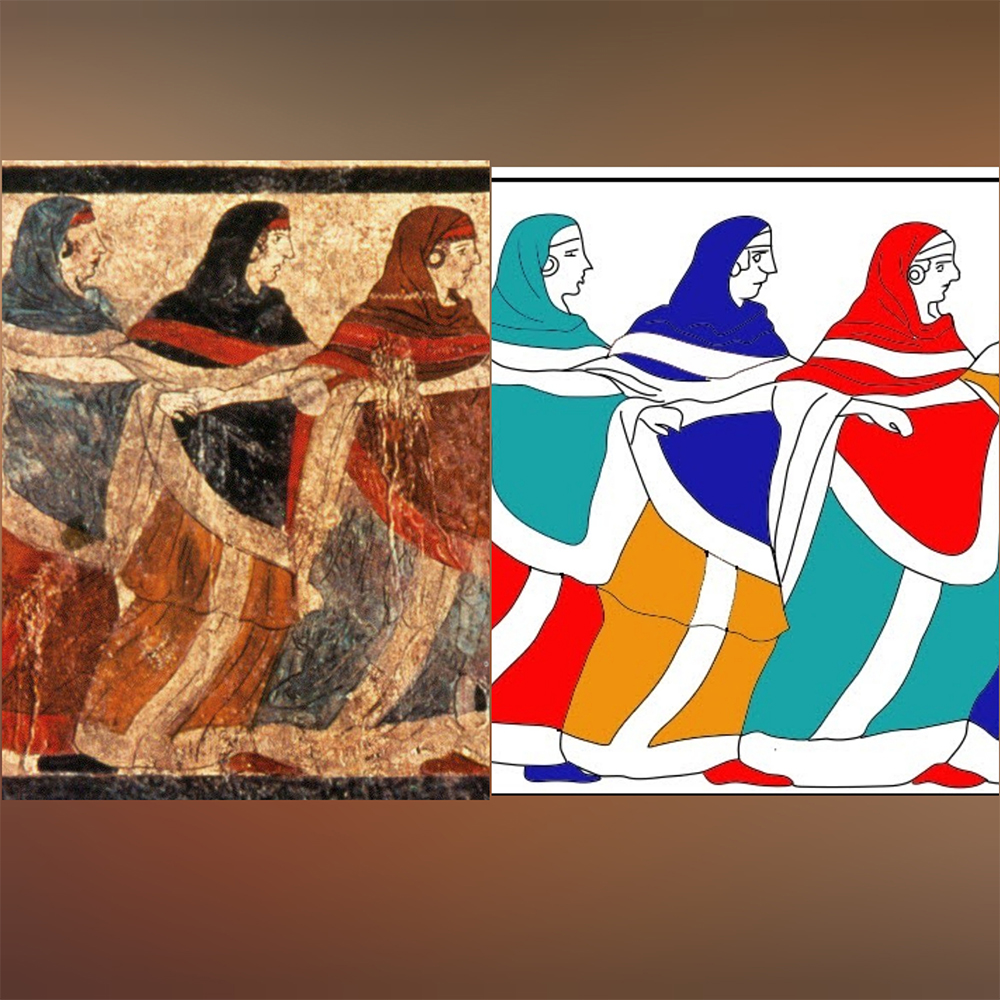
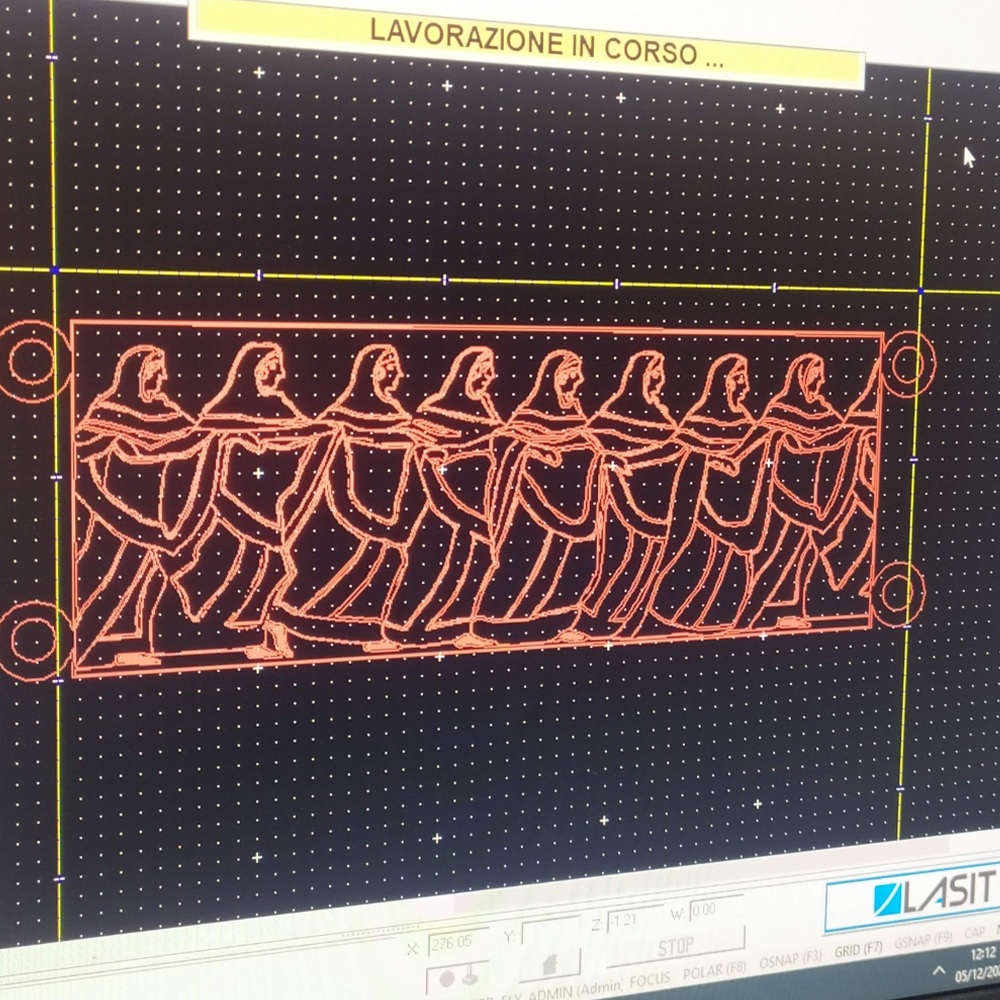
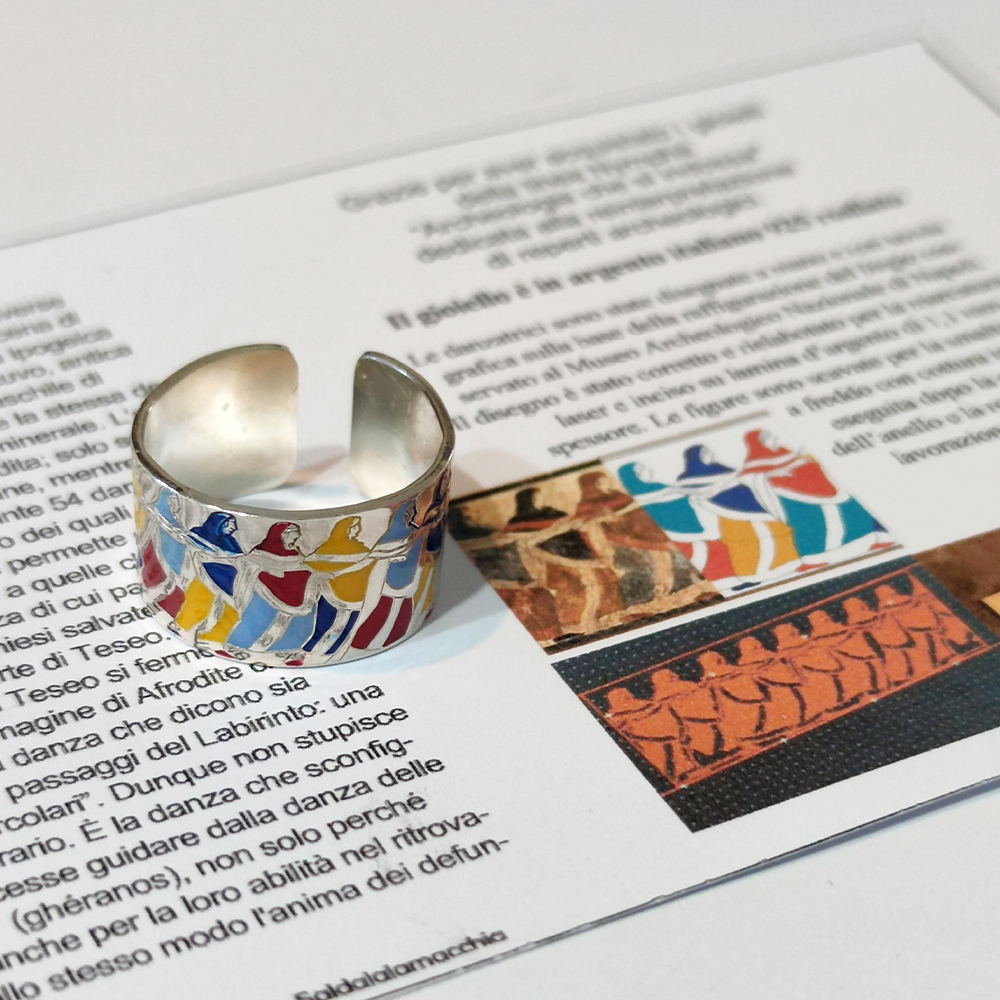
The wall decoration originally depicted a single, continuous rhythmic procession: the surviving slabs preserve 30 veiled dancers moving in a cadenced step to the left, holding hands or resting a hand on the wrist of the adjacent figure, led by a youth clad in a white tunic playing the lyre (or heptachord). The chain of women, arranged in a continuous rhythm, symbolically encircled the tomb in a protective, choral embrace.
A branch of archaeological scholarship identifies this representation with the ritual dance described by Plutarch in the 2nd century AD (Life of Theseus, 21):
“On his voyage back from Crete, Theseus put in at Delos. Having sacrificed to the god and dedicated in the sanctuary the image of Aphrodite which he had received from Ariadne, he danced with the youths a dance which they say is still performed by the Delians, representing the windings and passages of the Labyrinth, in a rhythm composed of intricate turns and circular movements.”
The ancients named this complex choreographic performance the ghéranos (“crane dance”), both for the single-file arrangement that evokes the orderly flight of migratory birds, and for the symbolic value of the crane as a psychopomp and navigating bird.
In a Peucetian funerary context, the depiction of the ghéranos holds deep cosmological and eschatological significance: the dance overcomes the darkness of the Labyrinth and, metaphorically, overcomes death itself. It expresses the wish that the aristocratic deceased, guided by the music and the rhythmic chain of the maidens, might navigate through the shadows of the underworld and find path to eternal peace.
Dr. N.L. Saldalamacchia
Protohistoric Archaeologist
 From Ancient Art to Fine Jewelry: The Rare Elegance of Hot Enameling





Reviews
There are no reviews yet.