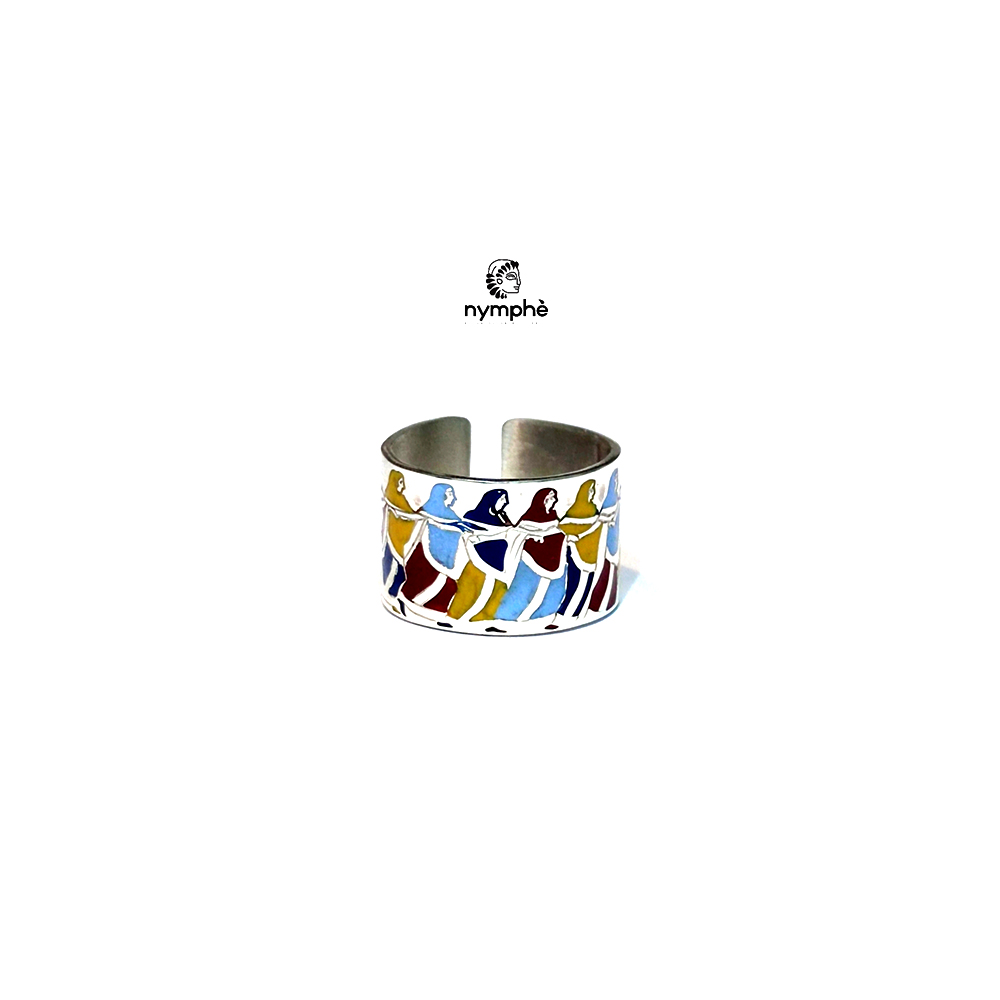
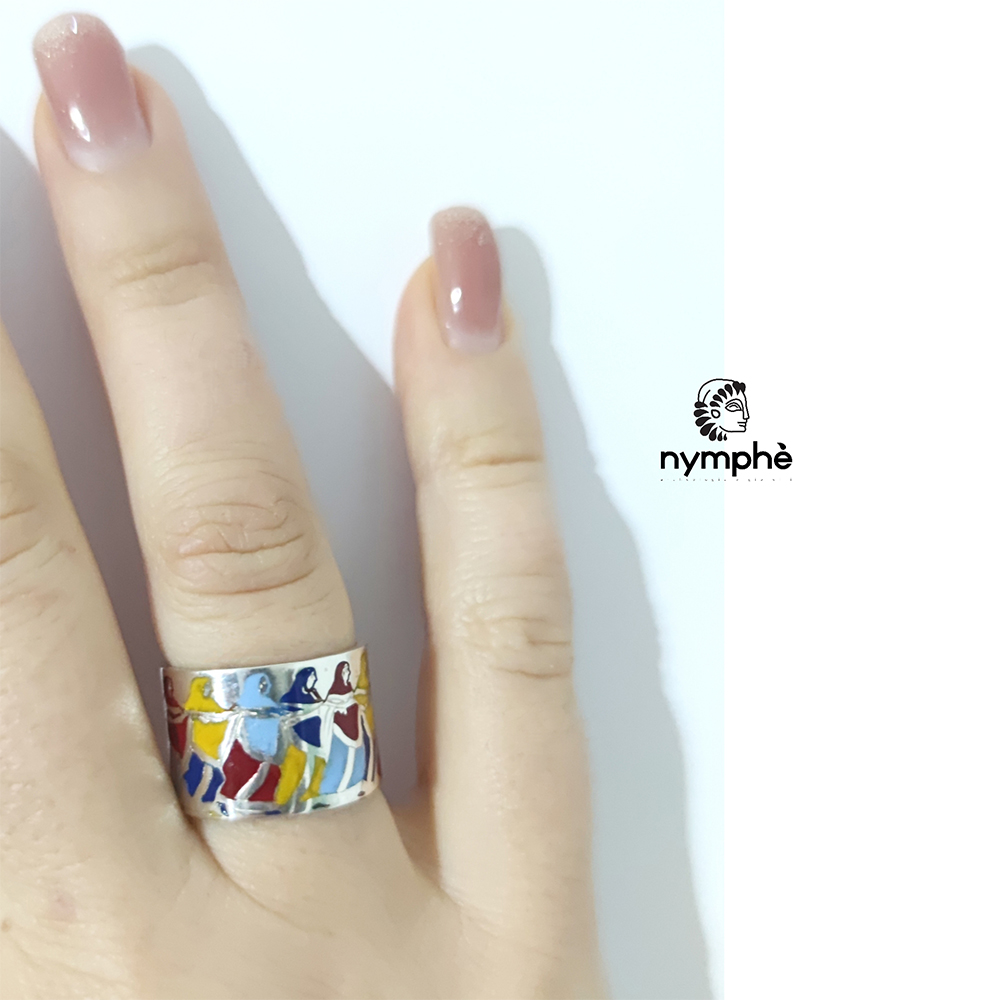
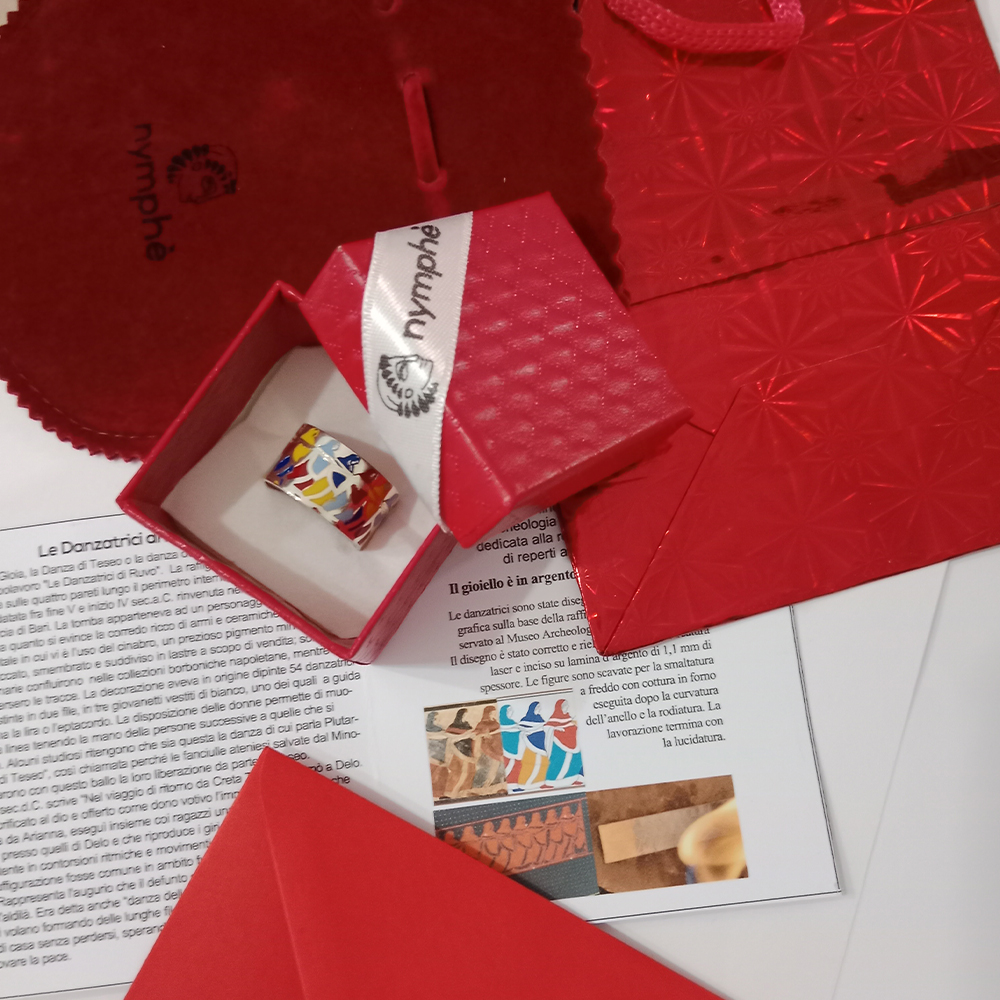
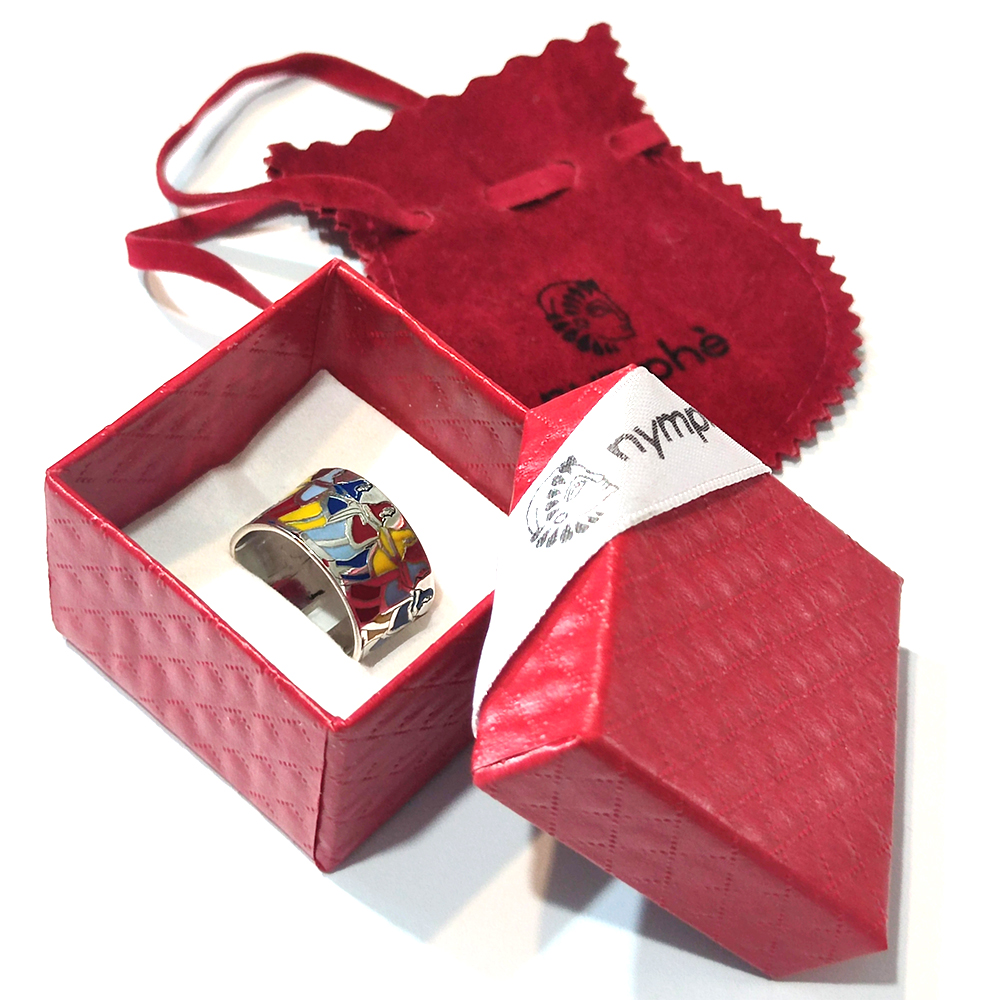
Dancers of Ruvo

Ruvo Dancers Ring | The Eternal Circle of Myth

“On his voyage back from Crete, Theseus put in at Delos. […] He danced with the youths a dance which they say is still performed by the Delians, representing the windings and passages of the Labyrinth, in a rhythm composed of intricate turns and circular movements…”

— Plutarch, Life of Theseus (2nd century AD)

From Archaeological Research to Fine Jewelry

This is far more than an accessory: it is where scholarly expertise meets artistic creation. Conceived and crafted by an archaeologist specialized in ancient funerary contexts, every line carries a profound respect for the history and sacred value of these ancient artifacts.

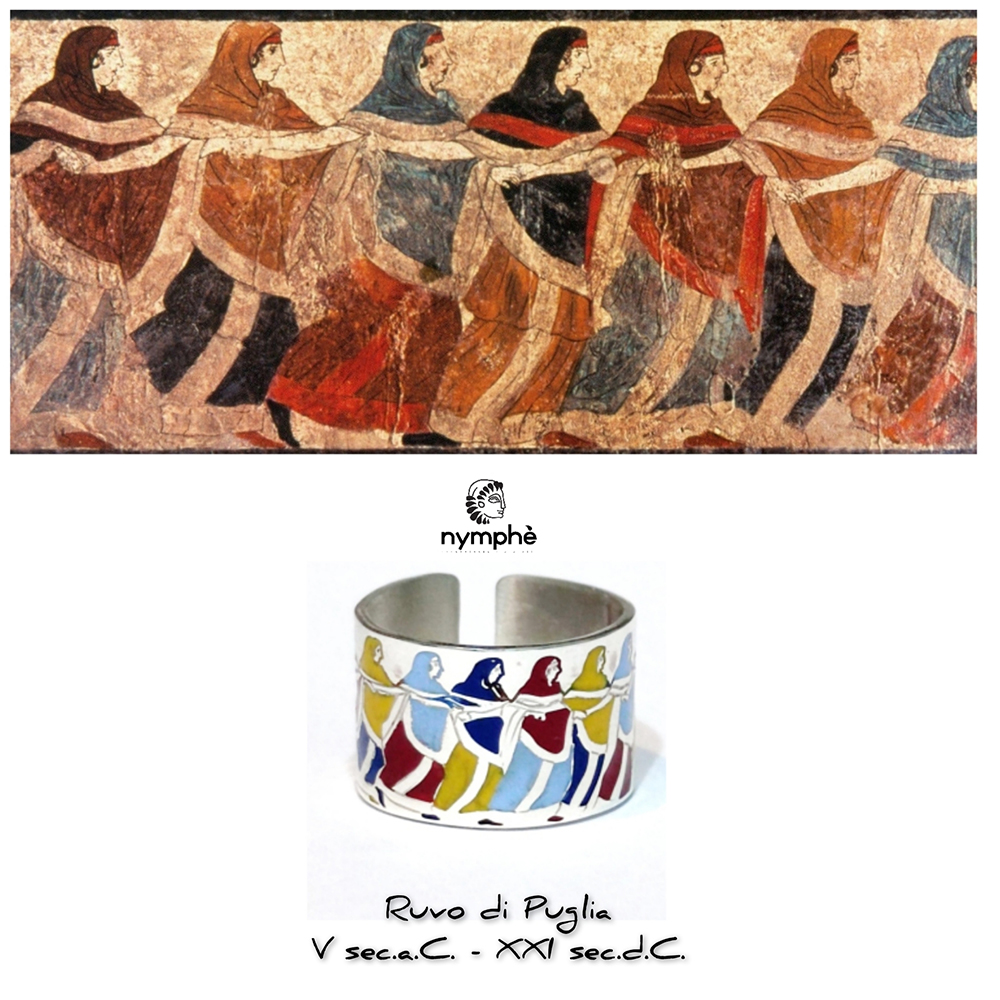
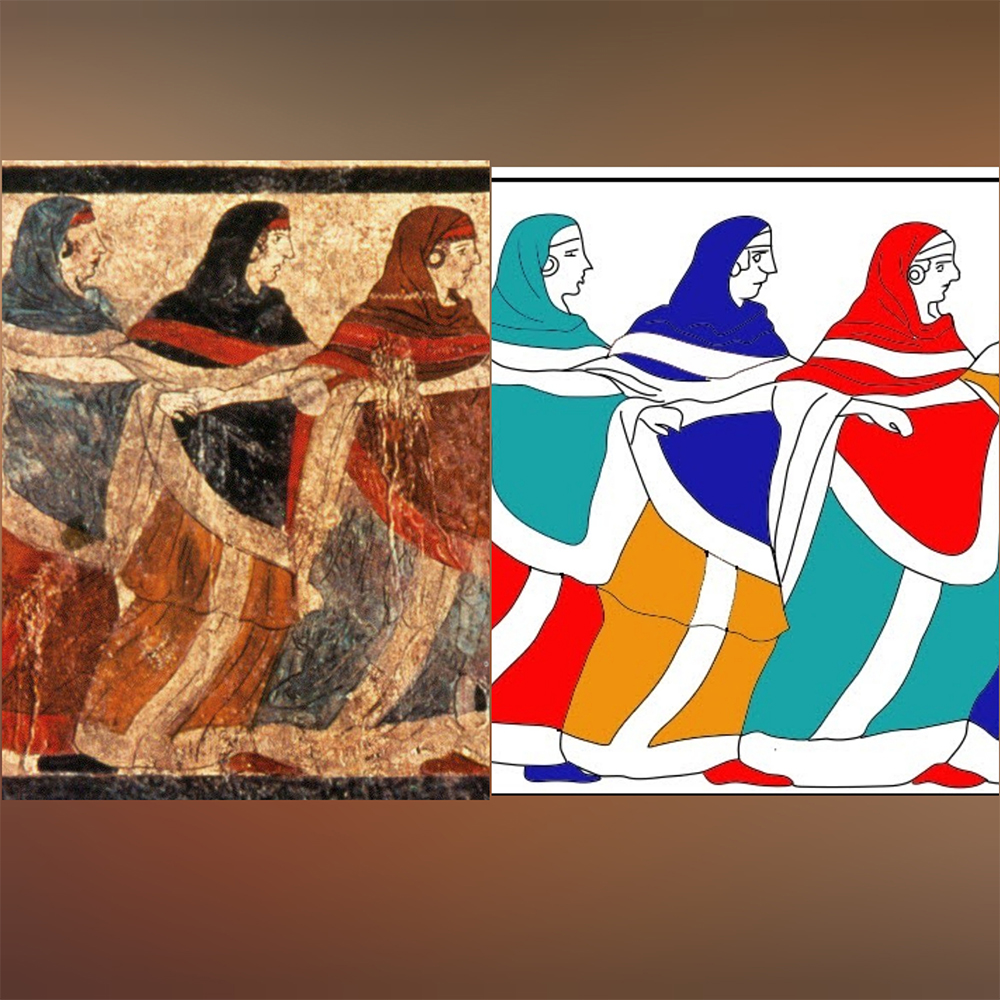
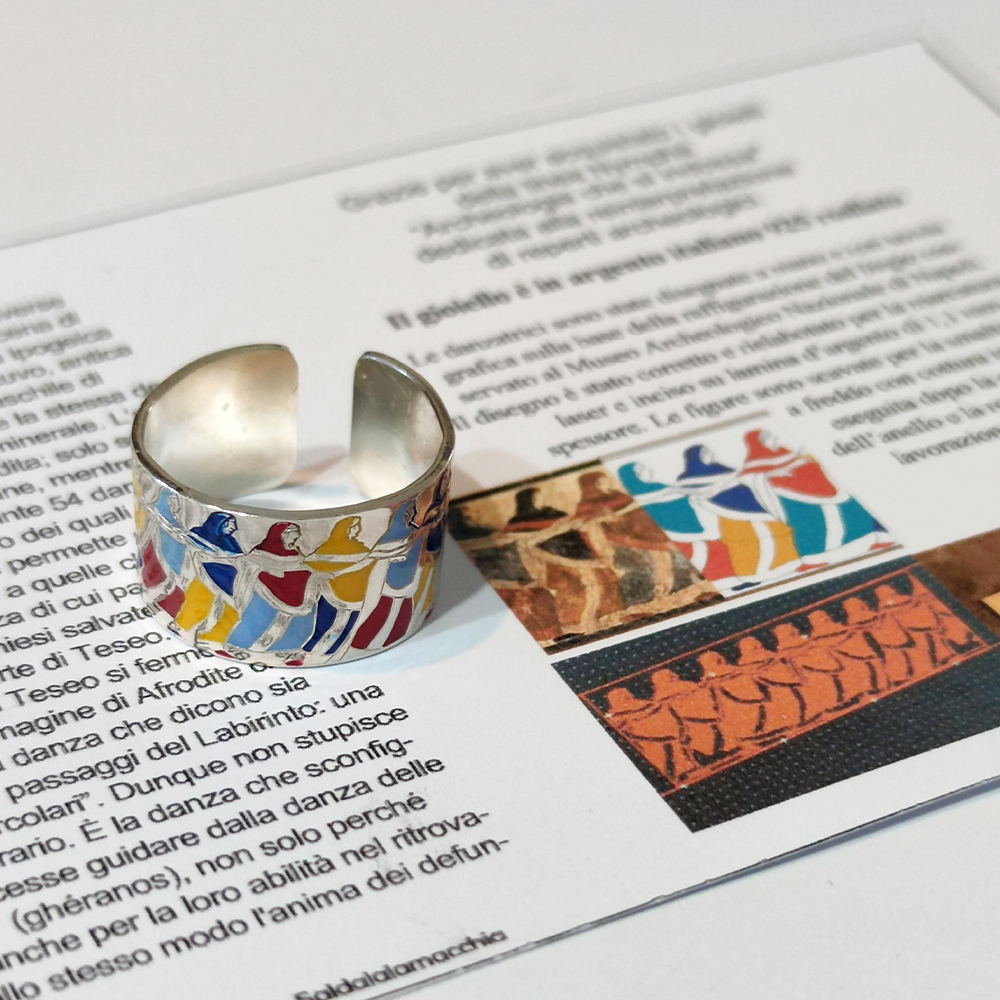
Dating to the 5th–4th century BC in Ruvo di Puglia, the fresco depicts Athenian dancers celebrating their liberation from the Minotaur’s Labyrinth through the ghéranos (the “crane dance”)—a rhythmic, continuous movement executed in single file, echoing the flight of migratory birds.

A Perfect Harmony: The Dance and the Ring

The core inspiration behind this piece lies in a striking conceptual alignment: the seamless, circular rhythm of the ancient dance naturally mirrors the infinite geometry of the ring.

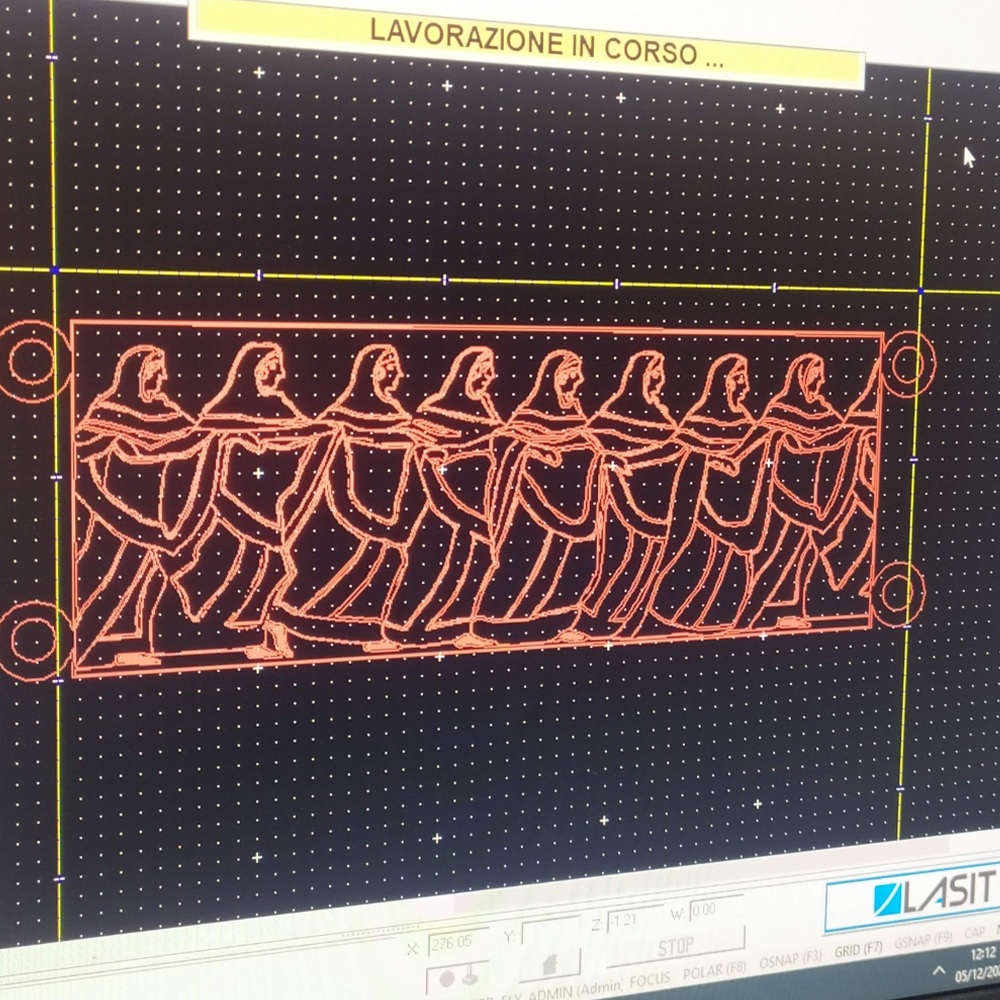
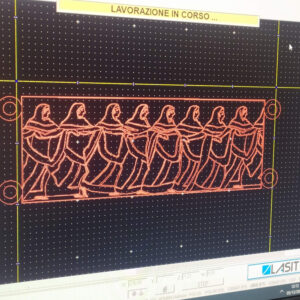
  • Hand-Drawn Precision: Starting from scientific publications of the tomb paintings, the scene is meticulously hand-drawn to capture every fold of drapery and gesture of the dancers.

  • Laser Engraving & Noble Silver: The artwork is converted for high-precision laser marking and cutting on a 1mm solid sheet of 925 Plated Italian Sterling Silver.

  • Artisanal Finishing: Each piece is hand-cleaned and brought to a brilliant mirror polish on the front, paired with a subtle brushed satin finish on the back.

Wearing this ring means wrapping your finger in a millennial dance, a legend of liberation, and pure Italian goldsmithing excellence.

125,00 €

Condividi

Scheda Archeologica

The Dancers of Ruvo: Ritual, Myth, and Immortality in Ancient Apulia

The Dance of Joy, the Dance of Theseus, or the Crane Dance: three distinct expressions used in archaeological historiography and exegesis to describe one of the absolute masterpieces of Classical and Hellenistic painting in Southern Italy: the painted frieze of the Tomb of the Dancers of Ruvo.

This complex figurative scene ran in a continuous band along the four interior walls of a semi-chamber hypogeum tomb, dated between the late 5th and early 4th century BC (c. 400–380 BC), discovered in 1833 in Ruvo di Puglia (ancient Rubi), in the province of Bari. The tomb belonged to an elite male member of the Peucetian aristocracy, as evidenced by the rich metallic grave goods (bronze helmets and armor), red-figure pottery, and the exceptional use of rare, costly pigments in the fresco, including cinnabar.

In 1838, to preserve the decoration and facilitate its sale, the fresco was detached and divided into calcarenite slabs. Only seven of the ten original slabs entered the Bourbon Collections and are today preserved and displayed at the National Archaeological Museum of Naples (MANN), while traces of the remaining three were lost on the 19th-century antiquarian market.

The wall decoration originally depicted a single, continuous rhythmic procession: the surviving slabs preserve 30 veiled dancers moving in a cadenced step to the left, holding hands or resting a hand on the wrist of the adjacent figure, led by a youth clad in a white tunic playing the lyre (or heptachord). The chain of women, arranged in a continuous rhythm, symbolically encircled the tomb in a protective, choral embrace.

A branch of archaeological scholarship identifies this representation with the ritual dance described by Plutarch in the 2nd century AD (Life of Theseus, 21):

“On his voyage back from Crete, Theseus put in at Delos. Having sacrificed to the god and dedicated in the sanctuary the image of Aphrodite which he had received from Ariadne, he danced with the youths a dance which they say is still performed by the Delians, representing the windings and passages of the Labyrinth, in a rhythm composed of intricate turns and circular movements.”

The ancients named this complex choreographic performance the ghéranos (“crane dance”), both for the single-file arrangement that evokes the orderly flight of migratory birds, and for the symbolic value of the crane as a psychopomp and navigating bird.

In a Peucetian funerary context, the depiction of the ghéranos holds deep cosmological and eschatological significance: the dance overcomes the darkness of the Labyrinth and, metaphorically, overcomes death itself. It expresses the wish that the aristocratic deceased, guided by the music and the rhythmic chain of the maidens, might navigate through the shadows of the underworld and find path to eternal peace.

Dr. N.L. Saldalamacchia

Protohistoric Archaeologist
Materiali e Tecnica

From Ancient Art to Fine Jewelry: The Rare Elegance of Hot Enameling
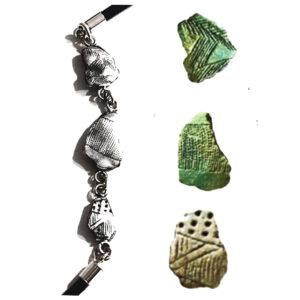
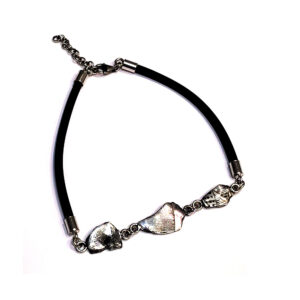
This piece is far more than an accessory: it is born from an original concept rooted in deep archaeological and art-historical research. As an archaeologist, I directly study ancient sources and historical contexts, carefully selecting each iconic detail and consciously interpreting the original artwork to breathe new life into classical heritage.

From Archaeological Research to Hand-Drawn Design

  • Conscious Artistic Interpretation: The creative journey begins with the rigorous study of the original mosaic/fresco. The scene is meticulously hand-drawn on a digital tablet, harmonizing historical accuracy with modern aesthetic elegance.

  • High-Precision Laser Crafting: The artwork is converted to guide a precision laser that engraves, hollows, and cuts a solid 1mm sheet of 925 Italian Sterling Silver, creating microscopic cells (champlevé basins) designed to hold the enamel.

The Rare Master Artwork of Hand-Applied Hot Enameling

The true soul of this piece lies in an increasingly rare jewelry technique: artisan hot enameling.

  • Masterful Painting: Within the intricate silver cells, the enamel is delicate and patiently applied by hand using microscopic brushes by a master enamel artist, honoring the smallest details of the design.

  • Multiple Kiln Firings: Each individual color requires its own dedicated application step and a separate kiln firing, a slow and exacting process that permanently fuses color to silver.

  • Polishing & Protective Finish: After firing, the enameled silver is meticulously hand-finished, polished to perfection, and sealed with a protective sealant to lock in its vibrant brilliance.

Noble Finishing & Versatility

To guarantee lasting brilliance, the entire piece undergoes a premium rhodium plating. It is completed with high-end findings: your choice of refined hoop earrings with fork clasps or elegant rollò chains, all crafted in 925 Rhodium-Plated Italian Sterling Silver.

Wearing this creation means carrying a piece of historical research, rare master craftsmanship, and pure Italian artistry.

Commenti archelogici (0)

Reviews

There are no reviews yet.

Be the first to review “Dancers of Ruvo”

Your email address will not be published. Required fields are marked *

Shopping cart

Sign in

No account yet?

Start typing to see products you are looking for.
Shop
0 Wishlist
6 items Cart
My account