📚 In-depth analysis by philologist Dr. Chiara Piedisacco, whom I heartfeltly thank for her inspiration and collaboration.
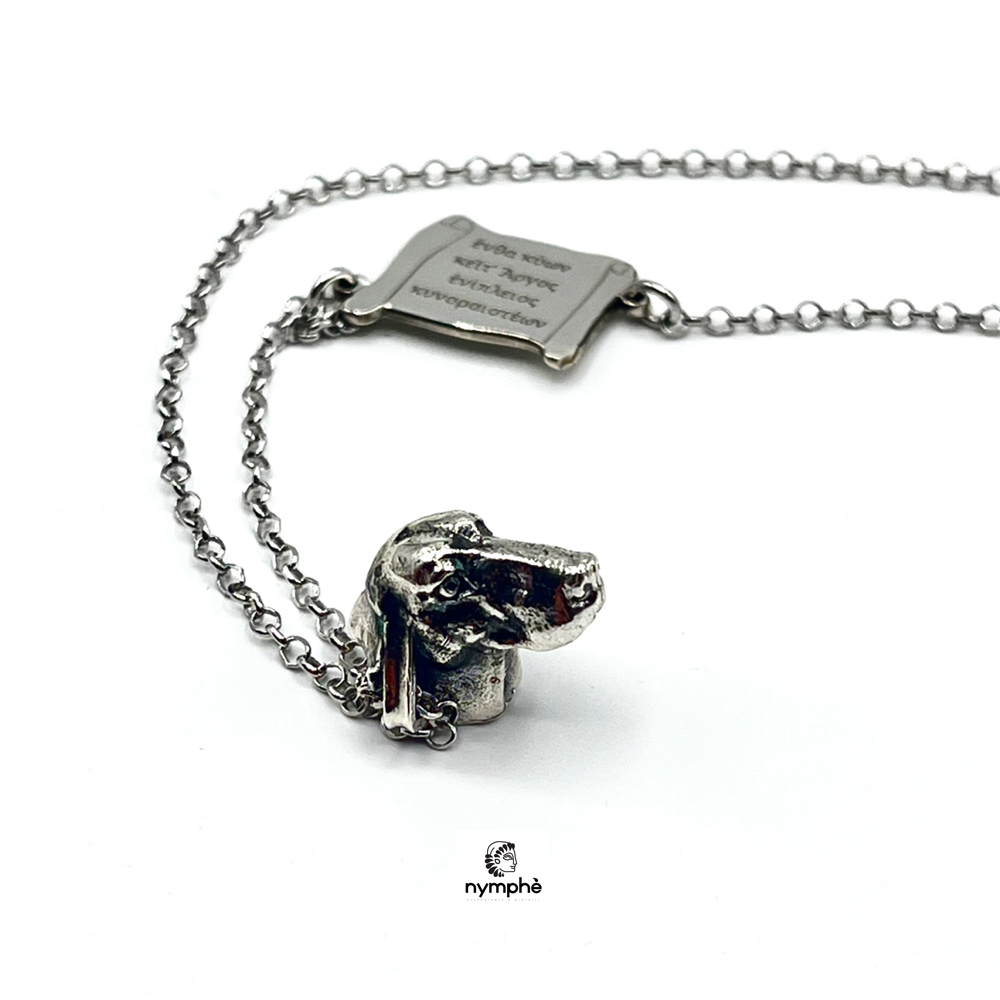
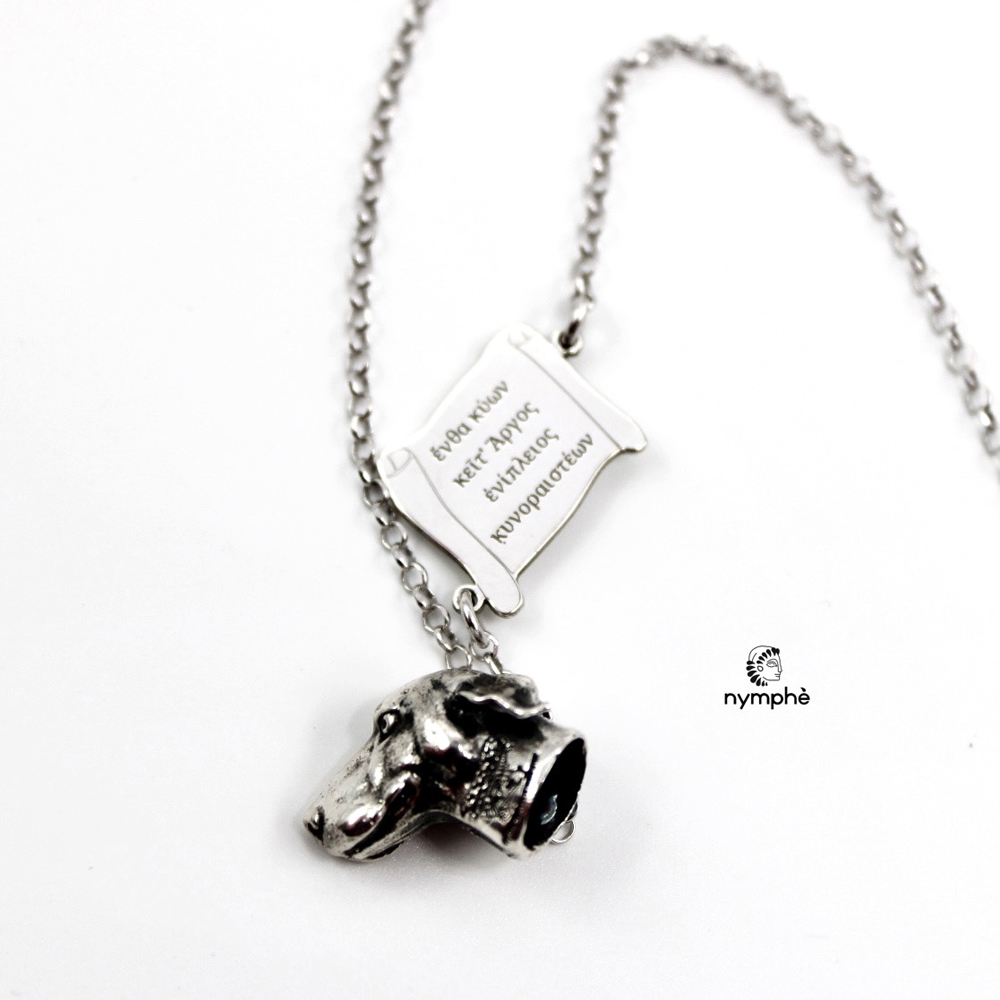
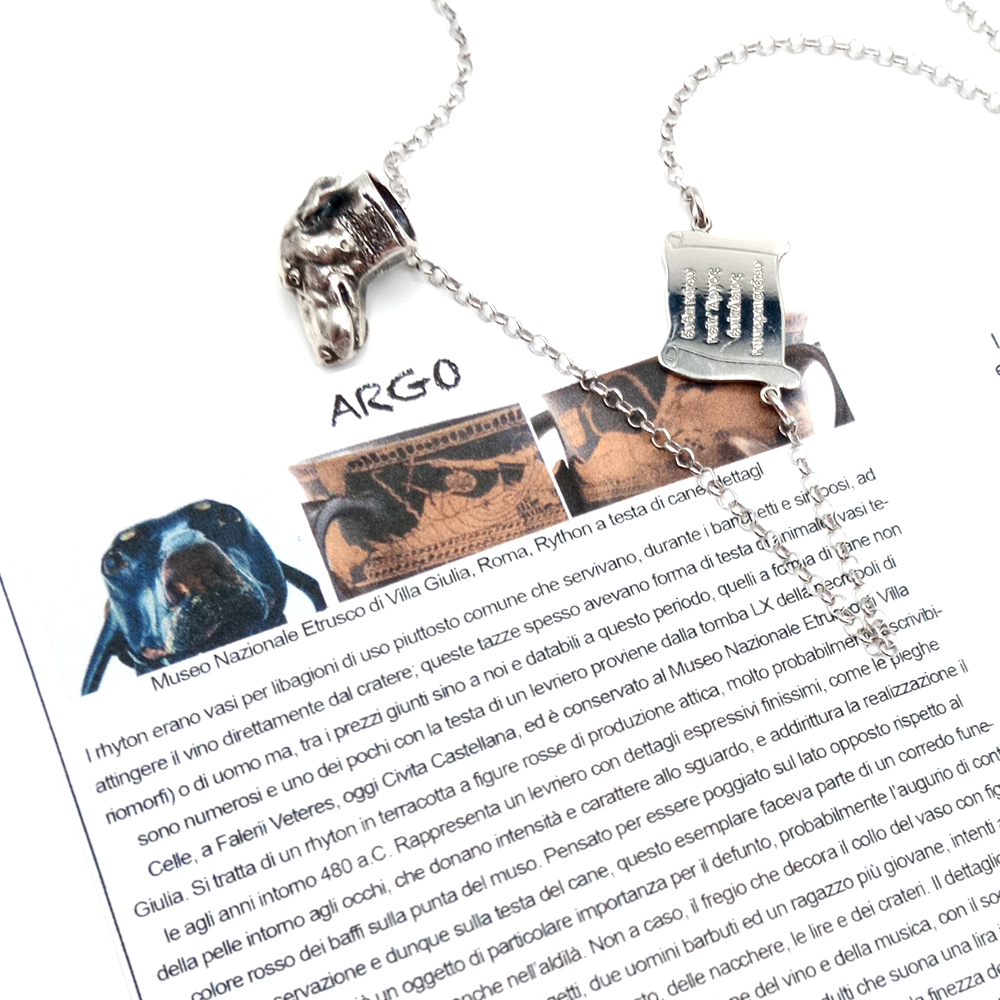
Rhytons were pourers/drinking vessels used quite commonly during banquets and symposia to draw wine directly from the krater. These cups often took the shape of an animal’s head (theriomorphic vessels) or a human head; however, among the pieces that have come down to us from this period, those in the shape of a dog are not particularly numerous. One of the few greyhound-head rhytons preserved in Italy—as well as the finest in our possession today—is the one originating from Tomb LX of the Celle necropolis at Falerii Veteres (present-day Civita Castellana), now housed in the National Etruscan Museum of Villa Giulia.
It is an Attic red-figure rhyton, finely crafted in terracotta and most likely assignable to the years around 480 BC. It depicts a greyhound with remarkably fine expressive details—such as the skin folds around the animal’s eyes, which give intensity and character to its gaze, and even the red rendering of the whiskers on the tip of the snout. Designed to rest on the side opposite the point of observation (and thus on the dog’s head), this piece was part of a funerary assemblage and therefore constituted an object of particular importance for the deceased, likely representing a wish to continue enjoying the pleasures of the banquet in the afterlife.
It is no coincidence that the red-figure frieze decorating the neck of the vessel, executed in the Severe style, depicts three figures—two bearded men and a younger youth—engaged in a symposium. Typical objects of the setting appear: castanets, lyres, and kraters. The detailed decoration captures the precise moment of wine consumption and music-making, with the younger figure accompanying with a musical instrument one of the two adults, who plays a lyre in a pose evocative of certain depictions of Orpheus. The piece is unsigned, but the exquisite craftsmanship points to the potter Brygos and the anonymous painter associated with his workshop.
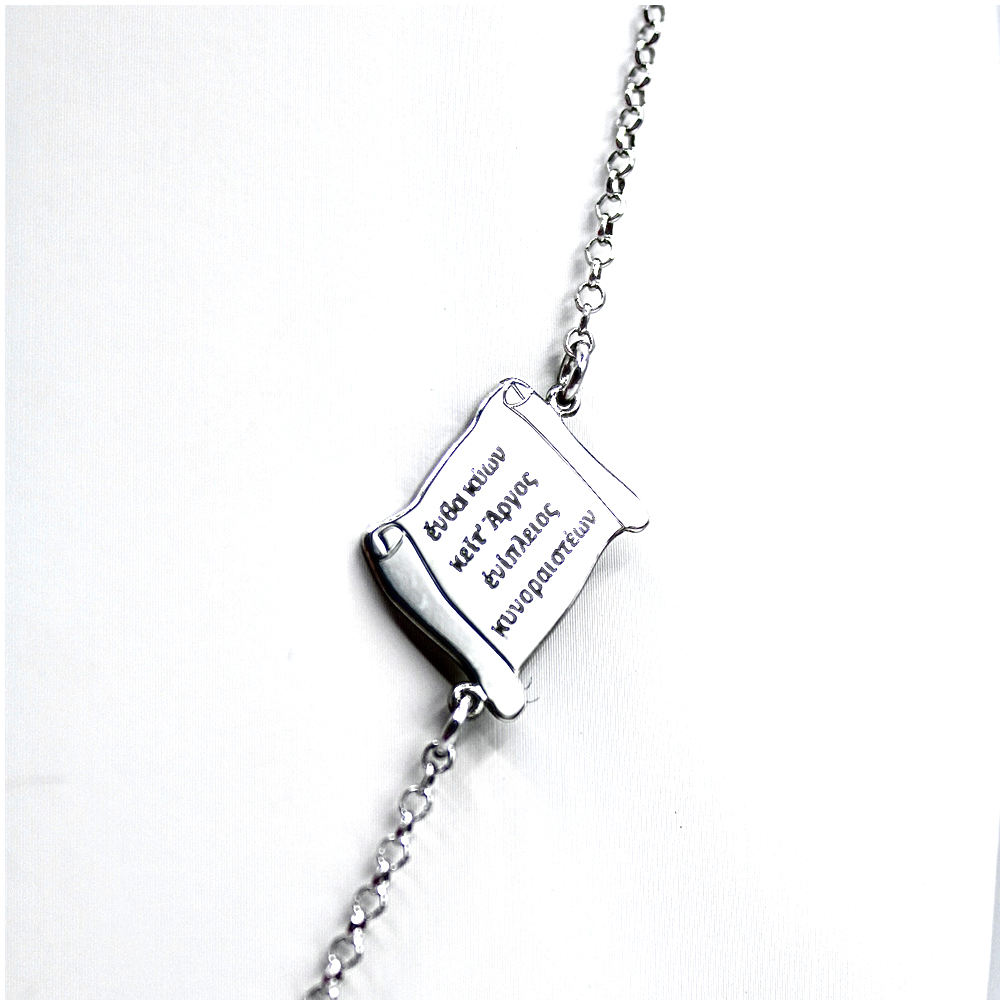
Used for guarding, hunting, or simply as beloved companions, dogs were widely cherished animals in antiquity—so much so that Xenophon dedicated a work to them, the Cynegeticus. However, the most famous dog in ancient literature is undoubtedly Argus, Odysseus’s dog remembered by Homer in Book XVII of the Odyssey (Odyssey XVII, 300 ff.), the faithful companion who waits twenty long years for him in Ithaca and is the first to recognize the hero. Their reunion is deeply dramatic: Odysseus cannot hold back his tears, and Argus, having reached extreme old age, dies shortly after:
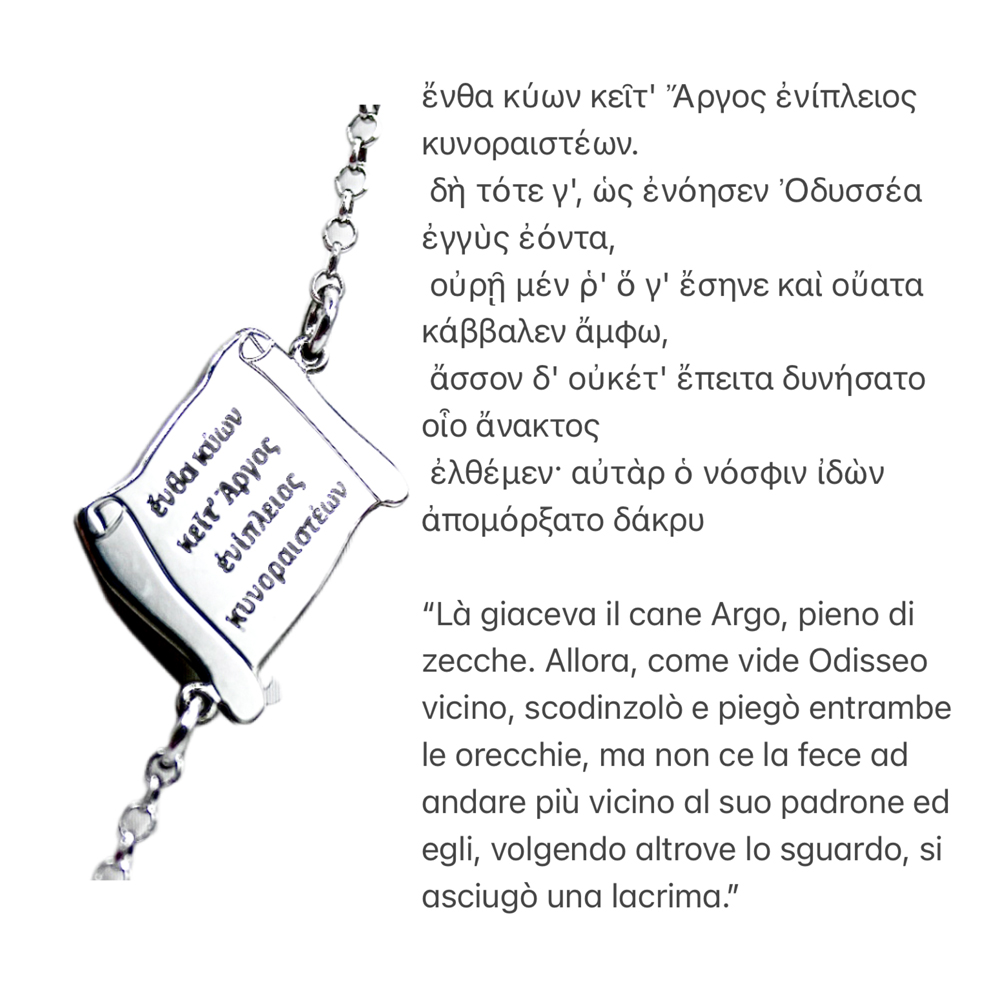
ἔνθα κύων κεῖτ’ Ἄργος ἐνίπλειος κυνοραιστέων. 300
δὴ τότε γ’, ὡς ἐνόησεν Ὀδυσσέα ἐγγὺς ἐόντα,
οὐρῇ μέν ῥ’ ὅ γ’ ἔσηνε καὶ οὔατα κάββαλεν ἄμφω,
ἄσσον δ’ οὐκέτ’ ἔπειτα δυνήσατο οἷο ἄνακτος
ἐλθέμεν· αὐτὰρ ὁ νόσφιν ἰδὼν ἀπομόρξατο δάκρυ
“There lay the dog Argus, full of ticks. Then, as he noticed Odysseus nearby, he wagged his tail and dropped both ears, but could no longer move closer to his master; and he, looking away, wiped away a tear.”
BIBLIOGRAPHY
G. DENNIS, in Journal of the British and American Archaeological Society of Rome, 1888-1889, p. 162
P. DUCATI, Storia della ceramica Greca, Florence 1922, pp. 516 ff.
E. PULVIRENTI, Un boccale come una scultura, 2016, didatticarte.it
P. DUCATI, Brevi osservazioni sul ceramista attico Brigo, Bologna 1904
J.D. BEAZLEY, Brygan Symposia, in Studies presented to D. M. Robinson, II, Saint Louis 1953
R. GRENIER, Le lacrime di Ulisse, Rome 2003









Reviews
There are no reviews yet.