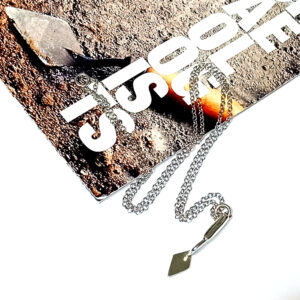
Labyrinth of Pompeii

🐂🏛️“𝒍𝒂𝒃𝒚𝒓𝒊𝒏𝒕𝒉𝒖𝒔 𝒉𝒊𝒄 𝒉𝒂𝒃𝒊𝒕𝒂𝒕 𝑴𝒊𝒏𝒐𝒕𝒂𝒖𝒓𝒖𝒔” — a maze, a mosaic, archaeology in a jewel in a hand.

(found on walls in Pompeii, including the House of Marcus Lucretius / Amphitheatre).

💎Nymphè Archeologia e Gioielli Srl 💎 the artisanal jewelry brand dedicated to educational outreach, is pleased to present the line inspired by the “Labyrinth” of the House of the Geometric Mosaics and the House of the Labyrinth in Pompeii.

✍🏻 Drawn by Nunzia Laura Saldalamacchia, PhD

80,00 €

Scegli il gioiello che preferisci!

Aggiungi una personalizzazione sul retro!

La superficie del pendente è di 2 cm quadrati e possiamo far incidere al laser una frase, iniziali o una data per rendere unico il gioiello!

Order total:

Condividi

Scheda Archeologica

📚📖

“The labyrinth is a motif that entered the repertoire of Roman artistic production through textiles, particularly during the Hellenistic age. Originating as an ornamental carpet pattern, it was transformed into a decorative motif for mosaic floors. The oldest known Roman mosaic depicting a labyrinth is found precisely in the House of the Labyrinth in Pompeii, constructed in the 2nd century BC and renovated following the earthquake of 62 AD.

The motif derives from the myth of Theseus’s fight against the Minotaur; thus, a scene referencing the myth often appears at the center of the labyrinth. In this instance, it depicts the final showdown between the hero and the monster, witnessed by several onlookers, including Ariadne. The labyrinth itself consists of four sectors featuring a serpentine maze.

However, interpretations extend beyond its decorative aspect, pointing to potential symbolic meanings. The scholar Gianluca Grassigli hypothesizes that behind the combat scene lies an allusion to the Sullan victory and the foundation of the colony. Meanwhile, archaeologist Fabrizio Pesando interprets the entire decoration as a celebration of the defeat of the pirates by Pompey, drawing a parallel between the Minotaur’s island of Crete and the port city of Pompeii, which acutely felt the threat of piracy.

Materiali e Tecnica

The piece is crafted from Italian 925 rhodium-plated/gold-plated silver.

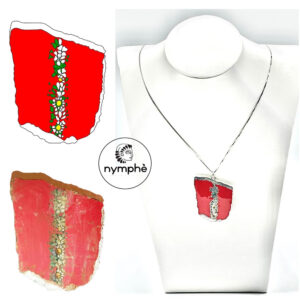
Hand-drawn design based on the updated 2023 archaeological map accepted in academic literature. The sheet metal has a thickness of 1 mm and is made of Italian 925 silver. The digitally refined design was laser-engraved onto the sheet, which was also laser-cut. The resulting prototype served as a mold to perfectly reproduce the fine laser engravings. Thus, the piece you purchase is the product of the traditional artisan lost-wax casting technique, as wax models are pulled from the mold one by one and then cast in metal. The cast piece is subsequently filed, hand-finished, and polished by the master goldsmith and the gilder, who also completes the process with rhodium plating. The pendant is paired with a Venetian box chain—also Made in Italy and produced in Veneto—featuring a medium thickness and a length of 50 cm in Italian 925 rhodium-plated silver.

Terminology Breakdown &

Commenti archelogici (0)

Reviews

There are no reviews yet.

Be the first to review “Labyrinth of Pompeii”

Your email address will not be published. Required fields are marked *

Shopping cart

Sign in

No account yet?

Start typing to see products you are looking for.
Shop
0 Wishlist
0 items Cart
My account