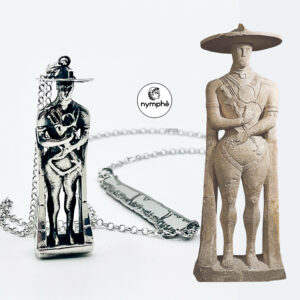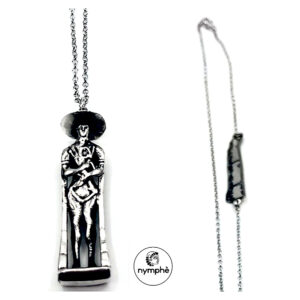
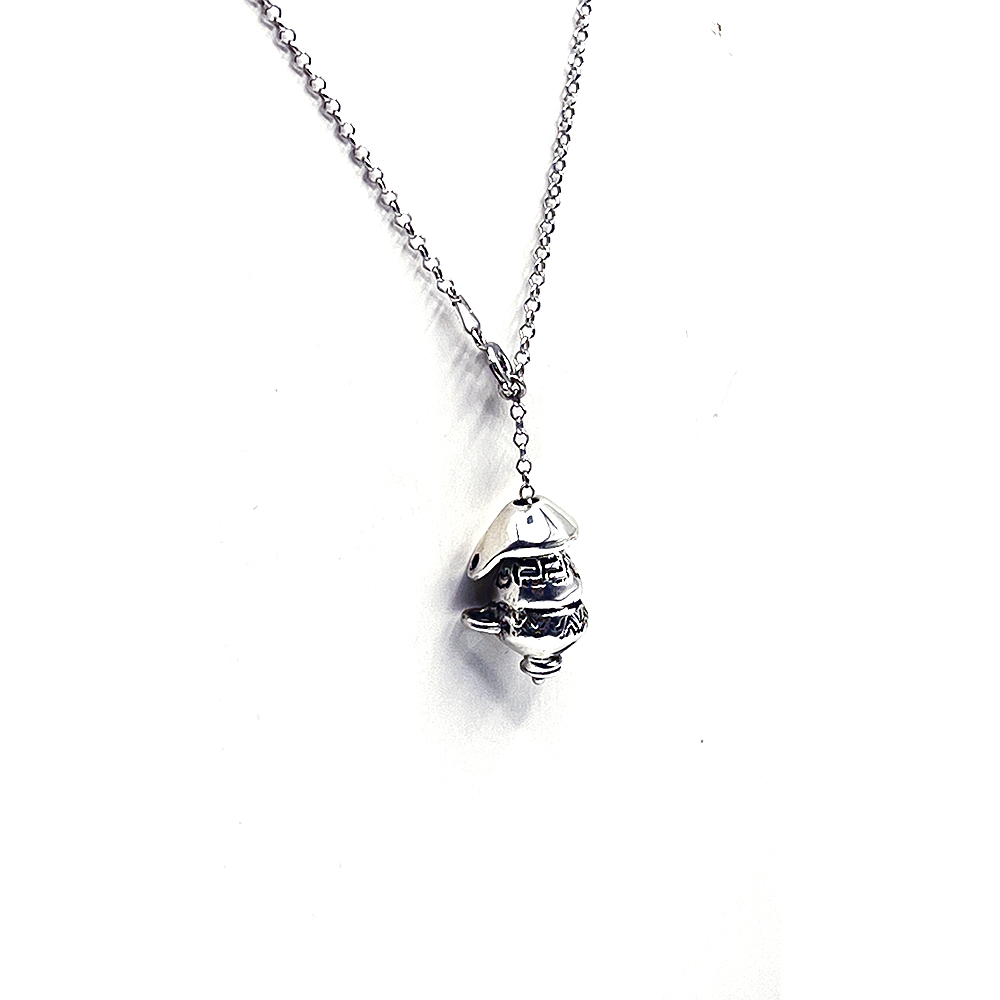
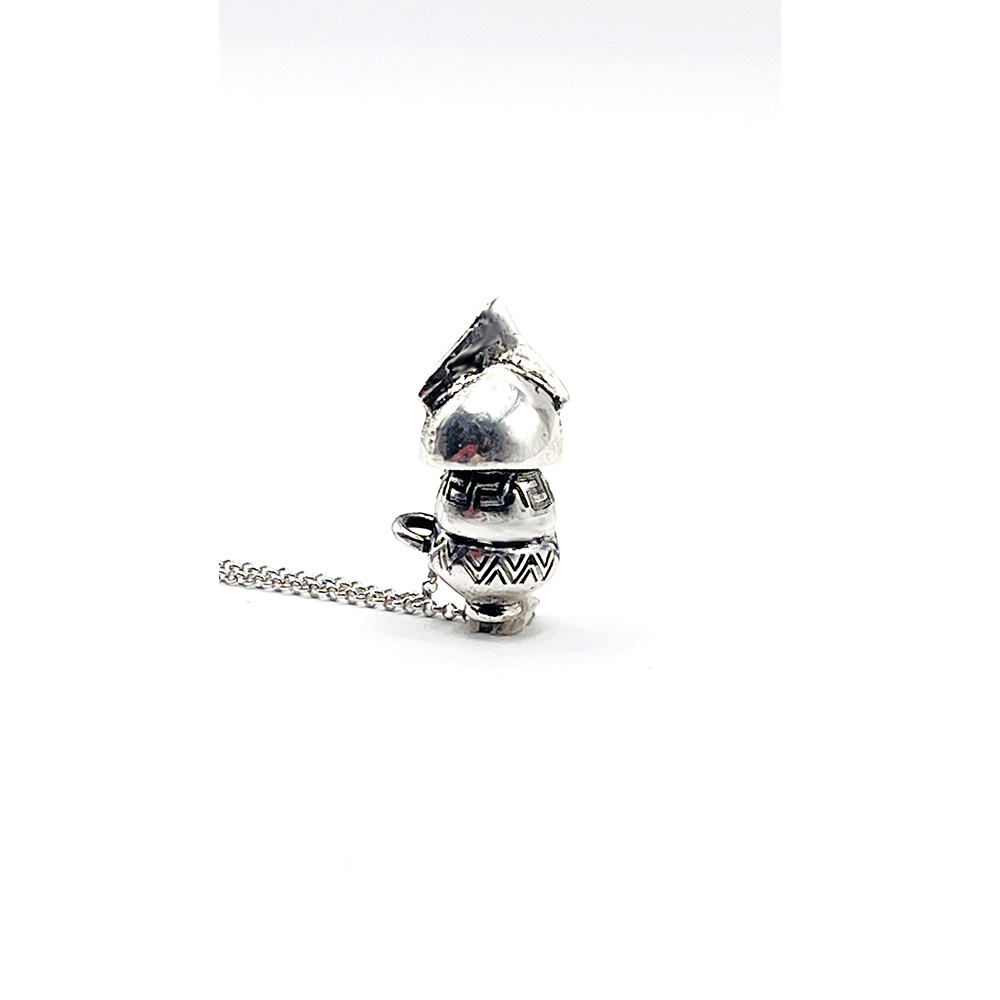
Biconical urn

The biconical urn—the double-cone vessel—is the symbol of an era: the Villanovan period of the 9th–8th century BCE, which sits at the very origin of Etruscan culture.
The biconical urn is the symbol of the origins of our culture, of Italic and Etruscan archaeology, and of a world made of people and scholars who search, excavate, and bring back to light the ritual of a life that does not end, but is transformed into a second life.
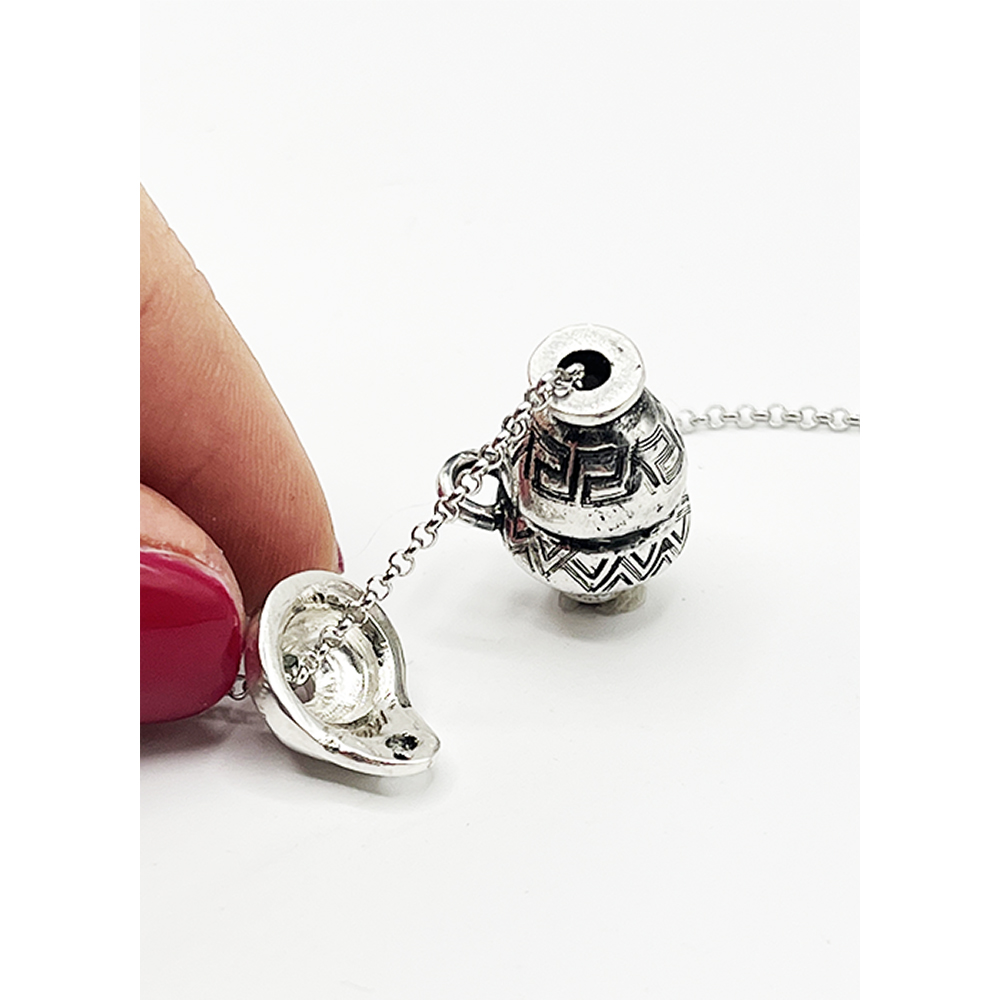
The biconical vessel is the embodiment of transformation—a vessel that, much like a person, had a life, a role, and a function. Yet by breaking one of its handles, it becomes something else entirely: it becomes the home of a body, the home of a second life.

160,00 

Scegli il tipo di collana *

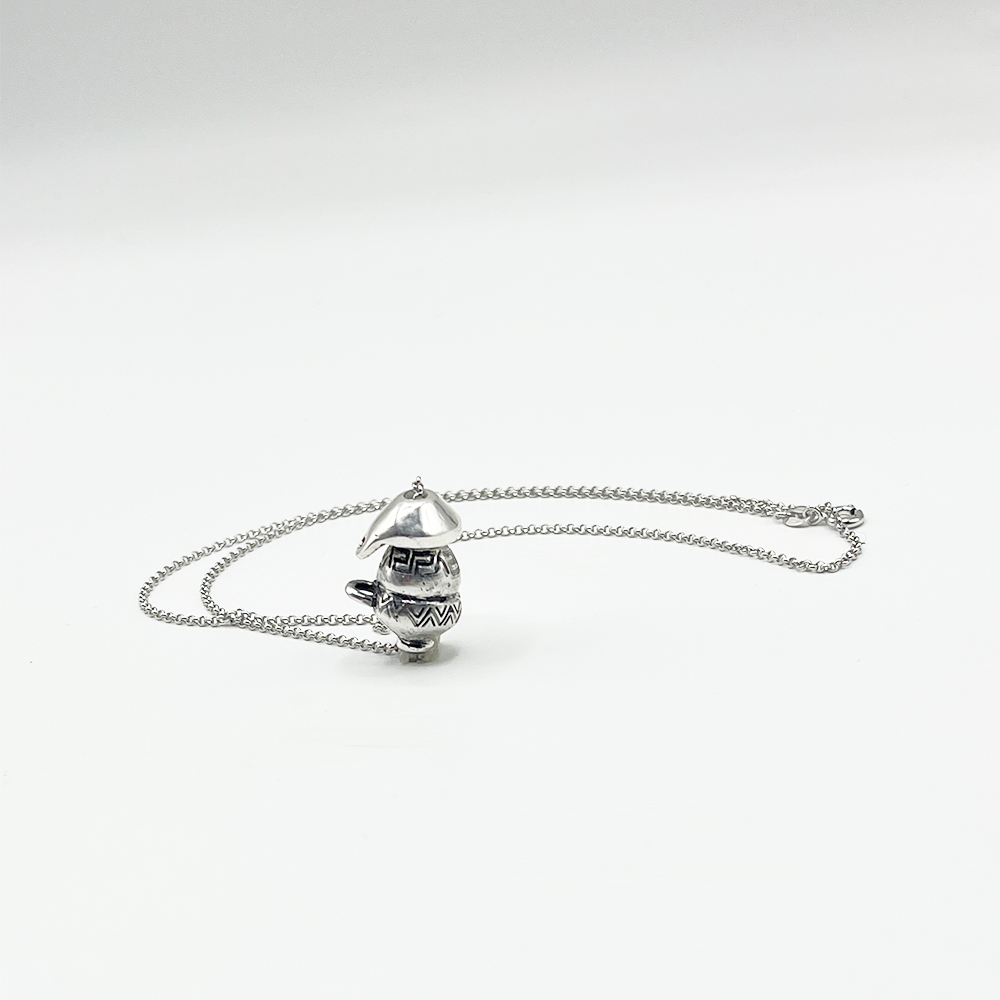
La collana include sempre una catena rolò passante attraverso il pendente a forma di biconico con terminale a coppiglia. Tutto è interamente in argento italiano 925 e il peso complessivo in argento è di circa 19 grammi

Order total:

Condividi

Scheda Archeologica
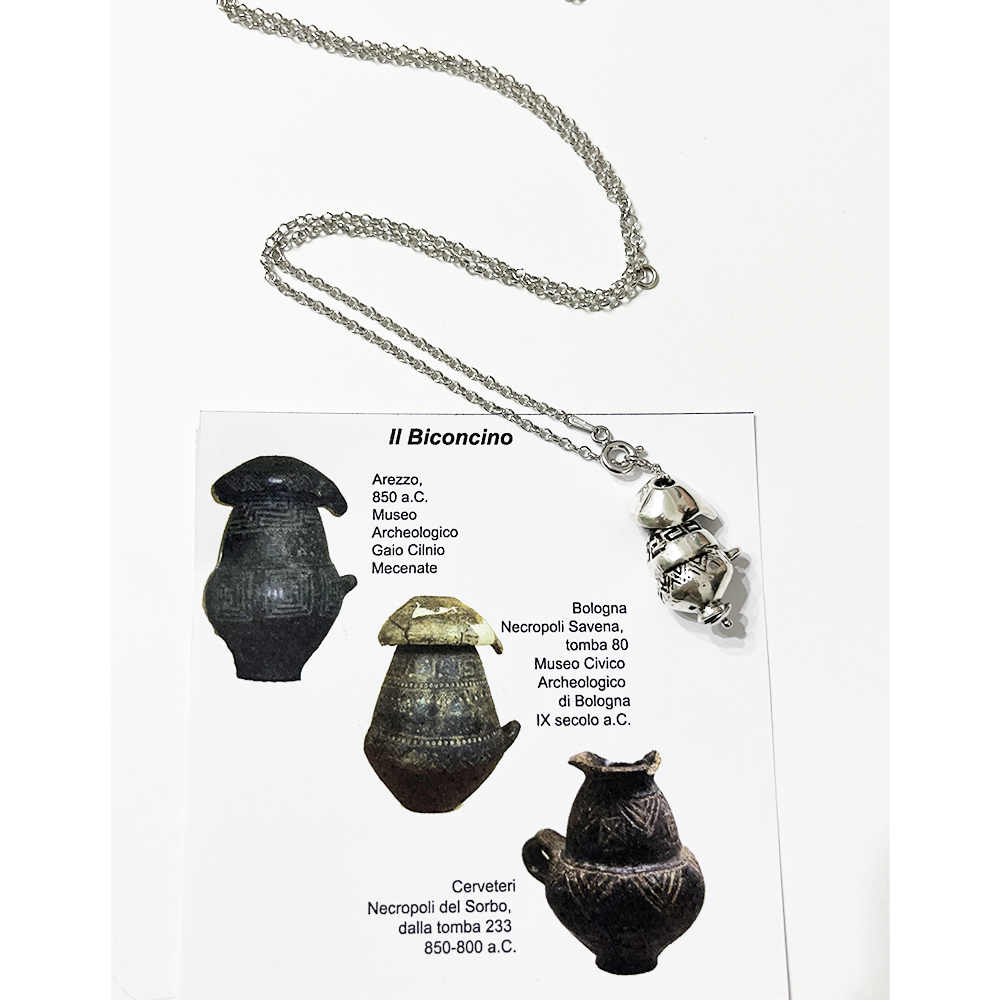
During the Villanovan period—at the dawn of Etruscan history in the 9th–8th century BCE—burials consisted of extremely simple holes dug into the ground. Today, these are known as shaft graves (or tombe a pozzetto) because they resemble small wells dug into the Mediterranean scrubland or woods. Inside, the container holding the deceased’s ashes was lowered along with a few grave goods. The shaft was then sealed with a stone slab known as a coperchio-cippo (lid-marker), which served both as a cover for the grave and as a funerary marker, sometimes decorated with circular incisions.

Hut urns were reserved exclusively for the most prominent figures. For everyone else, a double-conical vessel—the biconical urn—with horizontal loop handles was used, covered by an inverted bowl. In certain important male burials, the lid consisted of a ceramic helmet. In other Etruscan cities, such as Tarquinia, Volterra, and Veii, ossuaries featuring bronze helmets decorated with repoussé and punched designs were common.

In everyday life, these coarse impasto biconical jars served as water containers. Once their lifespan ended, they were repurposed to hold the final remains of the cremated deceased. However, to mark this new function, a ritual was performed: the vessel was dedicated to the deceased and consecrated to the underworld deities by breaking one of its two handles. Snapping the handle symbolized the end of its earthly function, aligning its fate with that of the deceased. There are also documented cases of vessels created ex novo—likely when common household jars were unavailable—which were purposefully crafted with only one handle from the start.

La dea dormiente, infatti, si confronta unicamente con un’altra venere sdraiata dallo stesso ipogeo, più grezza e dalle forme più approssimate.
La posizione racchiusa in un’ideale forma ovoidale, è la medesima in cui venivano deposti i defunti all’ interno dell’ipogeo. Tale dato, assieme alla sua probabile collocazione accanto a questi, ha indotto gli studiosi a ipotizzarne una sua funzione propiziatoria di rinascita in un mondo ultraterreno: infatti, oltre all’ormai noto simbolo di fertilità rappresentato da queste icone femminili preistoriche. La sleeping lady maltese si configura come emblema della funzione sacra e rigenerante del sonno della dea, del riposo eterno da cui, ciclicamente, rinasce nuova vita (Percovich, L., 2013)”.

Casi, C. et al., 2016. La donna nell’Antichità. Archeologia e storia della condizione
femminile dalla Preistoria al Medioevo. Laurum Editrice.
Kultermann, U., 1990. Woman Asleep and the Artist. Artibus et Historiae , 1990, Vol. 11,
No. 22 (1990), pp. 129-161
Percovich, L., 2013. Oscure madri splendenti: le radici del sacro e delle religioni. Venexia
Editrice.
Polo, A. et al., 2011. Le spirali nei templi neolitici di Malta e Gozo.
Materiali e Tecnica

This piece is crafted from Italian rhodium-plated 925 sterling silver.
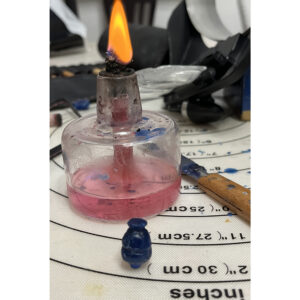
The prototype originates from a fully manual crafting process: the models of the biconical vessel, the bowl, and the helmet were carved by hand in wax using specialized tools and the flame of a “spiritera” (an alcohol burner). Using the ancient lost-wax casting technique, the wax model is placed inside a casting flask filled with investment plaster. Through a centrifugal furnace, molten metal is poured into the flask through dedicated sprues. The molten metal replaces the wax as it burns away; once cooled, the plaster mold is broken to reveal the newly formed metal piece. Naturally, the process doesn’t end here—the piece undergoes extensive hand-refining with files and rotary tools, treated as a true sculpture. Following this stage, the biconical piece in particular is laser-engraved with hand-drawn motifs inspired by the recurring meander patterns found on these historical artifacts. Next, a rubber mold is created from these master models, from which future wax patterns will be injected for subsequent castings. Thus, every single piece of jewelry is always produced using the ancient lost-wax technique and meticulously hand-finished by the goldsmith. The process concludes with rhodium plating at an electroplating laboratory and final assembly on a 60 cm rolo chain.

.

Commenti archelogici (0)

Reviews

There are no reviews yet.

Be the first to review “Biconical urn”

Your email address will not be published. Required fields are marked *

Shopping cart

Sign in

No account yet?

Start typing to see products you are looking for.
Shop
0 Wishlist
0 items Cart
My account