

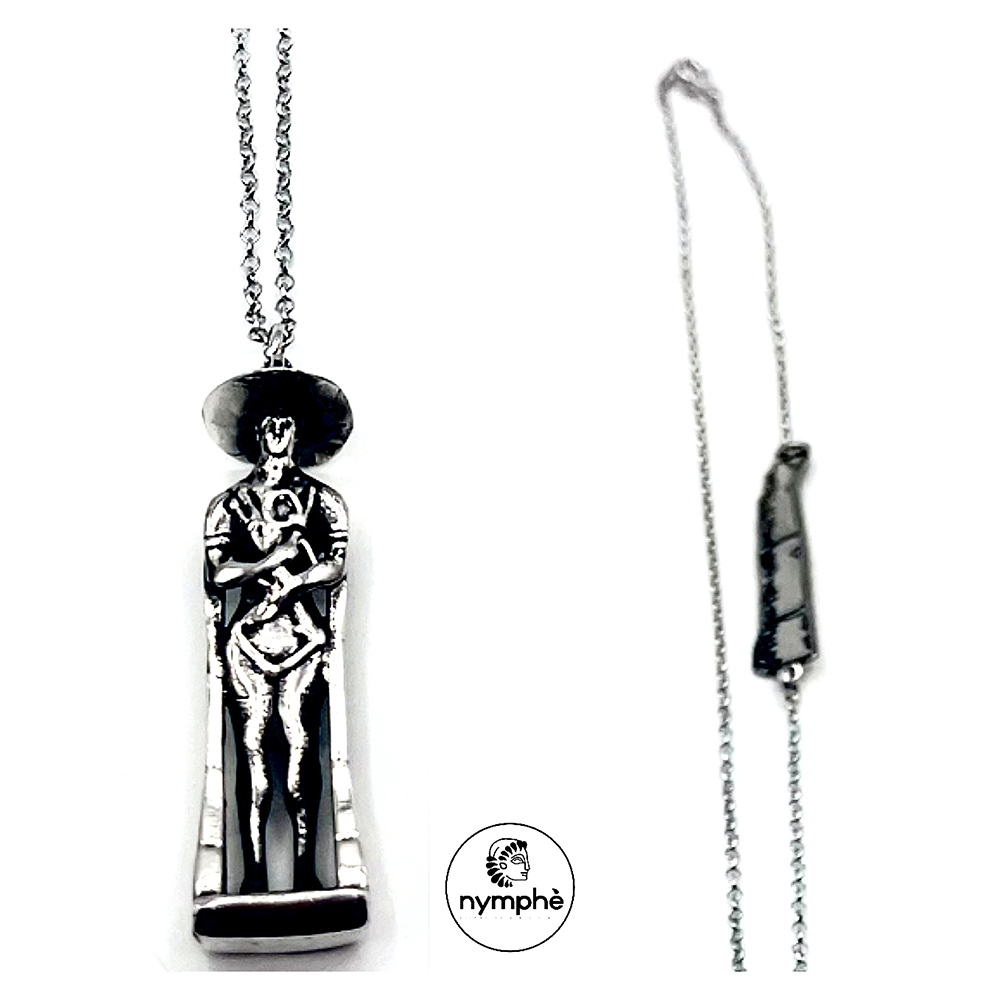
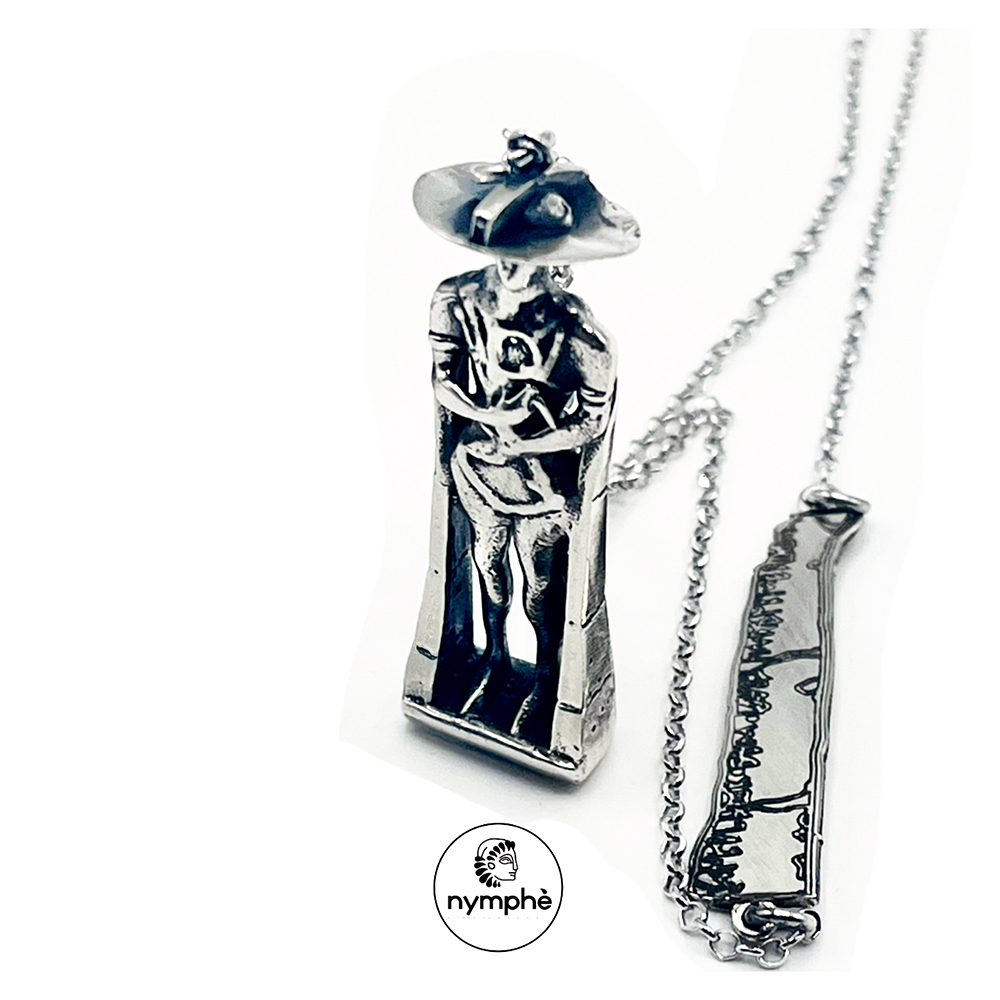
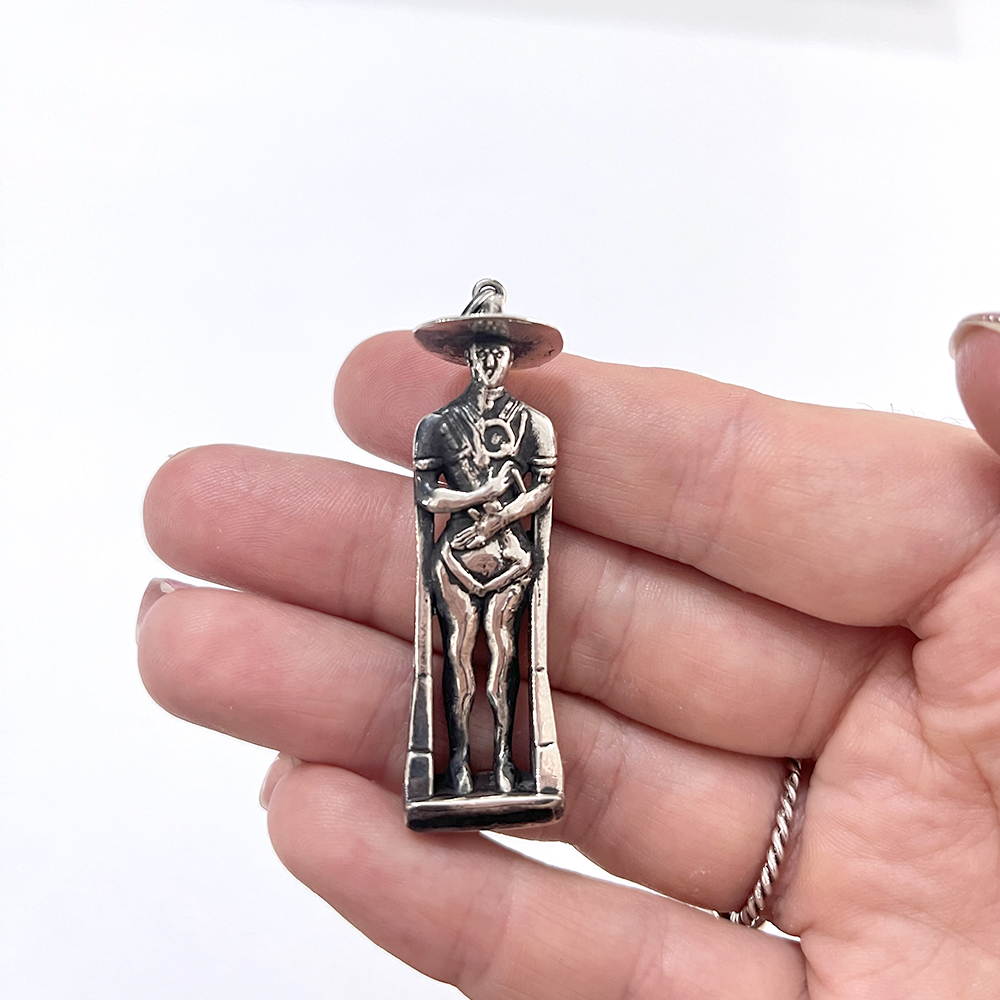
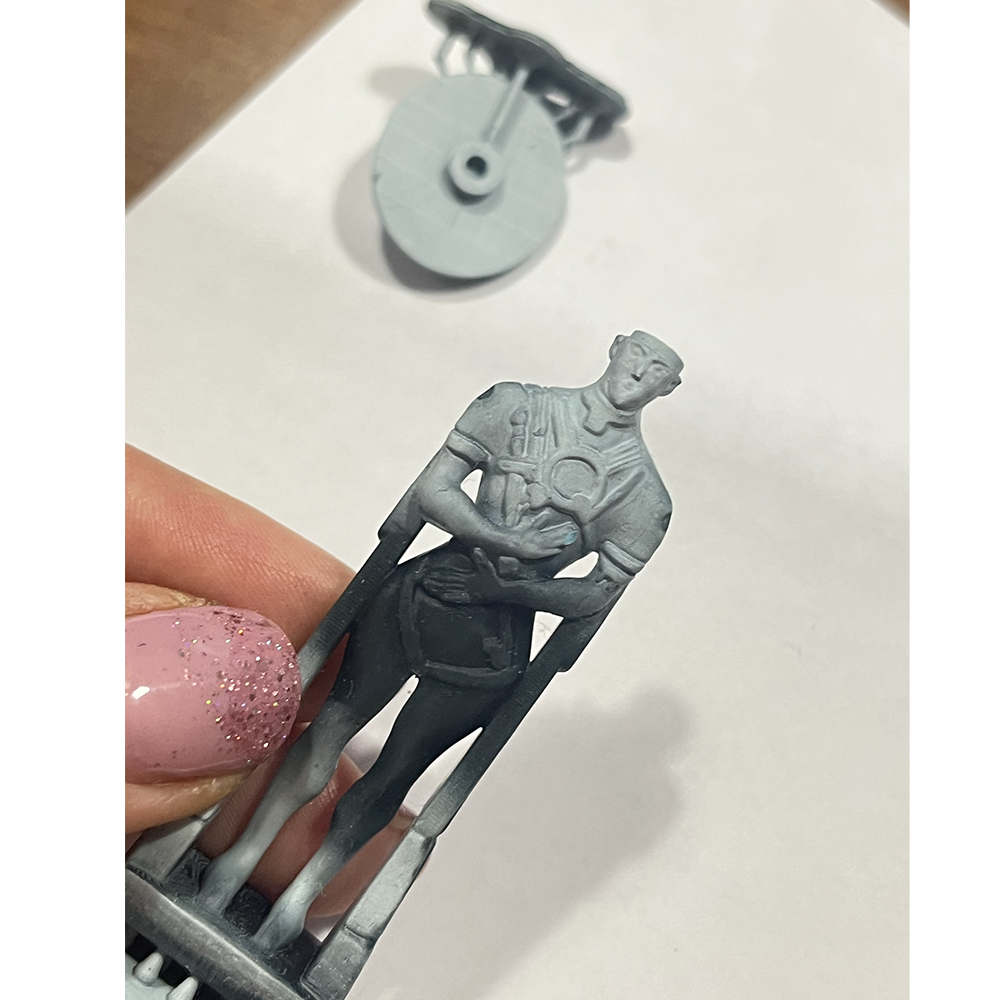
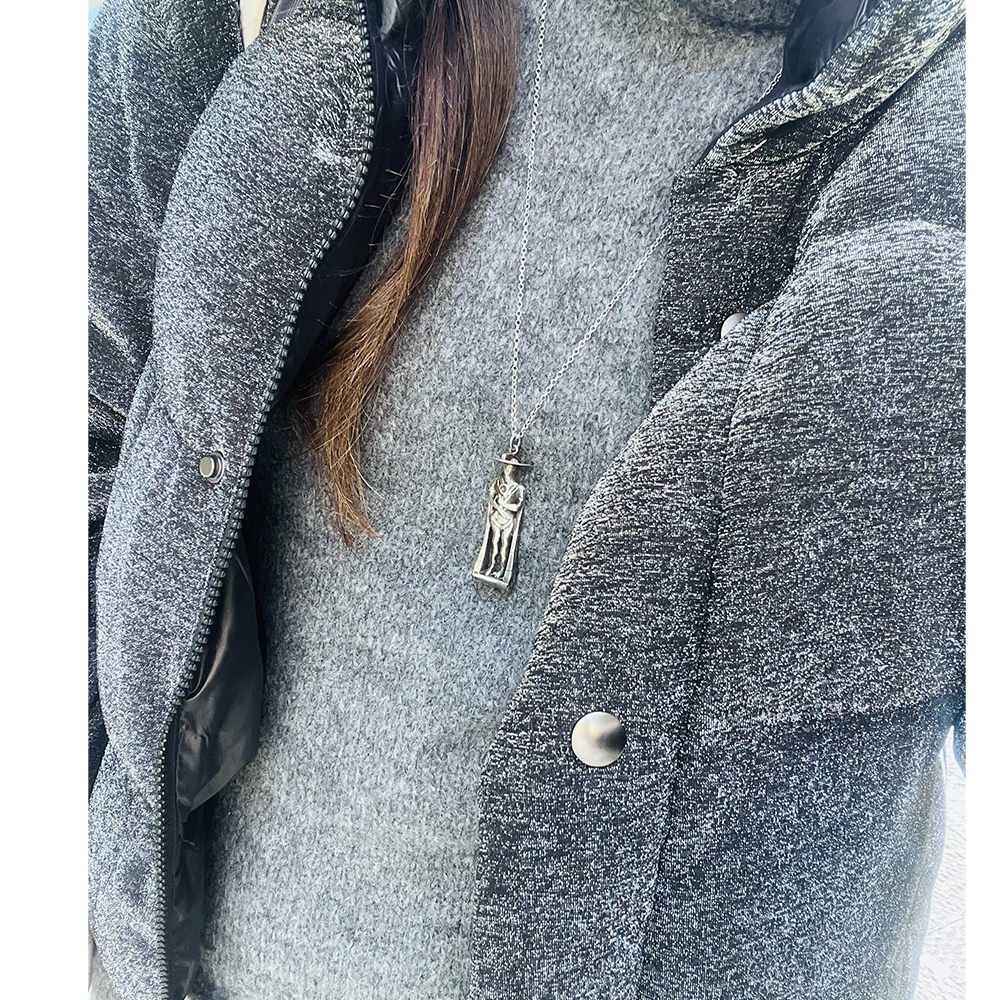
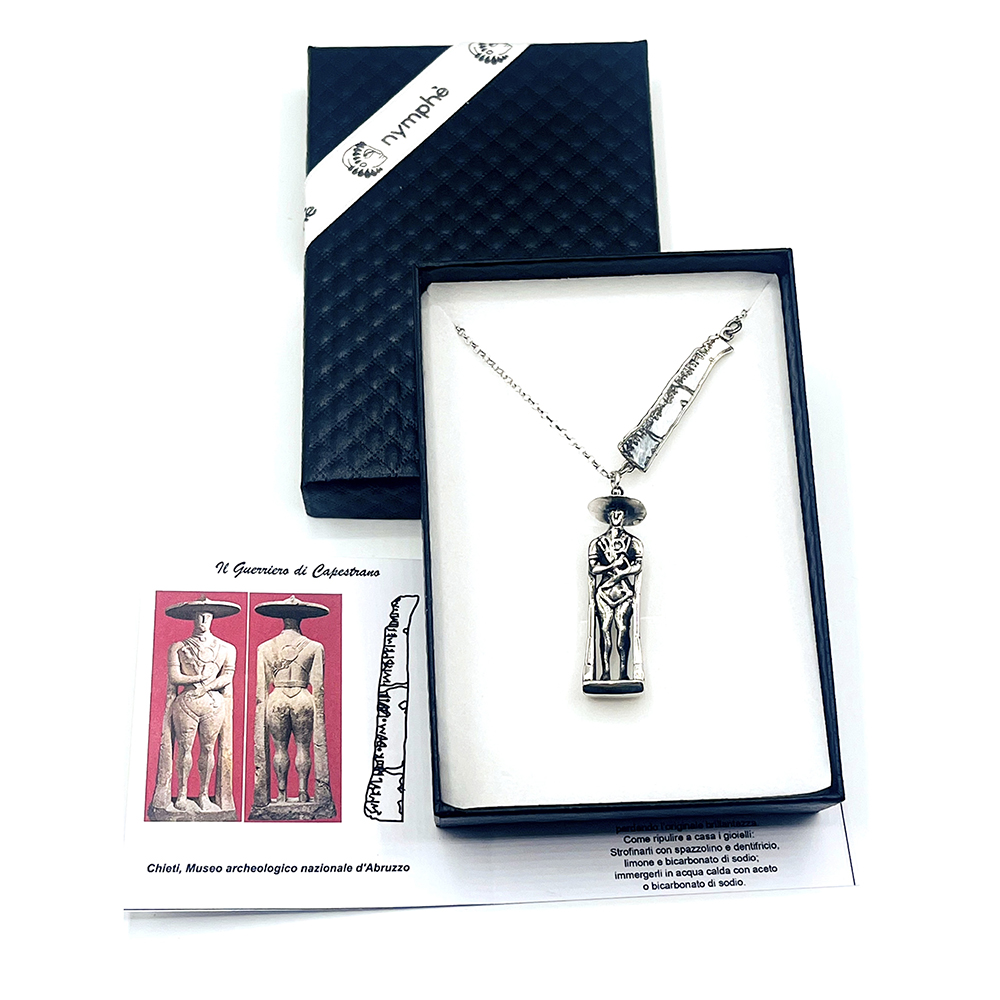
The Warrior of Capestrano is a local limestone sculpture discovered in the countryside of the small town of Capestrano, in the province of L’Aquila. The artifact fits within the horizon of 6th-century BC statuary, belonging to the Italic sphere yet relatable, through comparative analysis, to the broader sculptural landscape of European protohistory.
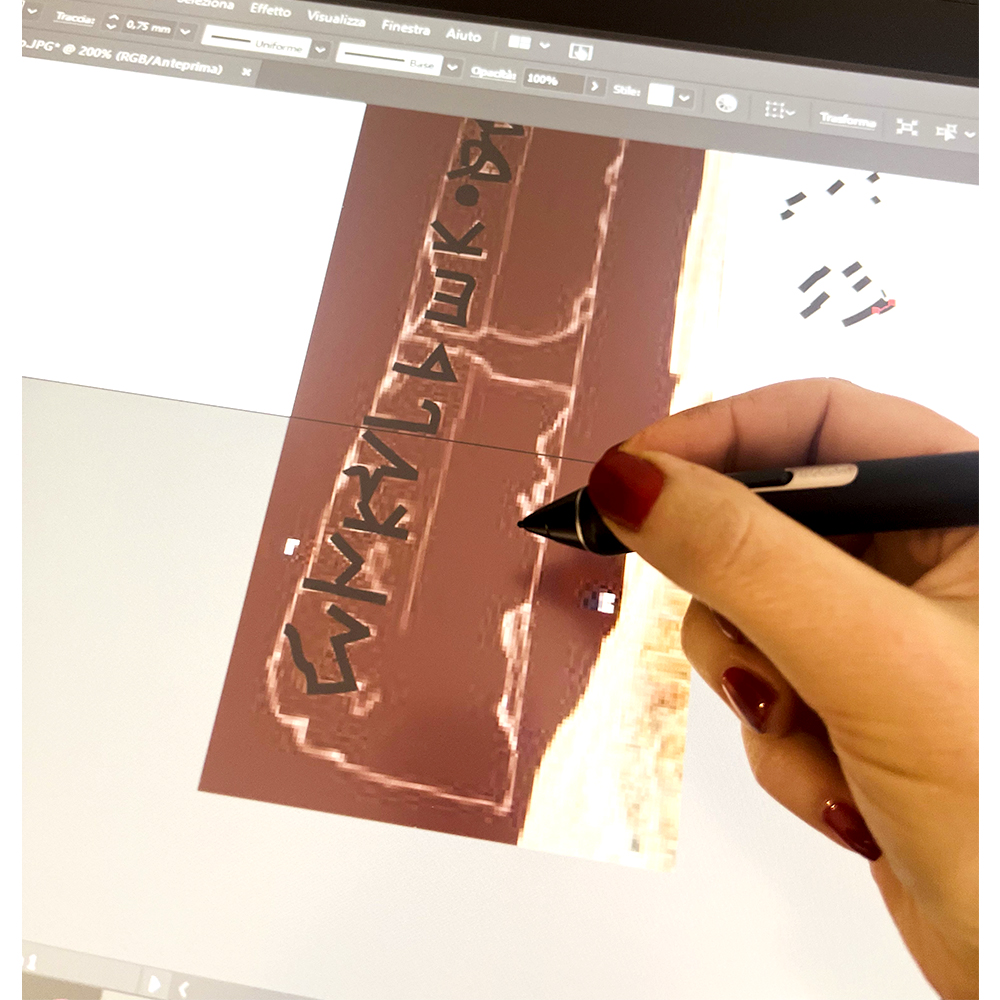
The statue was found in pieces alongside a female torso in 1934 by a local farmer during tilling work. An evolution of the tomb markers known as menhirs present in the nearby necropolis of Fossa, the Capestrano warrior represents the final link in a long evolution that saw the anthropomorphization of Abruzzese funerary stelae. We know his name, Nevio Pompuledio, thanks to the translation of the inscription on the statue’s right pillar, deciphered by Adriano La Regina. The inscription, written in South Picene (Osco-Sabellic), reads: “Aninis [the sculptor’s name] made me as a beautiful image for King Nevio Pompuledio.”
With a patronymic like Pompuledio—deliberately defaced through damnatio memoriae, perhaps during the social shift that brought the end of tribal societies and the adoption of a republican system—the warrior fits into the central Italian landscape where the patronymic root Pomp- extended to Rome with Numa Pompilius and survived through time up to Pompey.
Bibliography
Alberto Calderini, Sergio Neri, Maria Ruggeri, Guerrieri e Re dell’Abruzzo antico, Pescara, Carsa, 2007
Luca Moretti, Nevio Pompuledio guerriero. Come ogni amore di cui si teme l’estinzione, in www.terranullius.it
Paolo Brogi, Si chiama Nevio Pompuledio ma è Numa Pompilio?, from Corriere della Sera, October 1, 2004
Marialuce Latini (ed.), Il Museo archeologico nazionale d’Abruzzo di Chieti, in Abruzzo guida storico-artistica, Pescara, Carsa, 2003
Marisa Uberti, Due passi nel mistero il libro, Vol. I Antiche Civiltà, 2012
Goffredo Palmerini, Il Guerriero di Capestrano e la “reggia” creata da Mimmo Paladino, in www.italiani.ca
La scritta, in osco sabellico, recita: “Me bella Immagine fece Aninis (nome dello scultore) per il re Nevio Pompuledio”
Con un patronimico come Pompuledio (compromesso volutamente per damnazio memoriae forse nel momento in cui avvenne il cambiamento sociale che vide la fine dei popoli e l’adozione di un sistema repubblicano) il guerriero si inserisce nel panorama del centro Italia che vede la radice del patronimico Pomp- arrivare fino a Roma con Numa Pompilio e sopravvivendo nel tempo fino Pompeo.
Alberto Calderini, Sergio Neri, Maria Ruggeri, Guerrieri e Re dell’Abruzzo antico, Pescara, Carsa, 2007
Luca Moretti, Nevio Pompuledio guerriero. Come ogni amore di cui si teme l’estinzione,
in www.terranullius.it
Paolo Brogi, Si chiama Nevio Pompuledio ma è Numa Pompilio?, da Corriere della Sera del 1 ottobre 2004
Marialuce Latini (a cura di), Il Museo archeologico nazionale d’Abruzzo di Chieti, in Abruzzo guida storico-
artistica, Pescara, Carsa, 2003
Marisa Uberti, Due passi nel mistero il libro, I vol. Antiche Civiltà 2012
Goffredo Palmerini, Il Guerriero di Capestrano e la “reggia” creata da Mimmo Paladino, in www.italiani.ca


Reviews
There are no reviews yet.