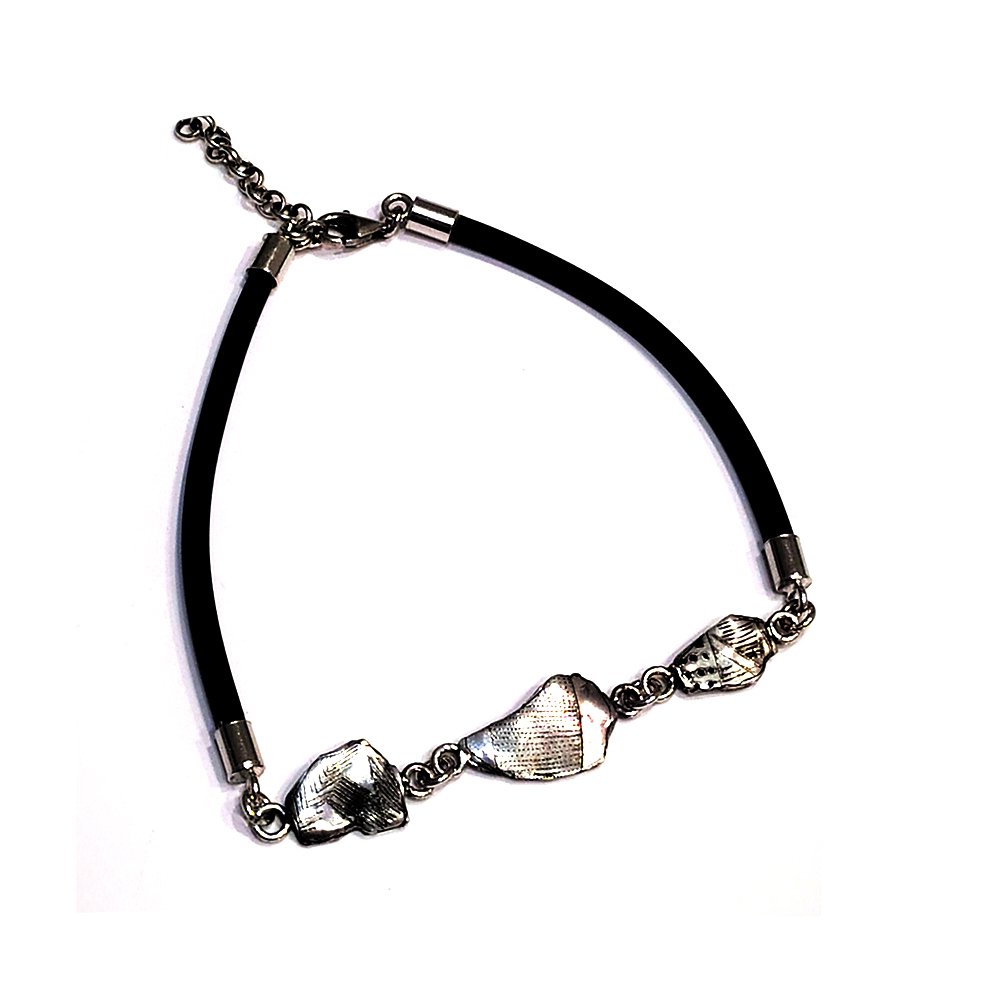
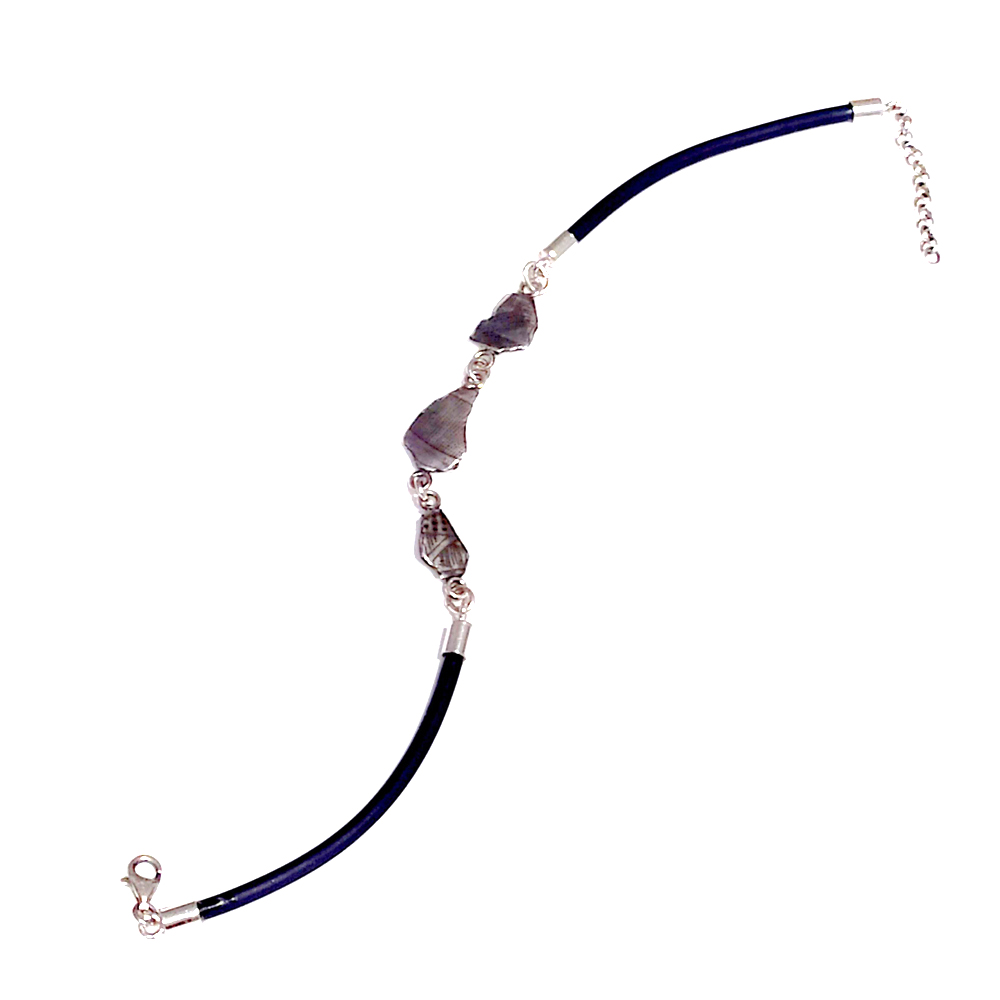
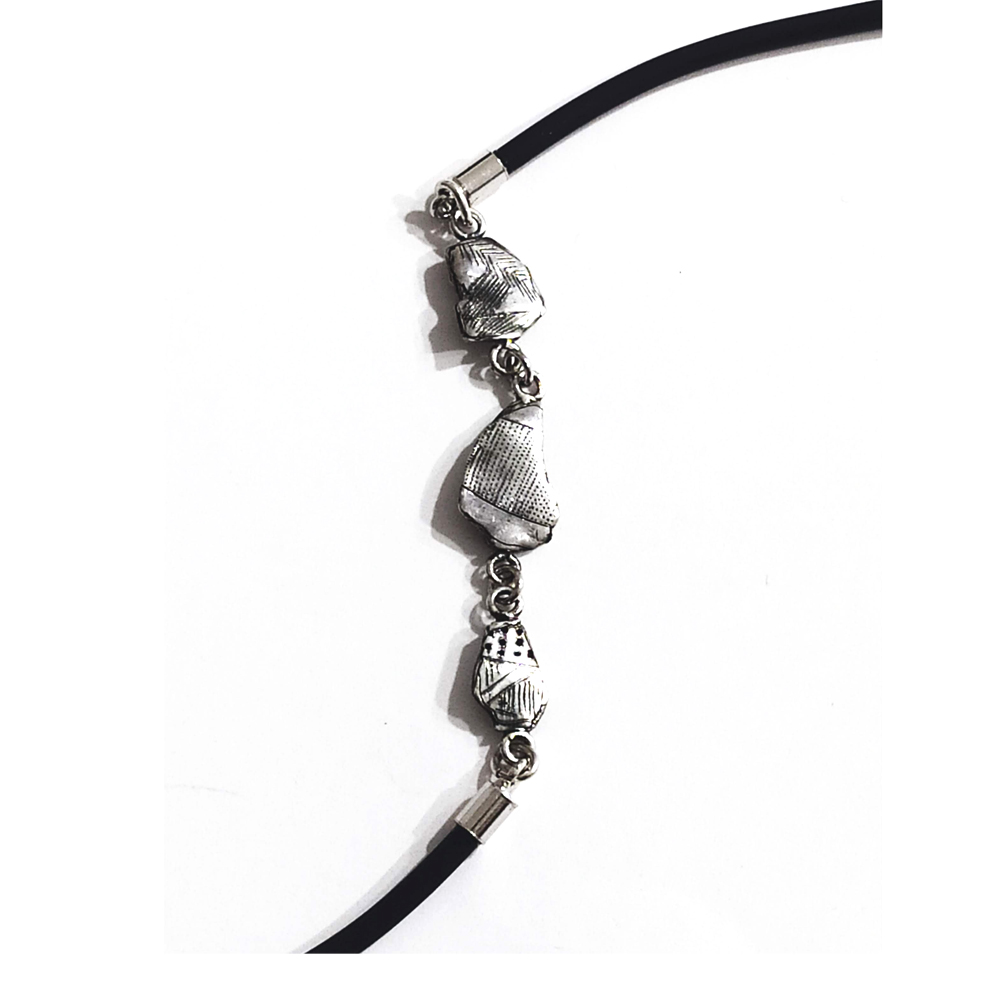
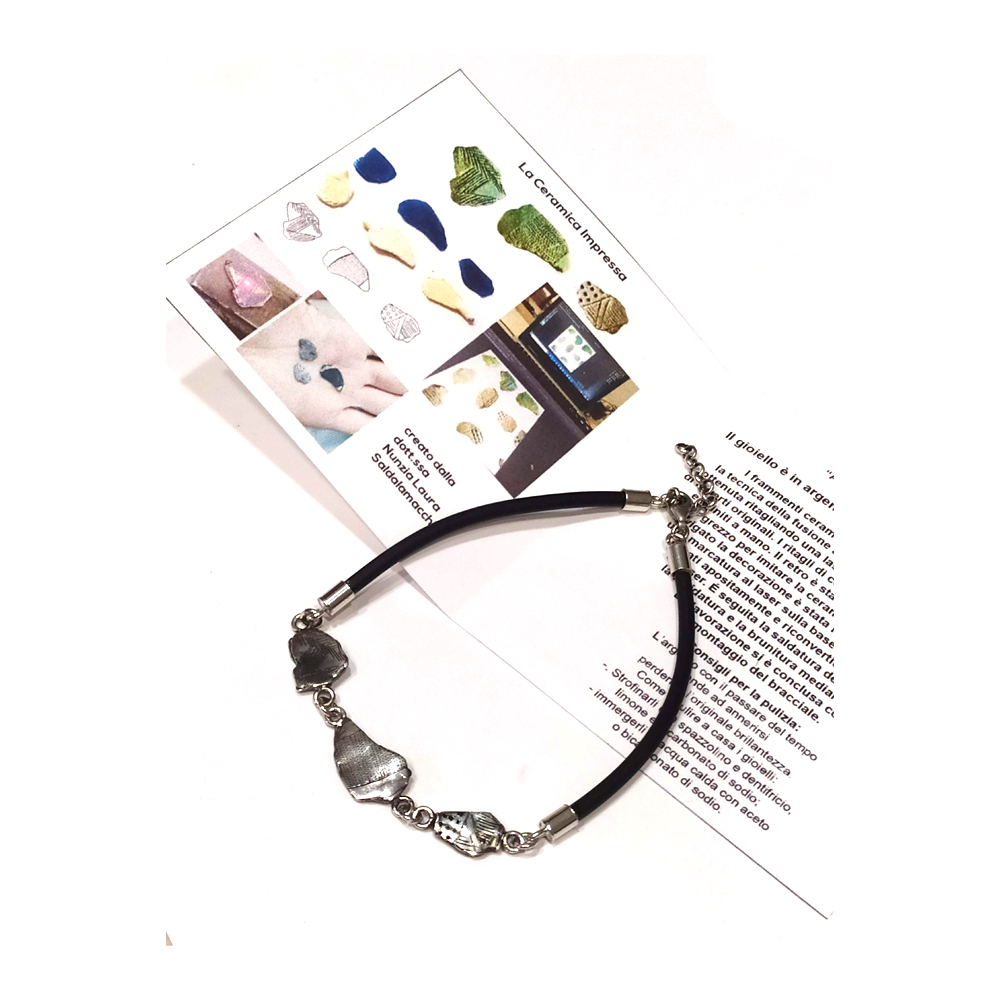
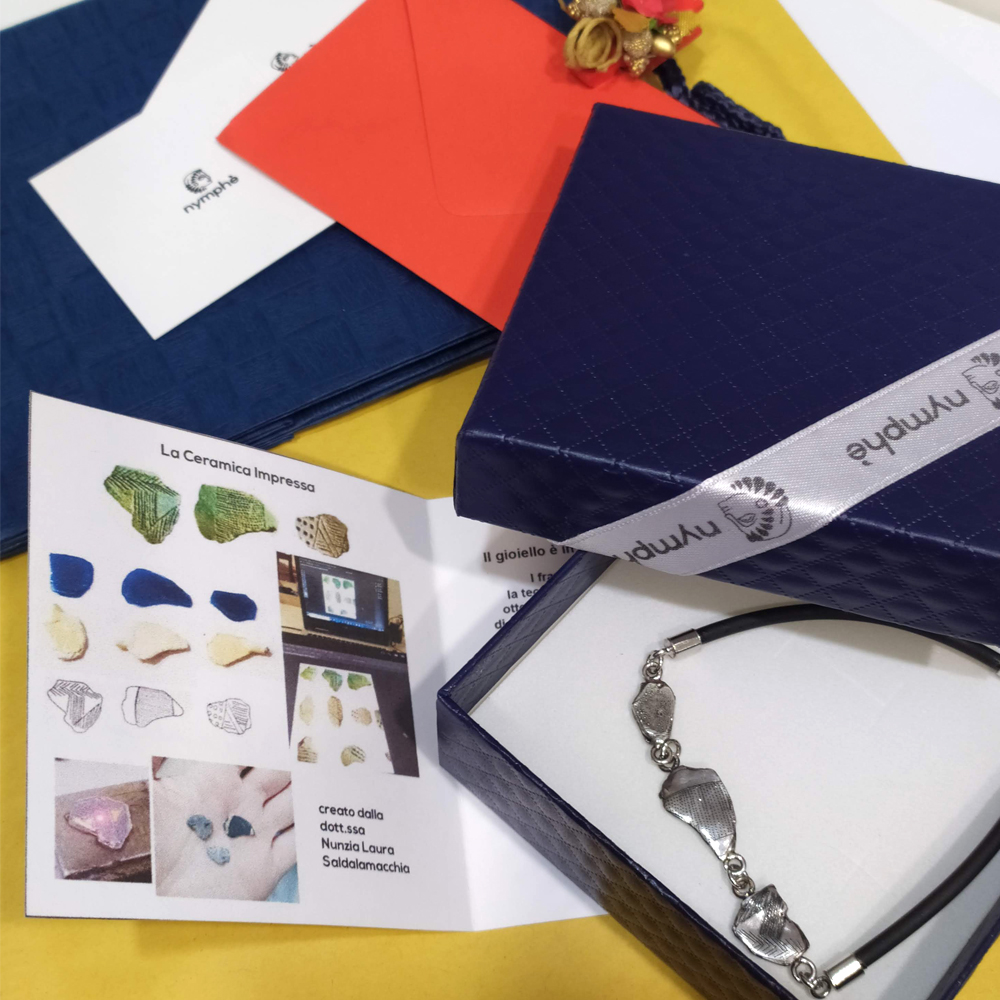
OSTRAKA The silver bracelet with customizable ceramic fragments

From Earth to Precious Metal: Introducing Nymphè’s OSTRAKA Collection! ✨🏺

Every archaeologist knows a fundamental truth: pottery is the ultimate foundation of our craft. It all begins right there — washing, drawing, classifying, and studying sherds that carry centuries of history. And let’s be honest: every single one of us has a favorite sherd close to our heart! 🤍

I am Dr. Nunzia Laura Saldalamacchia, archaeologist and jewelry designer behind Nymphè. I have combined academic rigor with high-end artisan craftsmanship to turn your beloved archaeological fragments into one-of-a-kind, bespoke jewelry pieces.

How is your personalized Ostraka created? 1️⃣ Hand-Sculpting: I sculpt the wax model by hand, matching the exact shape, profile, and thickness of your original sherd. 2️⃣ Detailing & Design: I faithfully recreate the original decorations. 3️⃣ Casting: The custom wax model is cast into precious metal. 4️⃣ Artisanal Finishing: Hand or high-precision laser engraving, meticulous hand-finishing, smoothing, polishing, and hand-burnishing.

How to order your custom piece: 📸 Send us a clear photo of your chosen fragment. 🛒 Select your preferred jewelry piece (pendant or bracelet) from the drop-down menu. ✨ We handle everything else — converting your archaeological passion into a wearable masterpiece!

Crafting Time: 2 weeks.

Wear your love for history every single day. 🏛️✨


200,00 

Tipo di gioiello

Scegli il tipo di gioiello

Personalizzazione dei frammenti ceramici

Carica la foto dei tre frammenti ceramici che desideri riprodurre. Un'immagine ad alta risoluzione mi permetterà di disegnare al meglio i dettagli e il risultato finale sarà migliore. I "frammenti " in argento saranno di dimensioni di circa 2-1,5 cm x 2-1,5 cm

Trascina i file qui oppure UPLOAD
Order total:

Condividi

Scheda Archeologica

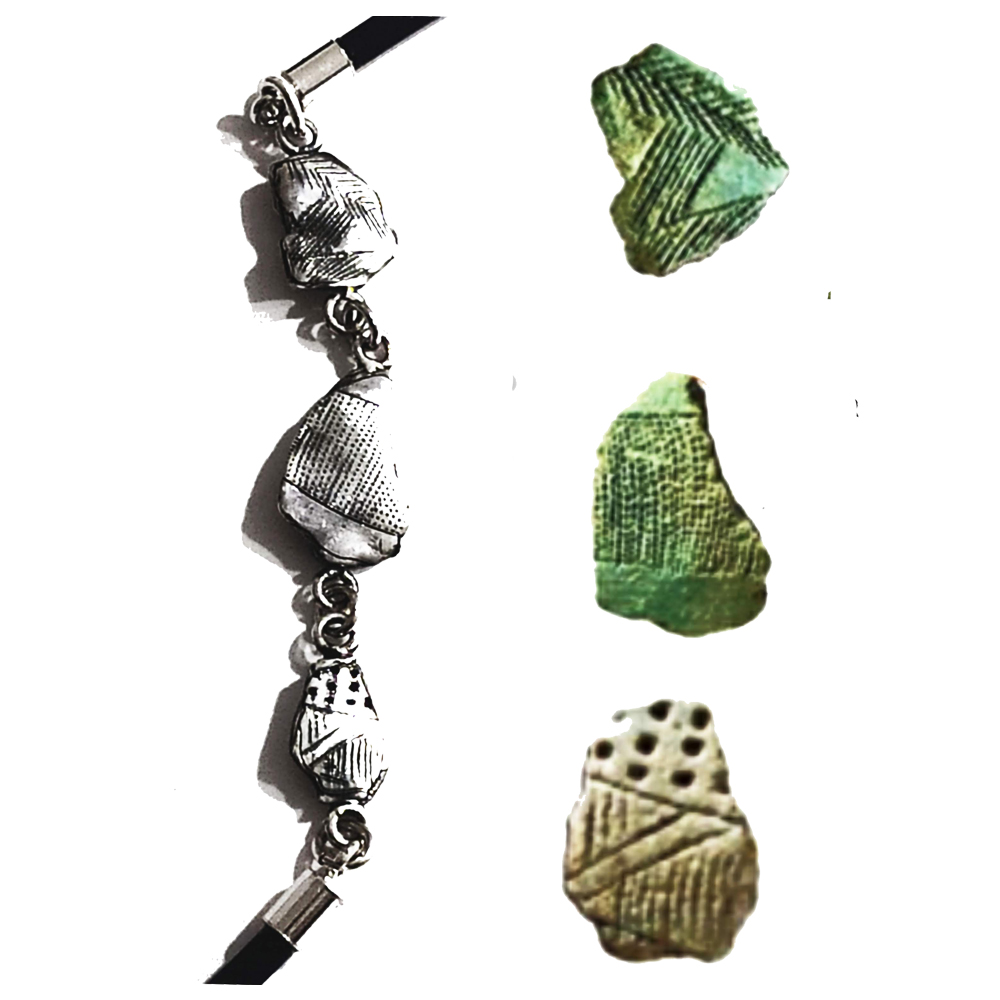
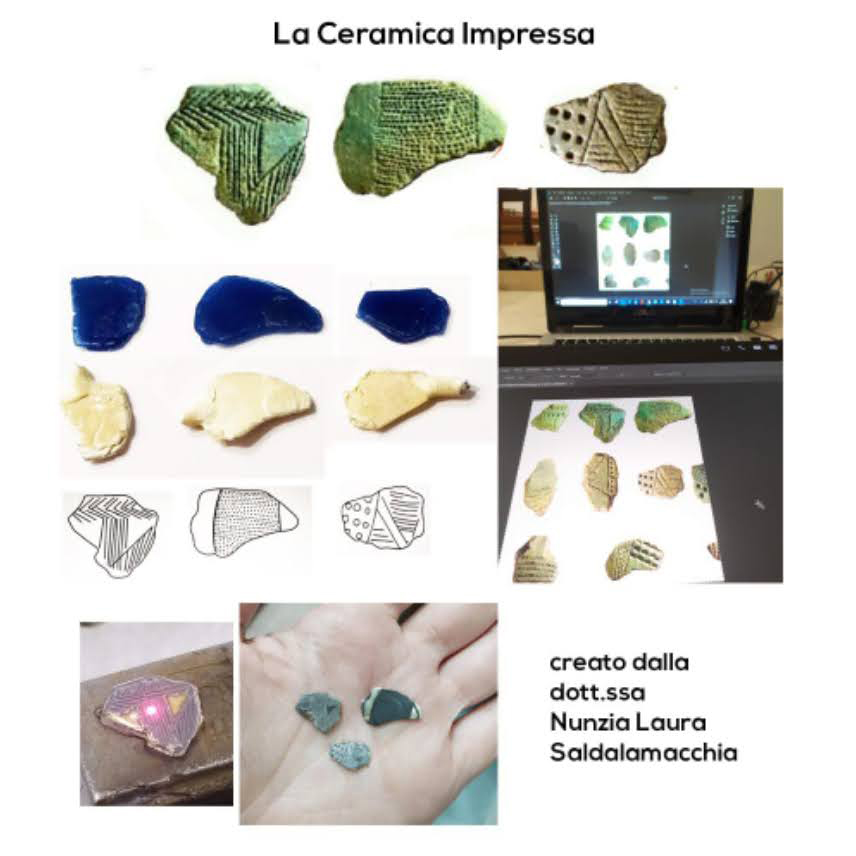
L’esempio del bracciale presentato è ispirato alla ceramica impressa su cui ci ha offerto un approfondimento l’archeologo dott. Umberto Lizzi

Le ceramiche impresse arcaiche giunsero in Italia attraverso le Tremiti, durante la prima fase della neolitizzazione, intorno al 6000 a.C. circa. Dal Sud-Est della penisola, queste genti portatrici di ceramica impressa si diffusero nel resto della penisola e delle isole risalendo verso nord e nelle regioni padano-alpine si incontreranno con genti provenienti dal nord e portatrici di ceramica decorata con linee incise. Questa ceramica è distinguibile in due classi: la grossolana e la fine. La ceramica grossolana è realizzata al colombino, ha superficie non trattate e viene usata per forme di medio-grandi dimensioni, per la maggior parte chiuse, con piede sagomato o a “tacco” e con funzioni di stoccaggio e trasporto. La ceramica fine è realizzata per pressione con impasti parzialmente depurati e superfici trattate e viene usata per forme di piccole e medie dimensioni, spesso aperte, per il consumo di cibi.

La decorazione, impressa e incisa, può essere eseguita con digitazioni, unghiate, pizzicature, motivi impressi con conchiglie a bordo dentellato (Cardium) o liscio (Pectunculus) o con punte oppure tramite pintaderas. I frammenti scelti sono invece caratterizzati da decorazione a rocker, impressioni a conchiglia e pittura organizzata in bande sotto l’orlo, motivi a spina di pesce, motivi triangolari e linee disordinate.

Biblio: Archeologia del Neolitico. L’Italia tra sesto e quarto millennio a.C. di Pessina A., Tinè V., 2019 Cremonesi G. Il villaggio di Ripoli alla luce dei recenti scavi in Rivista di Scienze Preistoriche, XX, 1965 Cremonesi G, Grifoni Cremonesi R., Radi G., Tozzi C., Nicolis F., L’Italia centrale, in Guilaine, 1998

Umberto Lizzi
Materiali e Tecnica

This leather bracelet features sterling silver end caps, centered with custom elements crafted from lightly burnished Italian 925 sterling silver.

The crafting process originates from precise drawings created by Dr. Nunzia Laura Saldalamacchia, based on selected ceramic fragments. Once the exact dimensions for each element were determined, the outlined designs were used to hand-cut thin wax sheets using a scalpel. Each piece was then meticulously sculpted by hand, applying the gentle heat of an alcohol lamp flame to build up and structure the desired thickness.

Once finalized, the wax models were cast in metal. Through the ancient lost-wax casting technique (fusione a cera persa), every single detail of the wax model is captured in the precious metal, as the melted wax is entirely replaced by silver.

Following casting, each silver “pottery sherd” undergoes careful hand-cleaning, refining, smoothing, and polishing. The original hand-drawn decorations—previously digitized with high precision—are then etched onto the surface using laser engraving.

The final touches include custom polishing and hand-burnishing to bring out the depth of the details. Lastly, the finished silver fragments are assembled onto a fine leather band fitted with sterling silver clasps.

Commenti archelogici (0)

Reviews

There are no reviews yet.

Be the first to review “OSTRAKA The silver bracelet with customizable ceramic fragments”

Your email address will not be published. Required fields are marked *

Shopping cart

Sign in

No account yet?

Start typing to see products you are looking for.
Shop
0 Wishlist
0 items Cart
My account