


📚 In-depth analysis by Dr. Francesco Rossi, whom I thank for his excellent work:
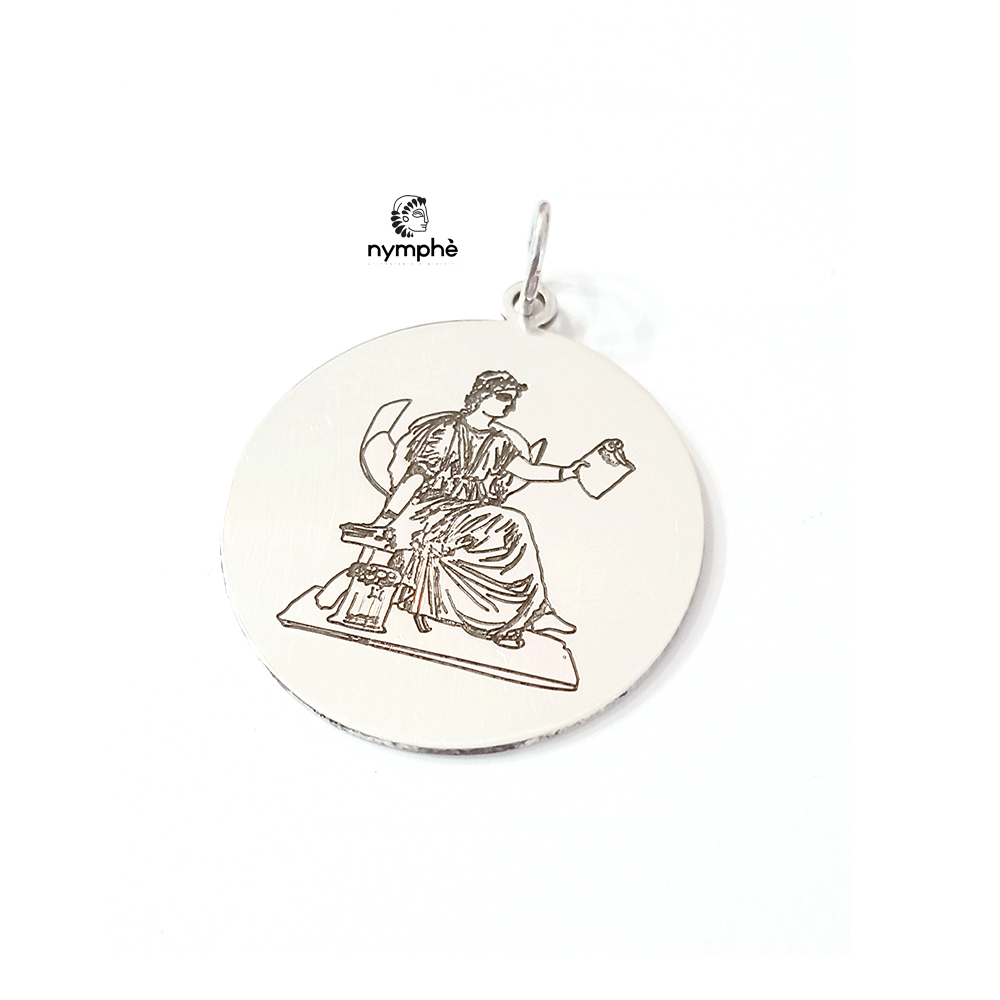
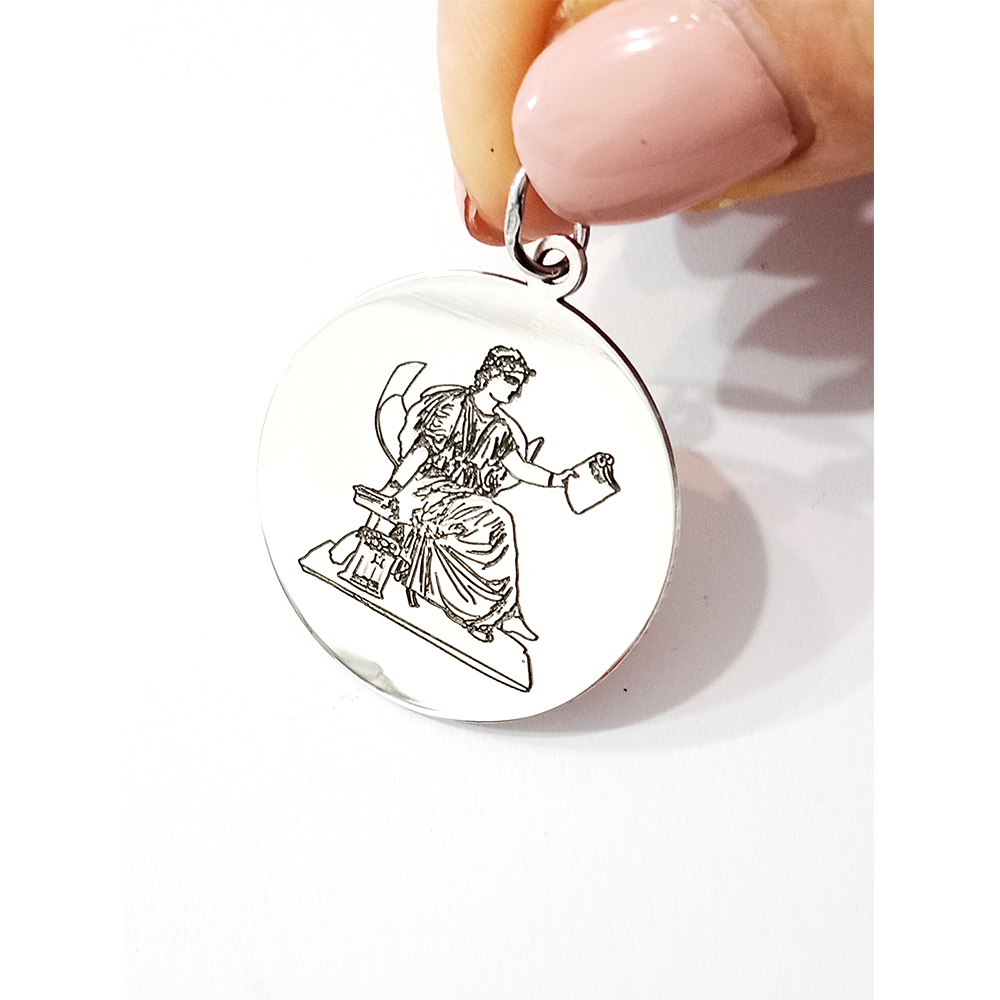
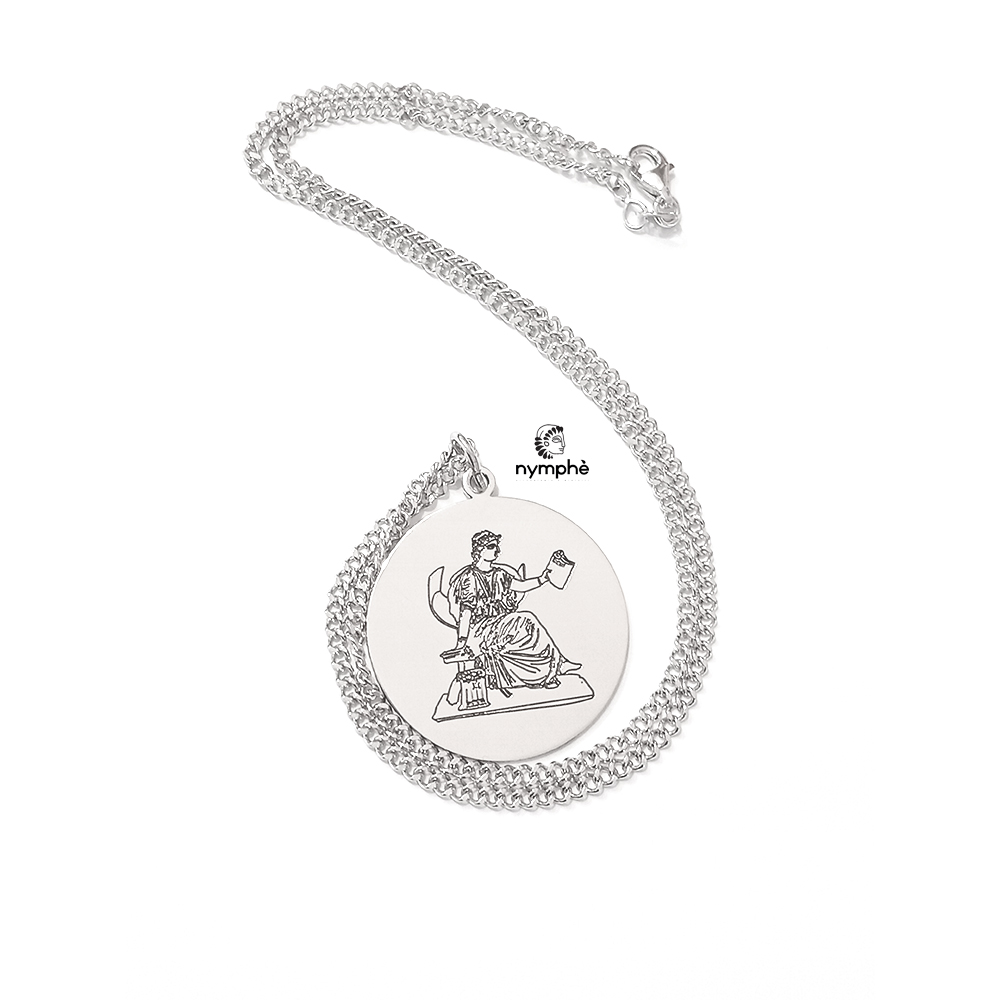
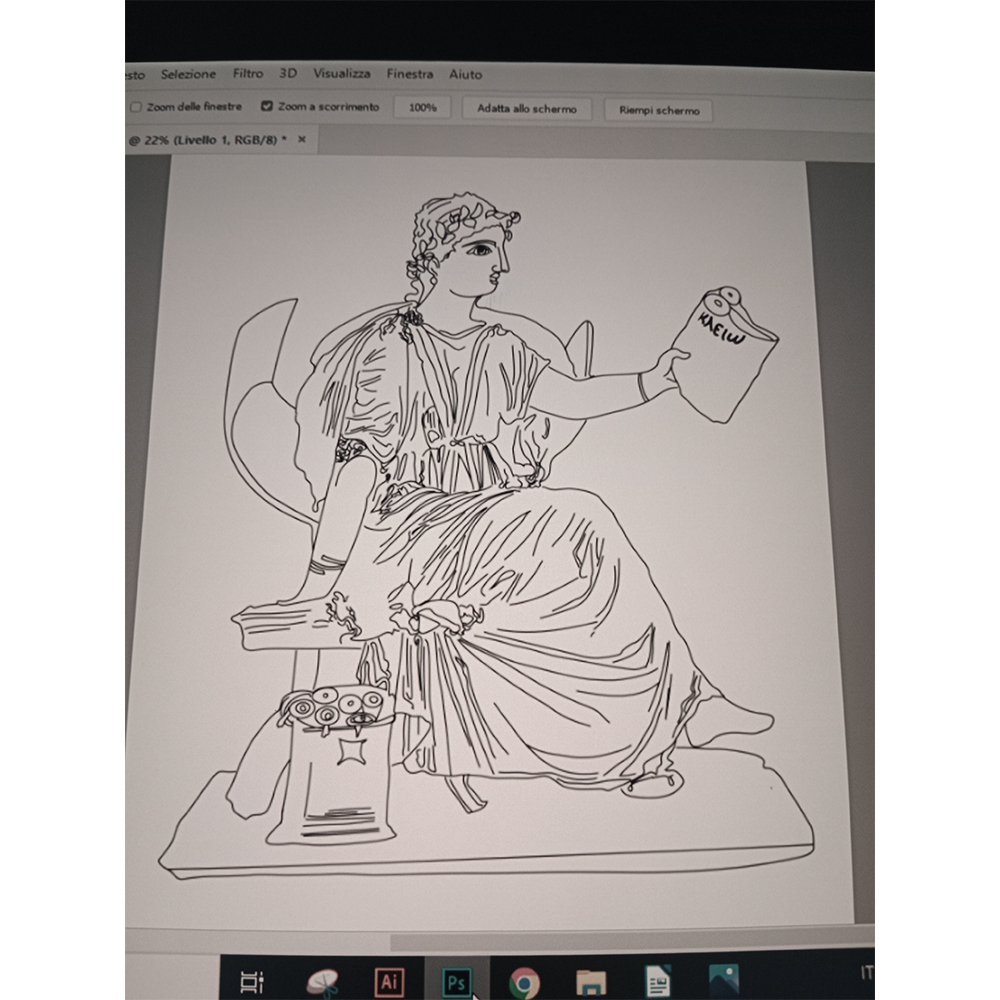
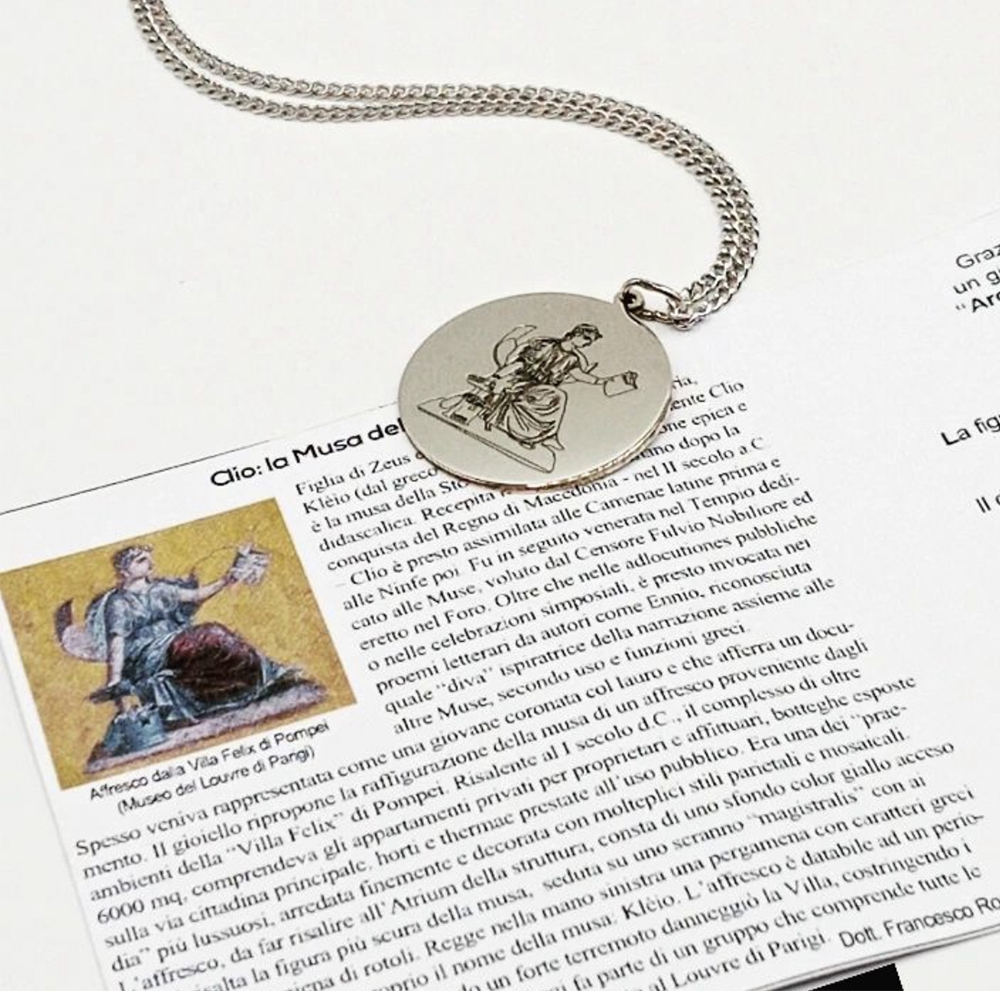
“Daughter of Zeus and Mnemosyne, Goddess of Memory, Kleio (from the Greek ‘to celebrate’) or Clio is the Muse of History, understood as epic and didactic narrative. Adopted into the Roman Pantheon following the conquest of the Kingdom of Macedonia, she was soon assimilated first into the Latin Camenae and later into the Nymphs. She was subsequently venerated in the temple dedicated to the Muses in the Forum, commissioned by the censor Fulvius Nobilior. In addition to public adlocutiones or symposiac celebrations, she is invoked in literary proems by authors such as Ennius, as the inspirational ‘diva’ (goddess) of the narrative alongside the other Muses, following Greek customs and functions. She was often depicted as a young woman crowned with laurel, holding a manuscript. The jewelry piece reproduces the representation of the muse from a fresco originating from the atrium of the ‘Villa Felix’ in Pompeii. Dating to the 1st century AD, the complex of over 6,000 square meters included private apartments for owners and tenants, shops facing the main street, horti (gardens), and thermae (baths) for public use. It was one of the most luxurious praedia, finely furnished and decorated with multiple wall-painting and mosaic styles. The fresco features a bright yellow background against which the darker figure of the muse stands out, seated on a magistralis chair with a basket filled with scrolls at her feet. In her left hand, she holds a parchment inscribed with Greek characters, among which the name Klèio is legible. The fresco can be dated to a period after the year AD 62, when a severe earthquake damaged the villa, which was subsequently renovated. Today, it belongs to a group comprising all the Muses alongside their patronus Apollo, and is preserved in the Louvre Museum in Paris.”
Dr. Francesco Rossi
la scena




Reviews
There are no reviews yet.