



In-depth Analysis by Dr. Francesca Deriu, Archaeologist
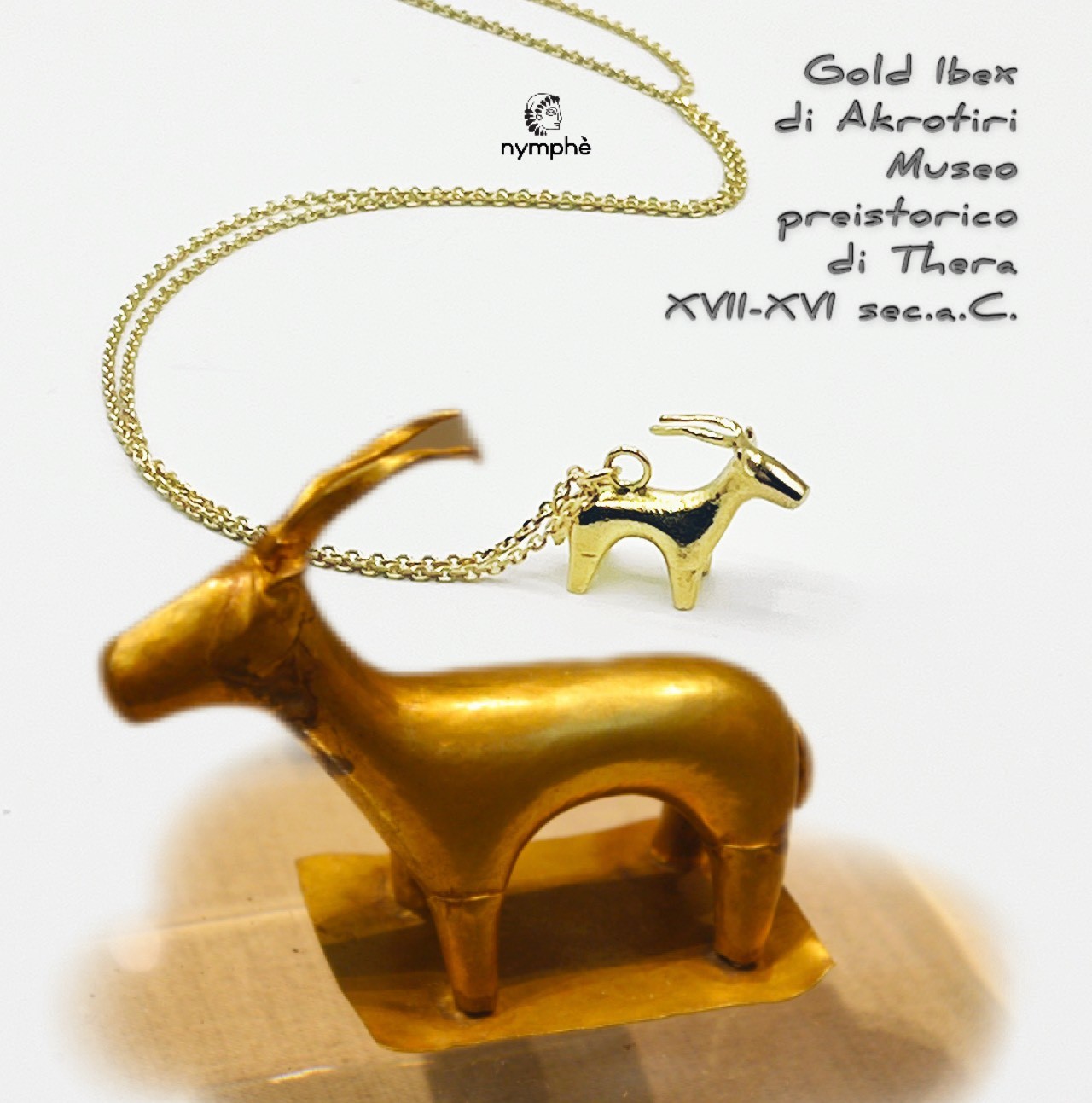
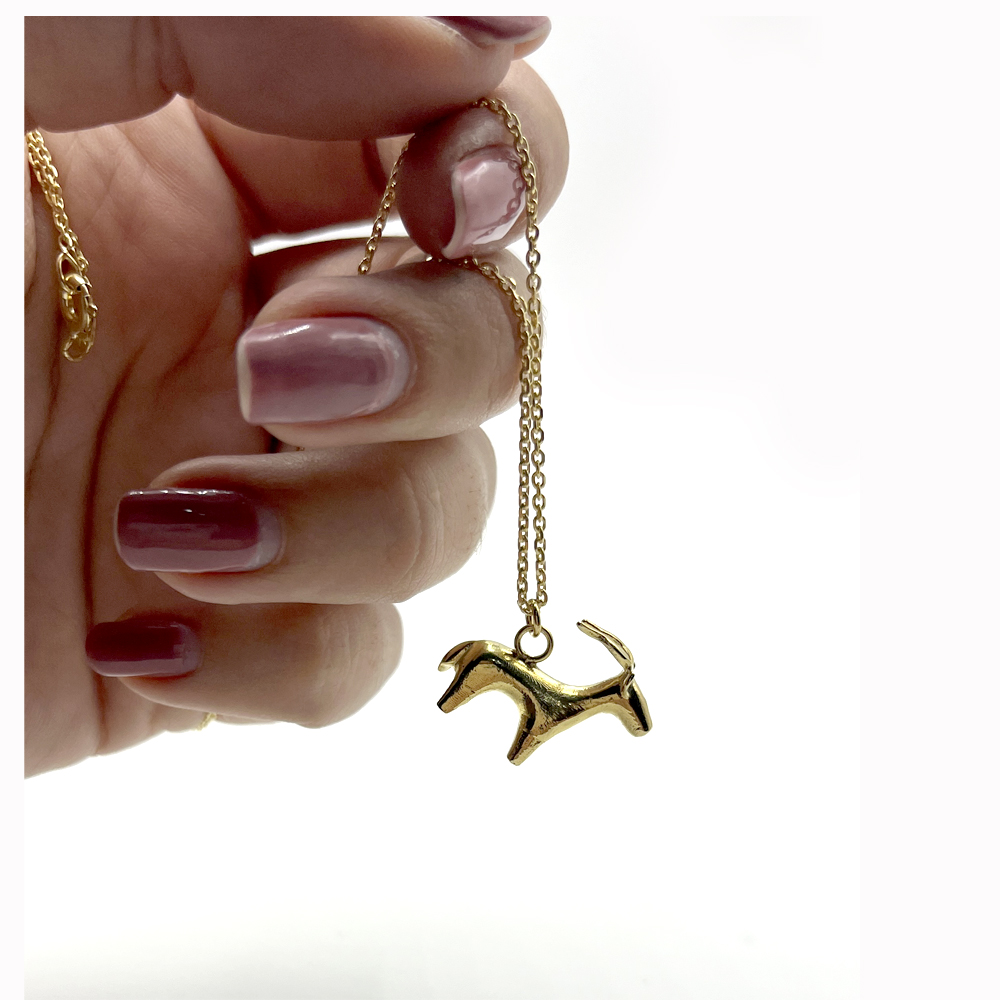
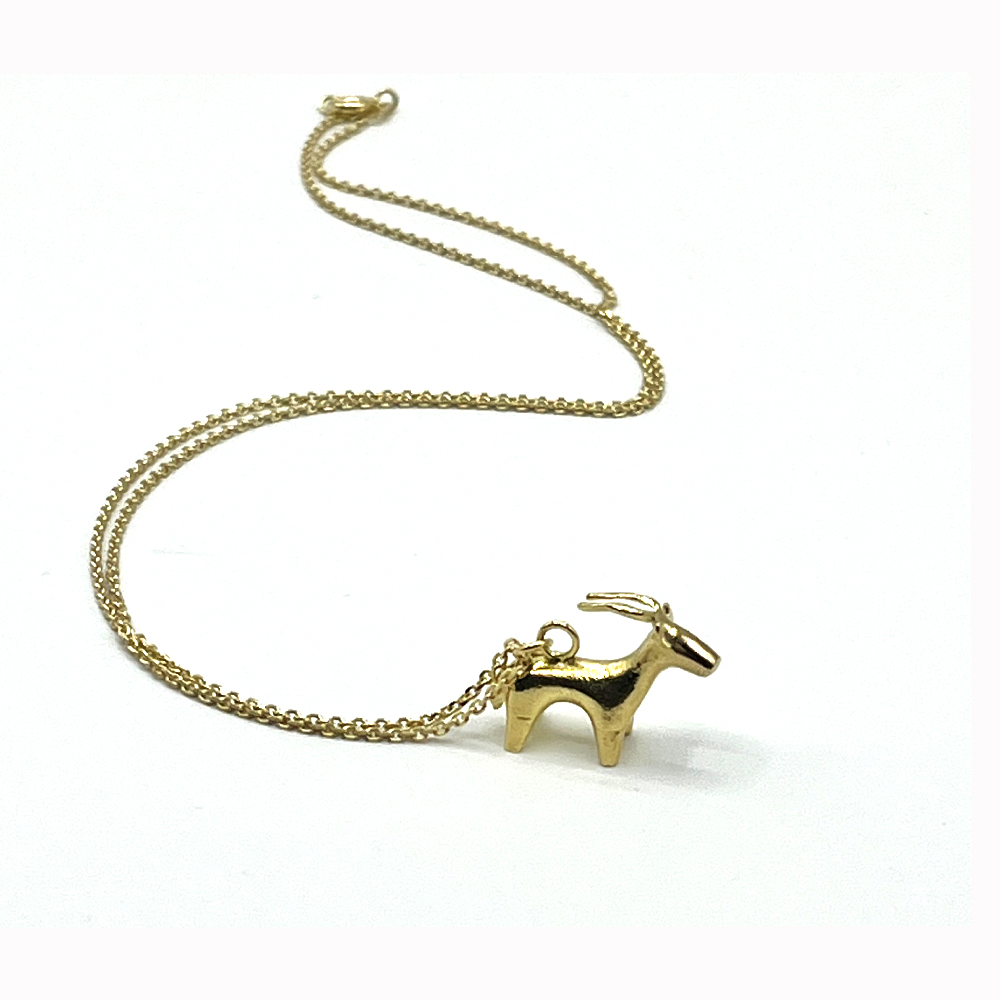
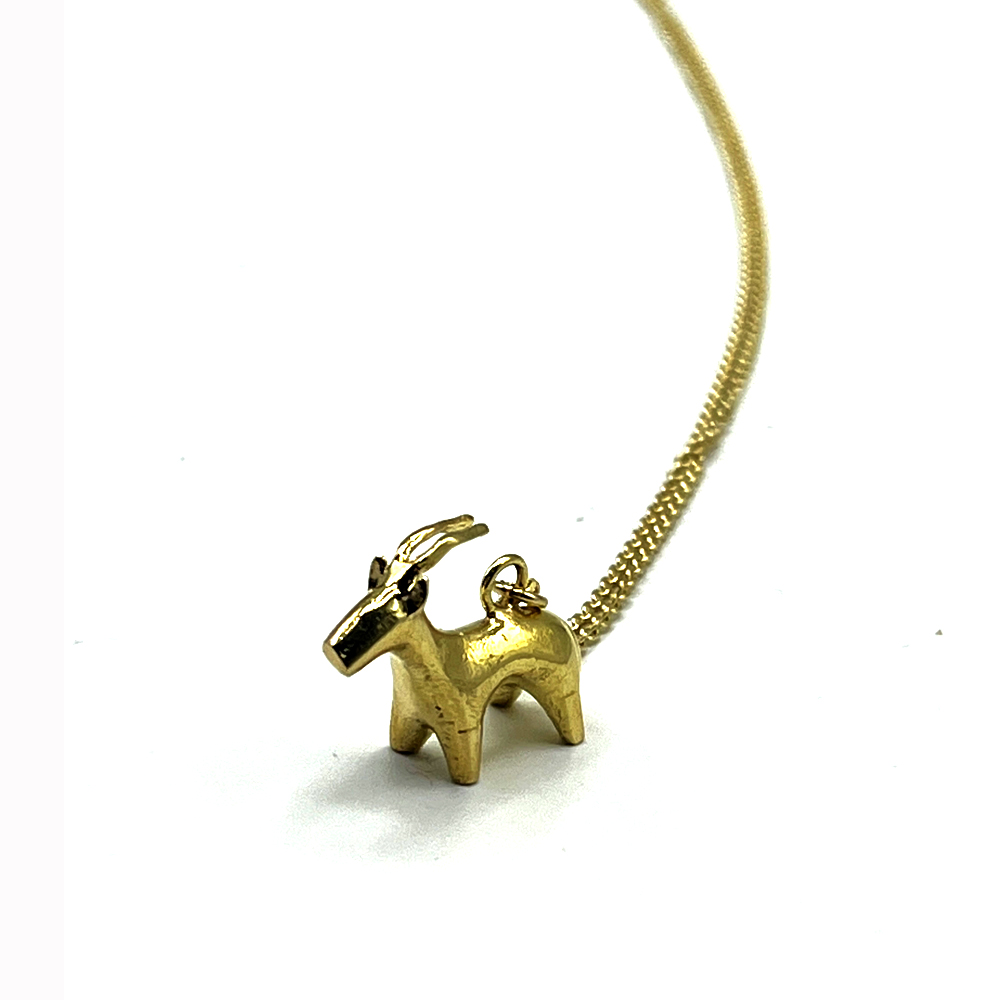
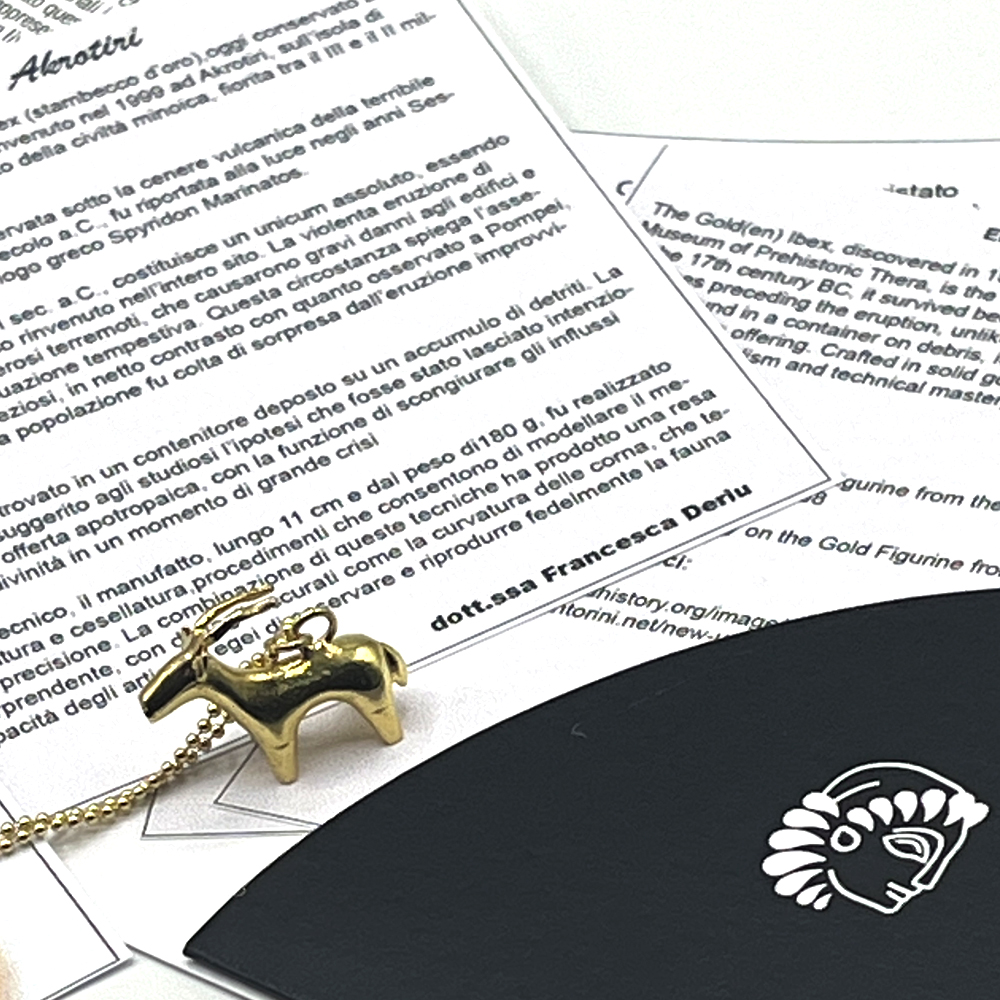
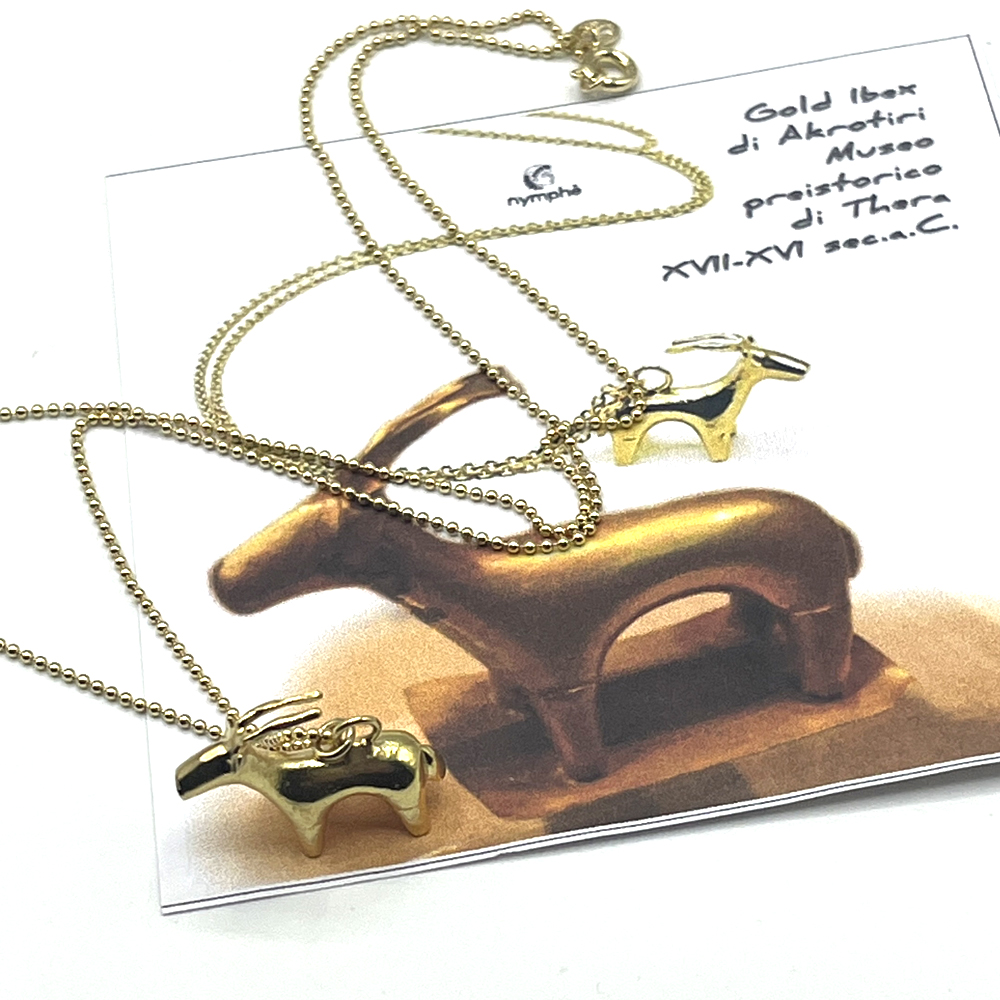
The pendant draws inspiration from the Golden Ibex (or Gold Ibex), currently preserved in the Museum of Prehistoric Thera. The artifact was discovered in 1999 at Akrotiri, on the island of Thera (Santorini), and belongs to the context of the Minoan civilization, which flourished between the 3rd and 2nd millennia BC.
Akrotiri—a city extraordinarily preserved under volcanic ash following the devastating eruption dating to the 17th or 16th century BC—was brought back to light in the 1960s by the Greek archaeologist Spyridon Marinatos.
The artifact in question, dated to the 17th century BC, represents an absolute unicum, as it is the only precious metal object found across the entire site. The violent eruption of Santorini was preceded by numerous earthquakes, which caused severe damage to buildings and prompted a timely evacuation by the inhabitants. This circumstance explains the absence of human remains and precious artifacts, standing in stark contrast to what was observed at Pompeii, where centuries later the population was caught entirely off guard by the sudden eruption.
The golden ibex was found inside a container placed atop a pile of debris. Its survival has led scholars to hypothesize that it was intentionally left behind, perhaps as an apotropaic offering to ward off evil influences and appease the deities during a time of immense crisis.
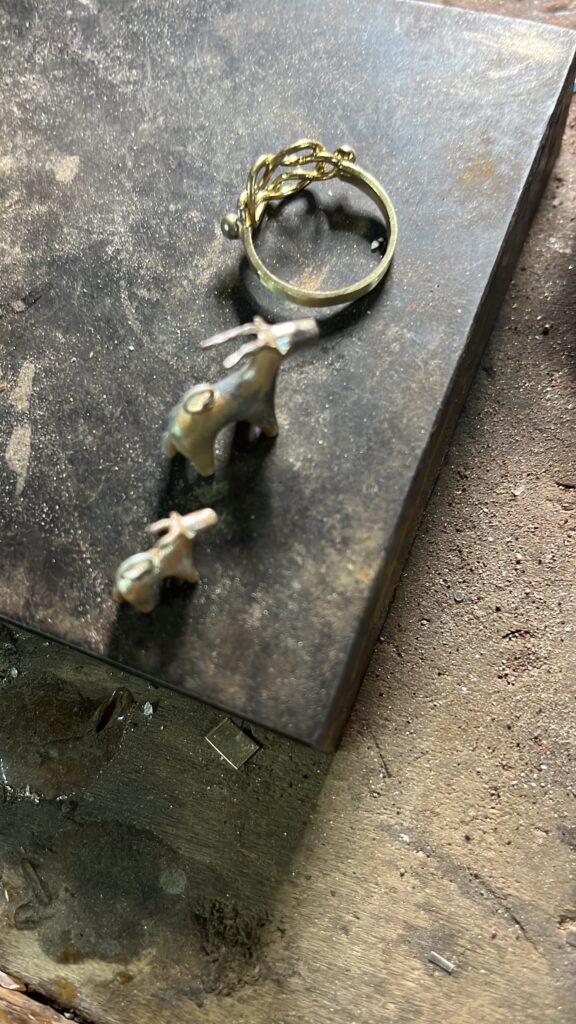
From a technical standpoint, the artifact—measuring 11 cm in length and weighing 180 g—was crafted using hammering and chasing techniques, processes that allowed artisans to shape the metal with remarkable precision.
The combination of these techniques produced a strikingly naturalistic rendering, featuring delicate details such as the curvature of the horns, which bears witness to the mastery of Aegean craftsmen in closely observing and faithfully reproducing local fauna.
BIBLIOGRAFIA
- Galeno, Galeno, De Remediis Parabilibus, libro I, 585, 586, libro II 603-607, 622-635, libro III 642,
657, 661 - Celso, De Medicina, libro I, 6-6, libro III, 4, 7, 9, 13-15, 19, 24
- Plinio, Naturalis Historia, libro XXIII, 33-68, 83, libro XXVIII, 72, 73, 75, 123-128, 135-137, libro
XXIX, 38-42, libro XX, 129, 133, 211 - Dubois C., L’alimentation des enfants en bas âge : les biberons grecs. In: «Les Dossiers d’archéologie», n 356, 2013
- Doubois C., Alimentation infantile: pratiques et culture matérielle dans la société grecque. In: Una
favola breve. Archeologia e antropologia per la storia dell’infanzia a cura di C. Lambrugo, All'Insegna del Giglio, 2019 - Jaeggi-Richoz S., La fabrique des bébés dans l’Antiquité. Enquête sur les « biberons» gallo-
romains, Brepols Publisher, Belgio, 2024 - Jaeggi-Richoz S., Seins de chair, seins de terre : symbolique et usage des biberons grecs et gallo-
romains, In: Allaiter de l’Antiquité à nos jours : Histoire et pratiques d’une culture en Europe, a cura
di Foehr-Janssens Y., Solfaroli Camillocci D., Brepols Publishers, Turnhout, 2022 - Jaeggi-Richoz S., Wittmann A., Garnier N., Biberon or not biberon? Les analyses biochimiques de
contenus et la question de la function des vases gallo-romains communément appelés «biberons»
Actes du Congrès de Nyon, In: «SFECAG», 2015



Reviews
There are no reviews yet.