

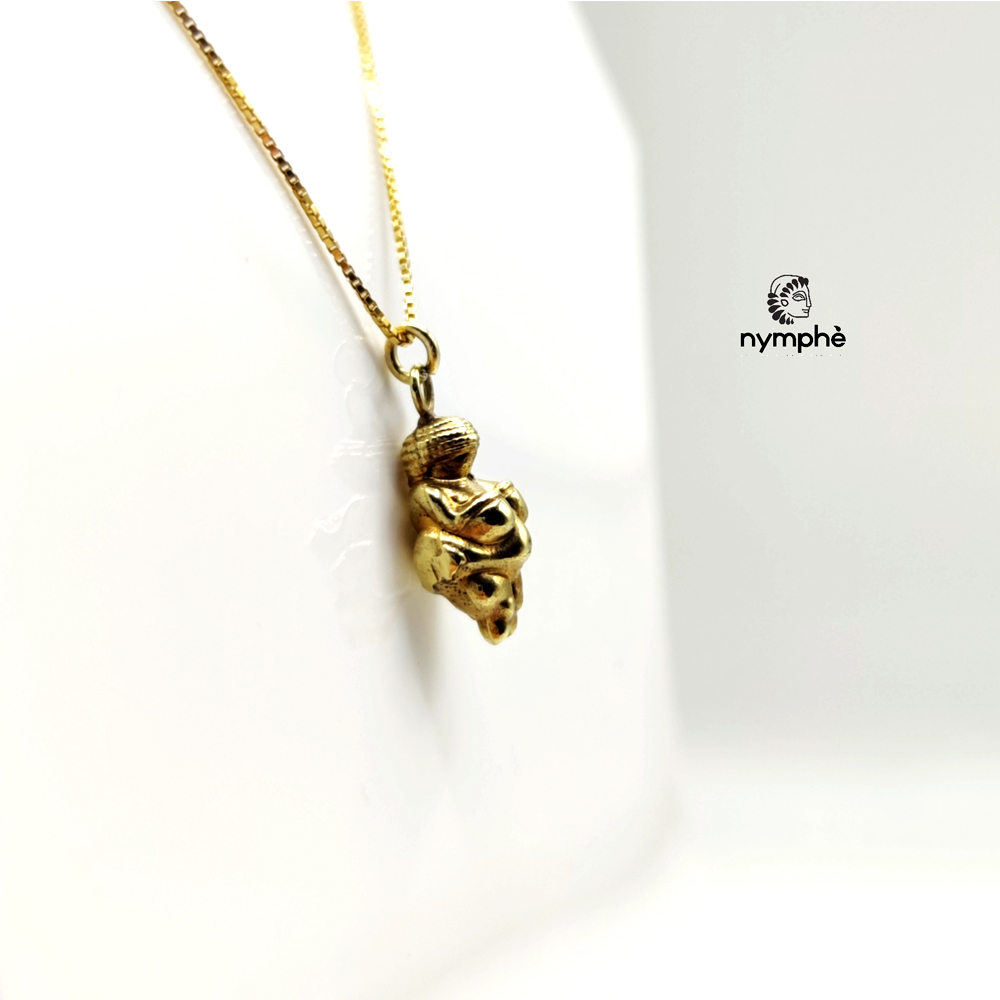

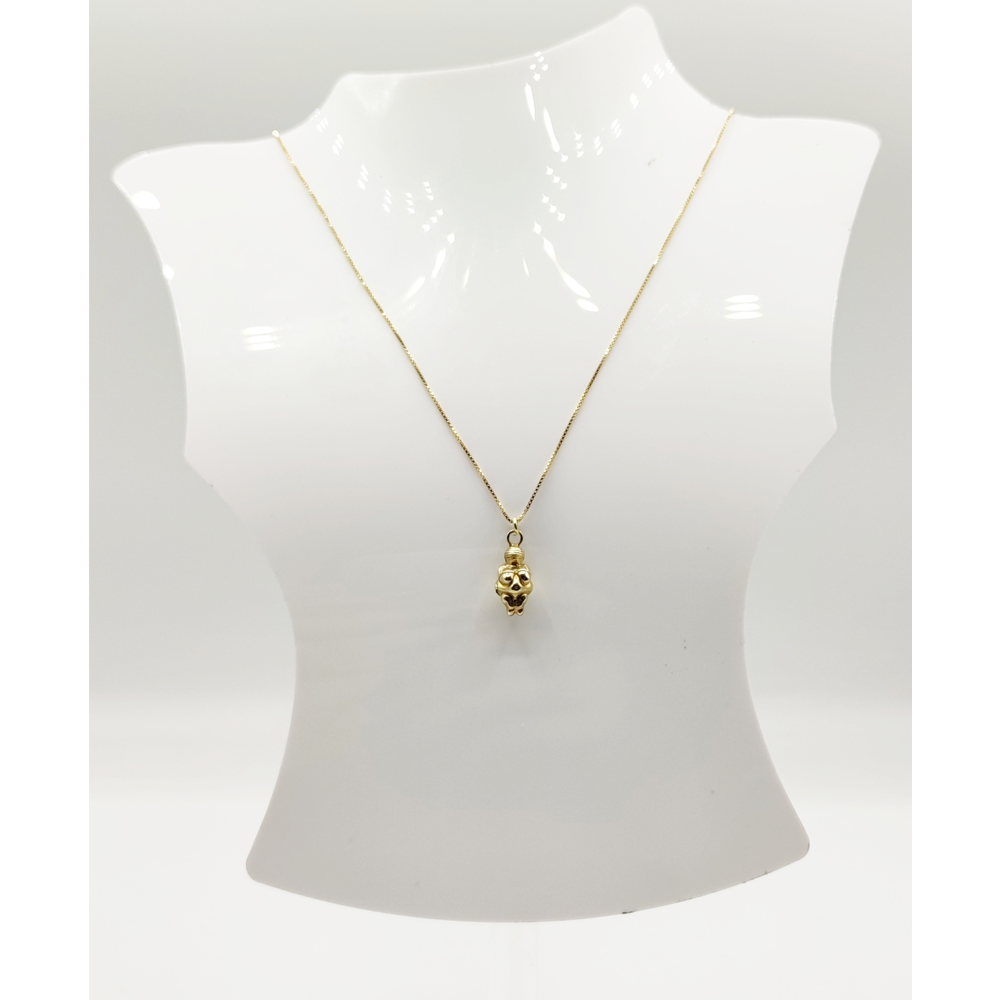
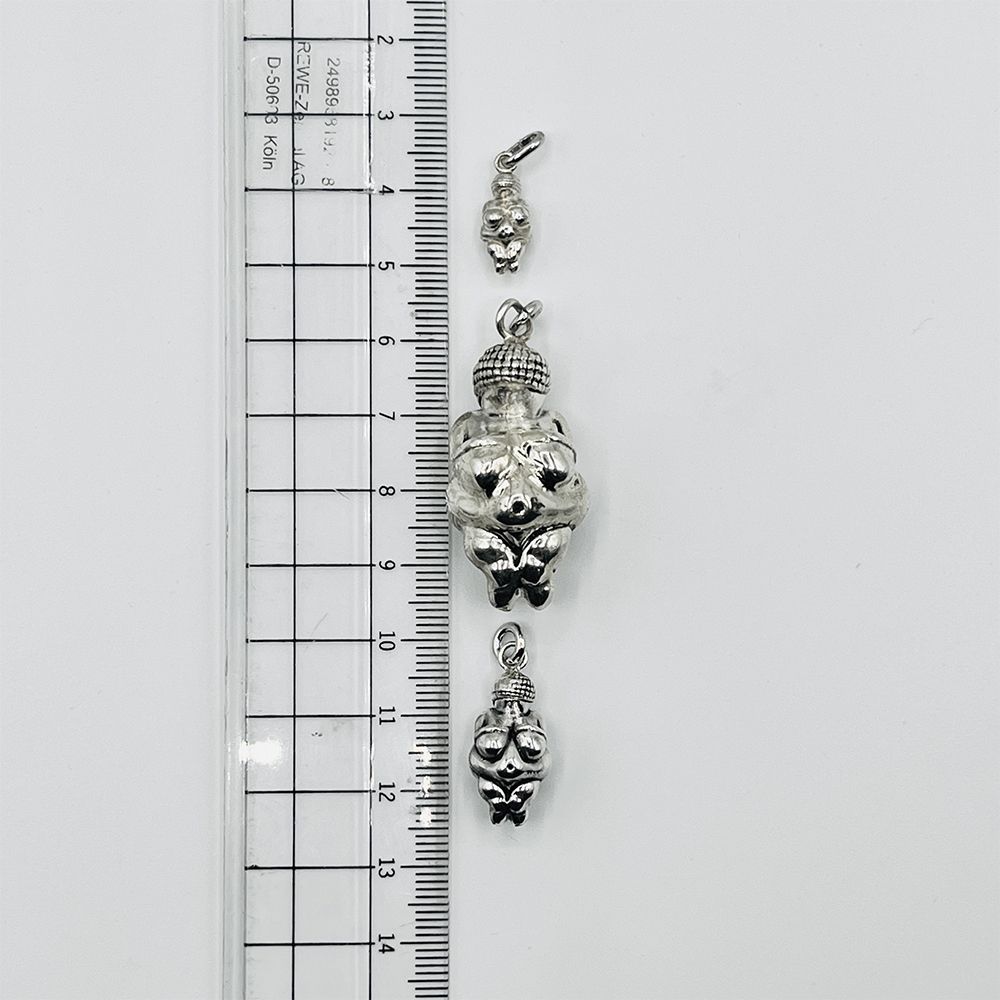
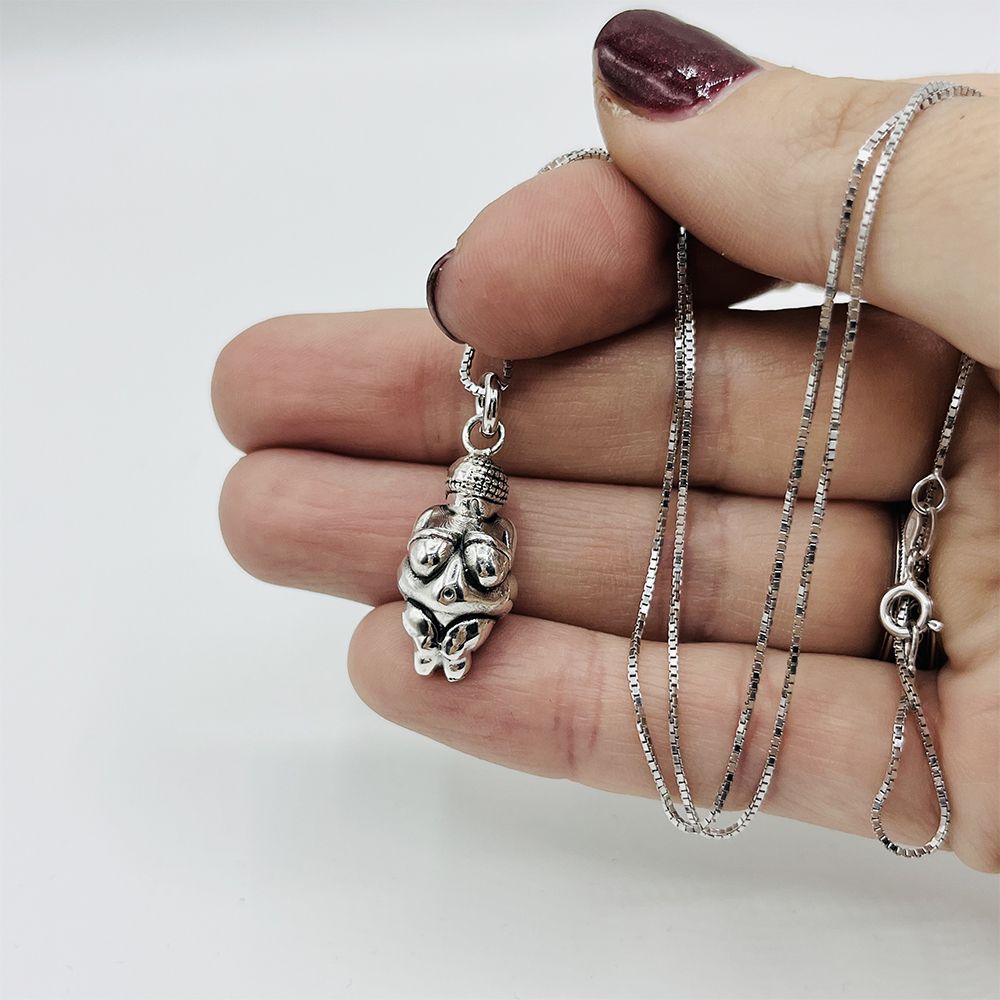
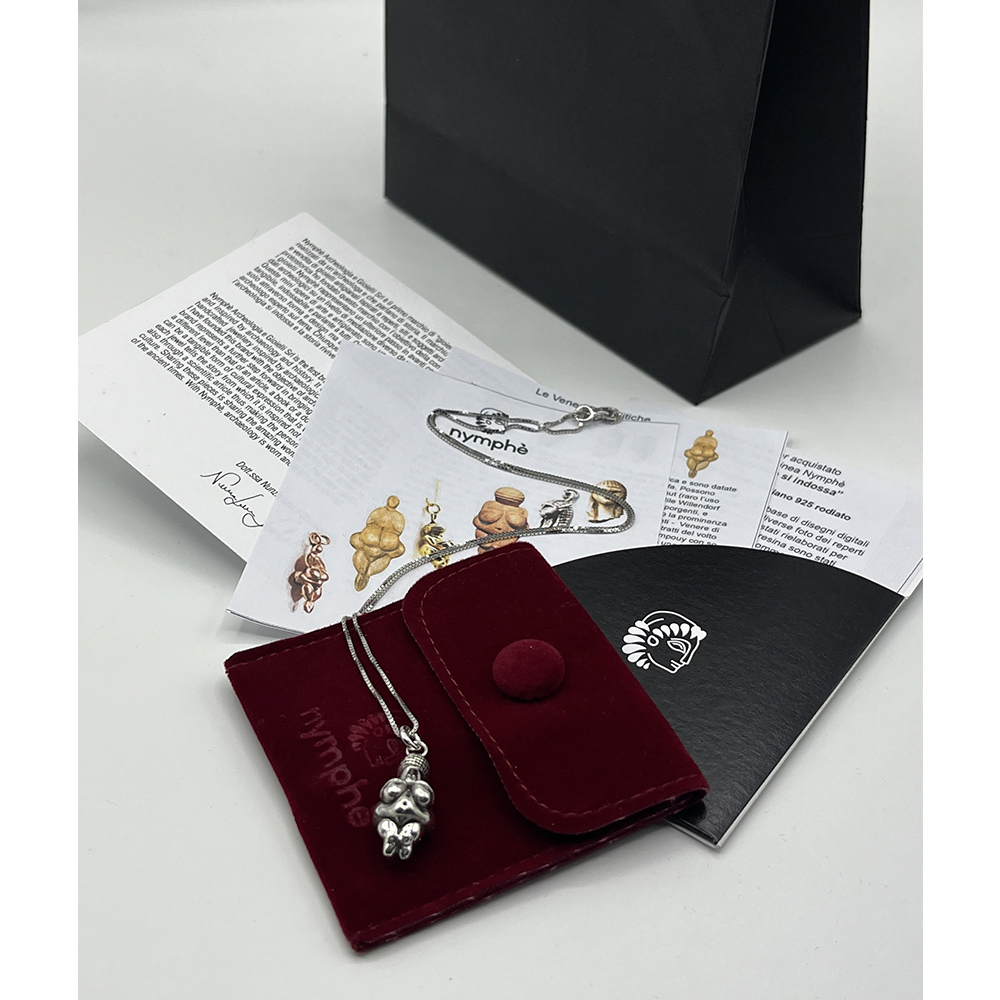
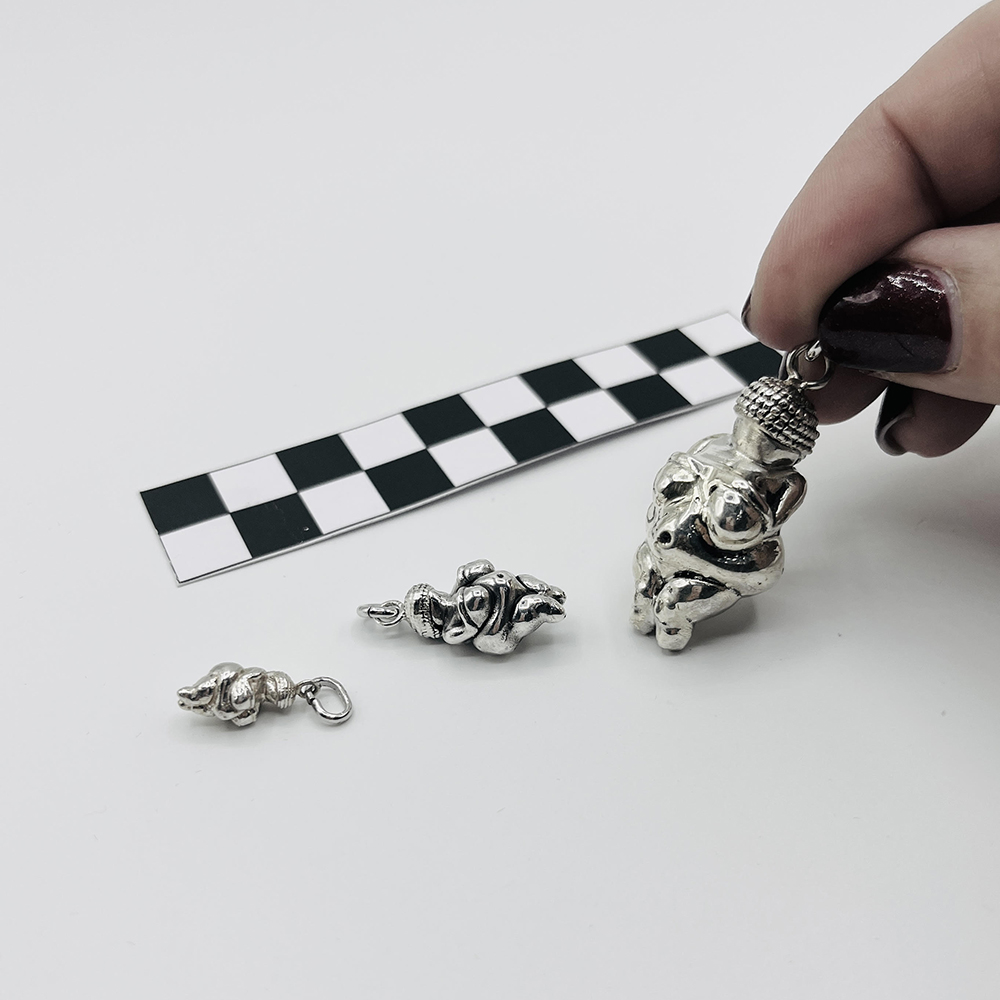
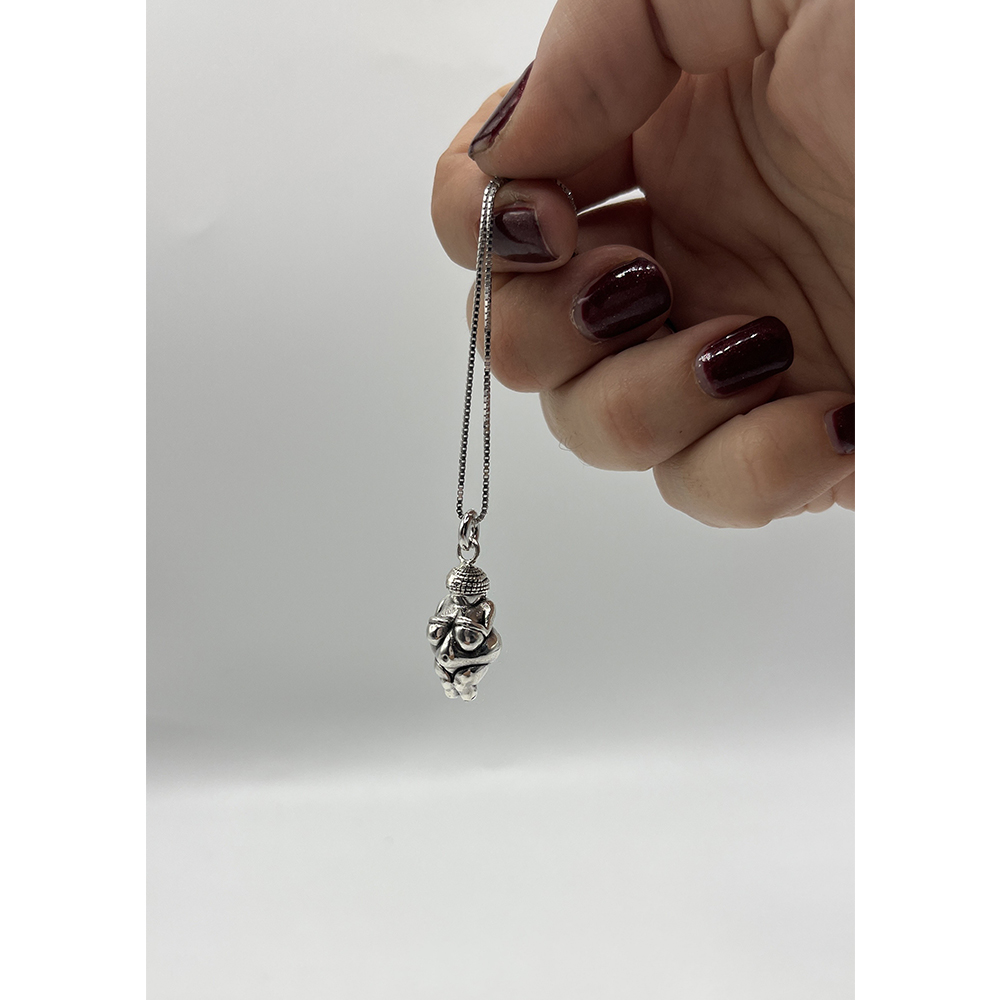
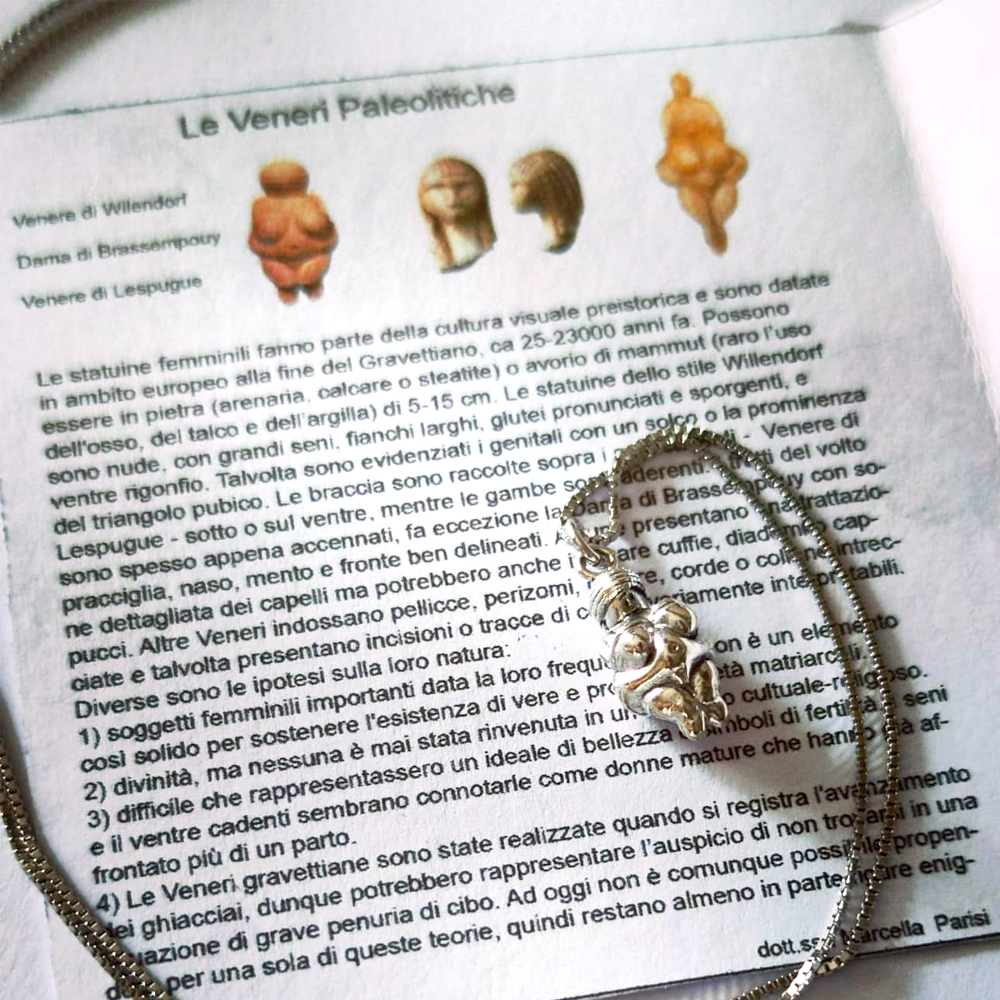
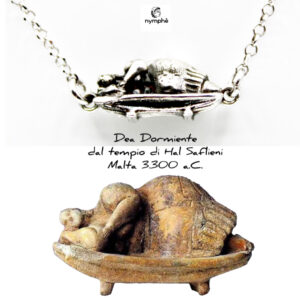
“For thousands of years, Paleolithic Venuses have continued to embody Beauty and inspire us to explore their meanings; today, with Nymphé, we wear their value in a new form ♀️💎♀️
Special thanks to Dr. Marcella Parisi for the insights:
‘Part of prehistoric visual culture, in Europe they are dated to the end of the Gravettian period, approximately 25,000–23,000 years ago. Ranging from 5 to 15 cm in size, they can be made of stone (sandstone, limestone, or steatite) or mammoth ivory (with rare uses of bone, talc, and clay). Figurines of the Willendorf style are nude, with large breasts, wide hips, pronounced and protruding buttocks, and a swollen belly. Sometimes the genitals are highlighted with a groove or a prominent pubic triangle. The arms are gathered over saggy breasts—like the Venus of Lespugue—or placed under or on the belly, while the legs are held tightly together. Facial features are often barely suggested, with the exception of the Lady of Brassempouy, who features well-defined eyebrows, nose, chin, and forehead. Some exhibit detailed hair styling, though this might also depict caps, diadems, or hoods. Other Venuses wear furs, loincloths, belts, cords, or woven necklaces, and occasionally bear engravings or traces of pigment subject to various interpretations.
There are several hypotheses regarding their nature:
- IMPORTANT FEMALE FIGURES: Given their frequency, though this alone is not strong enough evidence to support the existence of matriarchal societies.
- DEITIES: However, none have been found in a cultic or religious context.
- BEAUTY IDEAL OR FERTILITY SYMBOLS: Unlikely. Their saggy breasts and bellies seem to characterize them as mature women who have already experienced multiple births.
- FOOD SECURITY OMENS: Gravettian Venuses were created during the advancement of glaciers, so they may represent a wish to avoid severe food shortages.
To date, it is not possible to favor any single theory, leaving them—at least in part—ENIGMATIC FIGURES.'”




Reviews
There are no reviews yet.